CBD Pre Workout: What It Is and Whether It’s Worth Taking
CBD pre workout might sound like a smoother scoop without the jitters. Here's what the research says, and what to check before you buy.
Rachel Abela
November 04, 2026
This article contains sponsored content. Some of the products featured are part of paid partnerships. This page explains how our process works.

herb
CBD pre workout might sound like a smoother scoop without the jitters. Here's what the research says, and what to check before you buy.
November 04, 2026
CBD pre workout has a pretty specific pitch. If you’ve ever taken a scoop of regular pre-workout, you know the routine. The chalky shake, the tingly face, the heart-pounding energy, and sometimes a crash or a case of the jitters halfway through your session. CBD pre workout products are often presented as a smoother version of that ritual, with CBD added to the mix.
It sounds appealing, especially if you love the boost but hate the edge. But you’re also paying for it, sometimes at a premium, so it’s worth knowing what’s in the tub before you buy.
Here’s what CBD pre workout is, what the research does and doesn’t say, what real people report, and what to look for on the label.
Important: This article is for informational purposes only; not legal or medical advice. For adults 21+. Cannabinoid legality varies by state, and the federal hemp definition narrows in late 2026—verify your state’s laws before buying any cannabinoid products. Featured products are not FDA-evaluated and are not intended to diagnose, treat, cure, or prevent any disease.

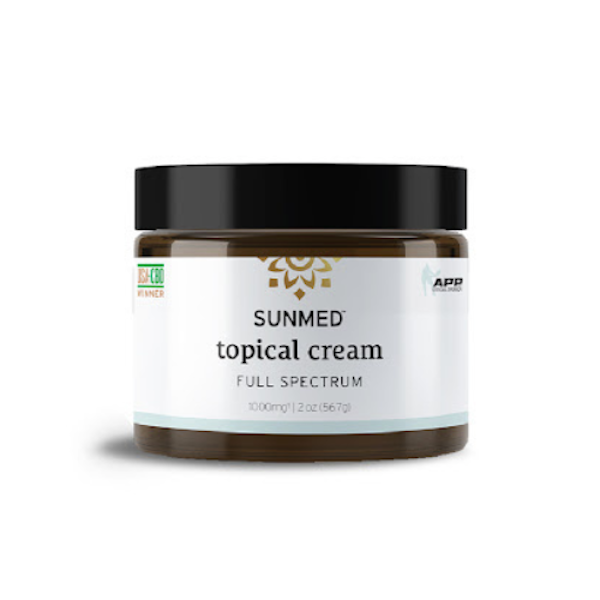
Not every CBD product belongs in your shaker bottle. Sunmed’s Full Spectrum Topical Cream is a natural fit for your gym bag, made for the end of a session when the cooldown stretches begin. The 4oz jar packs 4,000mg of full-spectrum hemp-derived cannabinoids, with peppermint oil, arnica, and MSM in the formula for a cooling feel. Sunmed suggests a pea-sized amount, applied as needed.

Aleksander Saks / Unsplash
CBD pre workout is a pre-workout supplement, usually a powder you mix with water, with CBD added to the formula. It’s a product category, not just the act of taking CBD before you exercise.
That’s an important difference. Using CBD as pre workout support can mean a few things. Some people take a CBD gummy or oil before the gym, separate from any pre-workout. A CBD infused pre workout, on the other hand, combines CBD with the usual pre-workout ingredients in a single scoop.
So what’s usually in the scoop? Mainstream pre-workouts tend to lean on the same core ingredients. Caffeine, beta-alanine, and citrulline show up in many popular formulas, along with ingredients like taurine and creatine. Caffeine is often the headliner, commonly around 200mg to 300mg per serving.
A pre workout with CBD keeps that same base and adds a small amount of CBD. In most cases, it’s a small part of a formula built mostly around stimulants and amino acids.
Taking CBD before a workout isn’t a new idea, though. Plenty of people have simply taken a CBD product on its own before training. Sunmed’s Anytime Gummies are one example of a CBD-infused product some people take earlier in the day. Each gummy contains 25mg of total hemp-derived cannabinoids from a full-spectrum, live resin-infused extract, and Sunmed suggests one to two a day. Unlike a pre-workout powder, there’s no caffeine or stimulant blend, just the hemp extract.
Important: Laws vary by state. A narrower federal hemp definition takes effect in late 2026. Check current state and federal laws before buying.

herb
The research doesn’t currently show that CBD improves workout performance or recovery. For the full breakdown of how CBD may affect performance and recovery, see our guide to CBD before or after exercise.
Here’s a quick look at what the research found so far:
A 2024 systematic review searched for studies on CBD in healthy, physically active people and found 901 publications. Only seven studies, with 134 participants in total, met its criteria. The review found a limited positive effect of CBD on some physiological measures, like oxygen use and average power, but limited data on strength and on post-workout recovery. For a full study-by-study breakdown, see Herb’s guide to CBD before or after exercise.
Before a workout, for performance: In a small 2022 pilot trial, trained runners who took 300mg of CBD before a long run rated it as more pleasant. But their time to exhaustion didn’t change. A larger follow-up trial in 2025 found no meaningful effects on performance or how the run felt.
After a workout, for recovery: Most recovery trials found no clear difference between CBD and placebo. One strength training study found small effects on muscle damage and squat recovery, but the differences were minor.
Here’s the catch for CBD and pre workout products specifically: these studies tested CBD on its own. None tested CBD inside a multi-ingredient pre-workout, so the research doesn’t speak directly to these products. It also used doses of 50mg to 300mg or more, while many CBD pre workouts list 25mg to 35mg per serving.
If you’re drug-tested: The World Anti-Doping Agency (WADA) allows CBD, but all other cannabinoids, including THC, are still banned in competition. USADA warns that it’s very difficult to extract only CBD, so athletes should assume CBD products may contain other cannabinoids.
Contamination is a real issue. A 2017 JAMA study tested 84 CBD products sold online and found THC in 18 of them, about 21%. In a 2019 commentary, researchers reported finding THC above 2.5mg per day in 10 of 28 commercial CBD products. USADA also notes that third-party certification reduces the risk of a prohibited substance, but doesn’t eliminate it.

Gabin Vallet / Unsplash
Reviews of CBD pre workout products specifically are hard to find. Most online discussion is about taking CBD before a workout in general, or about using CBD and pre workout together. Here’s what that chatter covers.
Does it work? Opinions are mixed and anecdotal. On Reddit, one user said they take CBD 15 to 20 minutes before going to the gym and felt less fatigued and more motivated during their workouts. They also asked whether any research backs it up, which is a fair question.
Anecdotal effects. In another r/CBD thread, a user said vaping CBD flower 15 minutes before lifting, combined with a regular pre-workout, felt incredibly euphoric. A commenter shared a weed and pre workout experience of their own: pairing a 5mg CBD gummy with a 5mg THC gummy. Important: Combining THC with a stimulant-heavy pre-workout can raise your heart rate. On Quora, users said CBD gave them more focus during exercise and a bit of energy.
Is it better than regular pre-workout? No one in these threads directly compared a CBD pre workout to a regular one. Most were adding CBD to their existing routine, not switching products.
Is it worth the price? We didn’t find reviews weighing the added cost, which is one more reason to do the price-per-mg math yourself (more on that below).
In short, people who like CBD before a workout describe feeling more focused, motivated, or relaxed. But these are personal experiences, not controlled results, and they mostly aren’t about CBD pre workout products.
Important: Reviews in this section come from third-party platforms. They are independent of Herb and are unverified. Individual experiences may vary.

Photo by Upheaval | Getty Images
If you’re shopping for a CBD infused pre workout, a few details on the label matter more than the marketing.
Pre-workout-specific criteria:
Standard criteria:
Curious how CBD recovery topicals interact with skin? Herb’s guide on how cannabis topicals work breaks it down.
CBD infused pre workout products are usually sold through brand websites, supplement retailers, and CBD retailers. Since the category is small, you may not find them in every store.
To make sure a seller is legit, check for:
Shipping and legality vary by state, so confirm the seller ships to you and that the product is legal where you live. Hemp rules are also changing, with a narrower federal definition of hemp taking effect in late 2026.

herb
CBD pre workout is a pre-workout supplement with CBD added, usually a small amount alongside caffeine and amino acids. It’s a newer, small category, and formulas vary a lot.
Is it worth taking? The research doesn’t show that CBD improves workout performance or recovery, and no studies have tested CBD inside a pre-workout formula. The CBD doses in these products are also much lower than those used in most studies. Anecdotally, some people say they feel more focused or relaxed, but that isn’t the same as proof.
If you’re curious about CBD and pre workout combinations, start with a clear, fully labeled product, check the COA, and be realistic about what you’re paying for. And if you’re drug-tested, think twice. For more on how athletes are approaching cannabis, see Herb’s look at CBD in sports.
The evidence isn’t strong enough to say so. A 2024 systematic review found only limited effects on a few performance measures and little support for recovery benefits. Some people report feeling more focused or relaxed, but those are personal experiences.
There’s no research showing one timing works better than the other. Studies have looked at CBD before exercise for performance and after for recovery, but not side by side. If you use a CBD pre workout, you’re taking it before by default.
No studies have shown that CBD affects muscle growth. Research so far has focused on short-term performance and recovery. Any muscle-building benefit from a pre-workout would come from the training itself, not the CBD.
Yes, and in two studies of trained runners, CBD taken before a run didn’t hurt performance. It didn’t improve endurance, either. A CBD pre workout with caffeine is a different product, so check the stimulant content before a long run.
Research hasn’t shown a clear effect. Most recovery studies found no meaningful difference between CBD and a placebo. Some people still like CBD topicals as part of their cooldown routine, but that’s personal preference, not proven relief.
It can. Studies have found THC in a meaningful share of CBD products, including ones labeled THC-free. Full spectrum products carry the most risk, and even isolate products aren’t a guarantee.