Photo by MysteryShot / Adobe Stock
7 Benefits Of CBD Water
CBD water sounds like the easiest way to get your daily dose of cannabidiol: crack a bottle, take a sip, done.

But does it actually do anything, or are you paying premium prices for slightly fancy water? Here’s an honest look at the benefits of CBD water, how well your body actually absorbs it, and what to check before you buy.
What Is CBD Water?
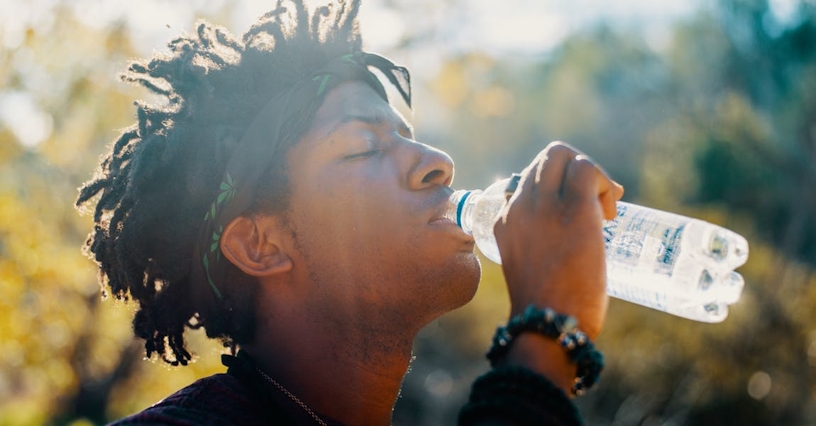
CBD water is exactly what it sounds like: water infused with CBD (cannabidiol), the non-intoxicating compound from the hemp plant. It won’t get you high. Most products contain a low dose, usually around 10 to 35 mg of CBD per serving.
Here’s the catch: CBD is fat-soluble, not water-soluble, so it doesn’t naturally mix into water. To get around this, most manufacturers use nanotechnology, breaking CBD down into microscopic droplets (10 to 100 nanometers) through a process called nano-emulsion. This dramatically increases the surface area of the CBD, letting it disperse evenly through water and absorb more easily in your body.
There are three main types of CBD extract used to make CBD water:
- Full-spectrum CBD includes all components of the hemp plant: CBD, trace amounts of THC (under 0.3%), other cannabinoids, terpenes, and nutrients.
- Broad-spectrum CBD includes everything in the hemp plant except THC.
- CBD isolate is pure CBD with all other plant components stripped away.
Does CBD Water Actually Work?
Short answer: the delivery method is legit, but manage your expectations on dose.
CBD on its own has poor bioavailability, meaning your body absorbs only a small fraction when you take it orally, because it doesn’t dissolve in water and gets broken down quickly by the liver. Nano-emulsion is designed to fix exactly that. Research shows water-soluble (nano) CBD absorbs faster and more completely than regular CBD oil, with one study finding it reached peak blood levels within 15 to 30 minutes versus up to an hour for oil, and another measuring bioavailability several times higher than lipid-based CBD.
So the technology works. The limitation is the low dose in most CBD waters (10 to 35 mg) and the fact that CBD degrades on the shelf (more on that below). You get a convenient, fast-absorbing format, but if you need a higher or more reliable dose, CBD tinctures or edibles may give you more for your money.
7 Benefits of CBD Water
Most CBD research is still early, and the FDA has not approved CBD to treat or prevent any condition (except one prescription epilepsy drug). The benefits below reflect what current studies suggest, not medical guarantees.
1. Antispasmodic (Muscle and Stomach Relief)
CBD is often used to ease muscle spasms, cramps, and stomach pain. Its interaction with the body’s endocannabinoid system is thought to help calm involuntary muscle activity.
2. Anxiolytic (Stress and Anxiety Relief)
“Anxiolytic” means anxiety-reducing. Several studies suggest CBD may help with stress and anxiety through the way it interacts with brain receptors, and it may lower cortisol levels by acting on the CB1 and CB2 cannabinoid receptors. One study found CBD significantly affected serotonin levels in mice, a possible mechanism for anxiety relief, though more human research is needed to confirm it.
3. Better Sleep
By helping ease anxiety and promote relaxation, CBD water may make it easier for some people to fall asleep and stay asleep. Sleep effects vary a lot from person to person.
4. Faster Absorption (High Bioavailability)
This is CBD water’s standout advantage. Thanks to nano-emulsion, the CBD is pre-dissolved into water-friendly droplets, so it tends to absorb faster and more efficiently than swallowing CBD oil, which your body has to work harder to break down. Faster absorption can mean quicker onset of effects.
5. Workout Recovery
CBD has long been linked to reduced inflammation, which is a big deal for athletes since muscle soreness is largely inflammation-driven. CBD water offers a double benefit here: potential anti-inflammatory support plus simple hydration to aid recovery.
6. Heart Health
There’s preliminary evidence that CBD may help lower blood pressure and support cardiovascular health. The research is early, so treat this as promising rather than proven.
7. Migraine Relief
The way CBD interacts with the CB1 and CB2 receptors may help relieve migraines. A 2018 study published in Frontiers in Pharmacology identified cannabinoids as a potential drug family for both acute and preventive migraine treatment.
CBD Drinks vs. Edibles
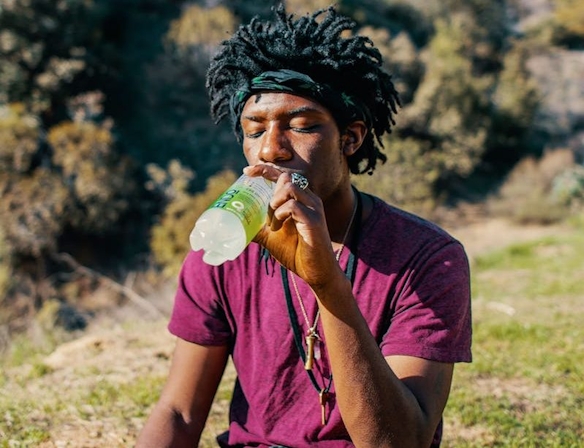
CBD and THC drinks and edibles can contain similar ingredients, but they behave differently in your body.
With drinks, you feel the effects sooner. Take a few sips, wait 15 to 20 minutes, and add more if needed. Effects typically become noticeable 20 to 30 minutes after drinking.
With edibles, it takes longer: usually 30 to 90 minutes to kick in, peaking around 2 to 3 hours later. Because drinks act faster, you’re less likely to accidentally overdo it, and single-serve cans make portioning easy. Want options? See our roundups of the best CBD drinks and cannabis-infused beverages.
Does Light and Air Degrade CBD?

Yes, and this is the biggest knock against CBD water. CBD is an unstable compound that needs careful storage to keep its benefits. Exposure to light and air causes it to degrade.
The problem: many CBD waters come in clear bottles and sit on store shelves for days or weeks, quietly losing potency. Studies show air exposure causes meaningful losses in cannabinoid content. In practice, the moment you open a bottle of CBD water, the small amount of CBD inside starts to break down. Look for opaque or sealed packaging and check for a recent production date.
How Much Does CBD Water Cost?
Photo by romsvetnik / Adobe Stock Photo
CBD water is pricey compared to other CBD products. A single 16-ounce (473 ml) serving runs about $4 to $7 before tax and delivery. Buying in bulk helps, but each bottle still tends to cost at least $3.
For comparison, CBD oil typically costs $35 to $40 for around 30 servings, which works out to under $2 per serving. So you’re paying a real premium for the convenience and fast absorption of water.
Risks and Side Effects
CBD is generally well tolerated, but keep a few things in mind:
- Talk to your doctor first if you take any medications or have a medical condition. CBD can interact with some drugs.
- Avoid mixing CBD with grapefruit-warning medications. CBD and grapefruit both affect the P-450 liver and gut enzymes that metabolize over a third of prescription drugs, so the combination can be risky.
- Skip it if you’re pregnant or breastfeeding.
For most healthy adults not on medication, there isn’t much to worry about, but “natural” doesn’t mean “risk-free.”
Where to Buy CBD Water (and What to Look For)
You’ll find CBD water at plenty of physical and online health shops. The single most important thing to check is a certificate of analysis (COA): proof that the product was tested by an independent, third-party lab. A COA verifies the CBD content and confirms the product is free of contaminants. Reputable brands make theirs easy to find. If a company won’t share lab results, walk away.
The Bottom Line
CBD water is a genuinely convenient, fast-absorbing way to take CBD, and the nano-emulsion technology behind it is real, not marketing fluff. The trade-offs are a low dose, a high price, and CBD that degrades once exposed to light and air. If convenience is your priority and you buy a fresh, lab-tested product, it can be worth it. If you want the most CBD for your dollar or a more reliable dose, oils, tinctures, or gummies are the better value.
Medical disclaimer: This article is for informational purposes only and is not medical advice. CBD research is still emerging, and the FDA has not approved CBD to diagnose, treat, cure, or prevent any disease (aside from one prescription epilepsy medication). CBD can interact with prescription drugs. Consult a healthcare professional before using CBD, especially if you take medication or are pregnant or nursing.
Frequently Asked Questions
Does CBD water actually work?
The nano-emulsion technology does improve how fast and efficiently your body absorbs CBD compared to oil. The main limitation is the low dose in most CBD waters (10 to 35 mg) and potency loss from light and air exposure. The delivery method is legitimate, but it’s not magic.
Will CBD water get you high?
No. CBD is non-intoxicating. CBD water contains little to no THC (full-spectrum versions have under 0.3%), so it won’t produce a high.
Is CBD water better than CBD oil?
It depends on your goal. CBD water absorbs faster and is more convenient, but it’s far more expensive per serving and comes in lower doses. CBD oil is cheaper, higher-dose, and more shelf-stable. Water wins on speed and convenience; oil wins on value.
How much CBD is in CBD water?
Most CBD waters contain roughly 10 to 35 mg of CBD per serving, which is a relatively low dose compared to tinctures or gummies.
How long does CBD water take to work?
Because it’s water-soluble, CBD water tends to absorb quickly, with effects often noticeable within 15 to 30 minutes, faster than traditional edibles or oils.
Does CBD water lose its potency?
Yes. CBD degrades when exposed to light and air, so CBD water in clear bottles that has sat on a shelf may contain less active CBD than the label claims. Choose fresh, well-packaged products.
Is it safe to drink CBD water every day?
For most healthy adults, CBD is well tolerated even in regular use. However, if you take prescription medication, are pregnant or breastfeeding, or have a medical condition, talk to your doctor first because of possible drug interactions.
Herb Recommended Products:
READ MORE