HERB
The Most Expensive Single Gram of Weed Ever Sold
How cannabis evolved from illicit substance to collectible commodity with prices exceeding precious metals

Claims of a “most expensive gram ever sold” are hard to verify because cannabis auctions and private transactions rarely publish auditable sales records. One of the best-documented high-price sales is an $11,000 luxury cannagar reportedly sold at NuWu Cannabis Marketplace in Las Vegas (December 2018)—a premium product measured in dozens of grams, not a single gram. This record-breaking transaction signals cannabis’s transformation from counterculture substance to luxury collectible, joining the ranks of rare wine, fine art, and limited-edition sneakers. Whether you’re exploring premium strains or simply curious about what drives such extreme valuations, understanding the ultra-premium cannabis market reveals fascinating insights about genetics, cultivation artistry, and consumer culture in the legal cannabis era.
Key Takeaways

- A documented high-price sale reached $11,000 for a luxury cannagar in 2018, establishing cannabis as a luxury collectible commodity
- Blue River Terps’ Strawnana Mochi Flan has been reported at $165/gram — among California’s most expensive legal cannabis extracts
- Ultra-premium flower strains can reach $28-$35 per gram at select dispensaries for varieties like Loud Dream, though typical regulated-market pricing is often in the single digits to teens
- Geographic location dramatically impacts pricing — older crowdsourced reports suggested Tokyo’s illegal market averaged $32.66/gram while Oregon’s mature legal market now sits at approximately $3.33/gram (December 2025)
- Solventless extraction commands premium pricing over flower through artisanal production methods and superior terpene preservation
- Rare genetics drive collectibility — Oracle strain seeds are reported to sell for $200 each in collector circles
- Cannabis pricing spans extreme ranges from budget to ultra-luxury, exceeding variation in most consumer goods categories
Unpacking the High Price Tag: What Makes Cannabis So Expensive?

MATTHEW sichkaruk
Premium cannabis pricing reflects a complex interplay of factors that extend far beyond simple THC percentages. The most expensive strains combine rare genetics, artisanal cultivation techniques, and strategic scarcity to justify prices that rival precious metals.
The Role of Rarity and Exclusivity in Cannabis Pricing
Genetic scarcity forms the foundation of ultra-premium pricing:
- Clone-only cultivars like Chemdog 91 remain highly sought after due to limited availability and verified lineage
- Landrace genetics from regions like Malawi, Panama, and the Hindu Kush command premiums for their genetic purity
- Limited seed releases create collector markets — rare seed packs from established breeders can command four-figure prices
- Verified authenticity becomes increasingly valuable as mislabeled genetics and clone/seed provenance disputes remain common in the market
Beyond Potency: Cultivation Techniques and Genetic Factors
While THC percentages grab headlines, true cannabis connoisseurs understand that potency represents just one piece of the quality puzzle. Factors driving premium pricing include:
- Terpene expression — responsible for aroma, flavor, and the entourage effect
- Cannabinoid diversity — full-spectrum profiles beyond just THC
- Bag appeal — visual characteristics including trichome coverage, color, and structure
- Cure quality — proper drying and curing that preserves volatile compounds
The World's Most Coveted Grams: Legendary Sales and Record Breakers

HERB
The ultra-premium cannabis market has produced some remarkable transactions that demonstrate the commodity’s evolution into collectible status.
Notable Instances of High-Value Cannabis Transactions
Documented High-Price Sales:
- The $11,000 luxury cannagar sold at NuWu Cannabis Marketplace in Las Vegas (December 2018)
- Blue River Terps’ extracts have been reported at $165 per gram in California dispensaries
Premium Retail Pricing:
- Loud Dream has been reported at $800-$1,000 per ounce ($28-$35/gram) at select luxury dispensaries, though sources indicate THC levels closer to 14-16% rather than the 40% sometimes claimed
- Oracle strain has been reported at $800+ per ounce with individual seeds priced at $200 each in collector circles
- White Fire OG averages $400-$600 per ounce ($14-$21/gram) at premium retailers
The Allure of Collectible Cannabis: A Rising Trend
Cannabis collecting parallels established luxury markets. Enthusiasts purchase rare genetics not for immediate consumption but for:
- Genetic preservation and breeding projects
- Investment in appreciating rare cultivars
- Cultivation bragging rights among connoisseur communities
- Supporting artisan growers and breeders
The Science Behind the Price: Terpenes, Cannabinoids, and Potency

Elsa Olofsson
Understanding the chemical compounds that drive perceived value helps explain why certain cannabis commands extreme prices while visually similar products sell for a fraction of the cost.
How Rare Cannabinoid Profiles Drive Up Value
Potency records continue to push boundaries:
- Godfather OG is often cited in cannabis media as reaching approximately 34% THC (depending on how labs report ‘total/activated THC’)
- Some isolates can test near 99% purity (often THCA/THC depending on product and reporting conventions)
- Many popular strains test in the teens to 20s; exceptional flower results can reach the 30s depending on lab methods
However, THC percentage alone doesn’t determine value. The strongest strains often derive their effects from complex cannabinoid-terpene interactions rather than pure potency.
The Impact of Terpene Expression on Premium Cannabis
Terpenes contribute significantly to the premium cannabis experience:
- Myrcene — earthy, herbal notes with sedating effects
- Limonene — citrus aromatics associated with elevated mood
- Caryophyllene — spicy, peppery profile with potential anti-inflammatory properties
- Pinene — fresh pine scent with reported alertness benefits
Premium extracts preserve enhanced terpene levels through proprietary refinement processes, directly justifying their elevated pricing.
Cultivation Excellence: The Masters Behind the Most Expensive Weed

Sensi Seeds
Premium cannabis requires master-level cultivation expertise that few operations can replicate consistently.
The Art of Craft Cannabis Cultivation
Top-tier growers employ sophisticated techniques:
- Screen of Green (SCROG) and Sea of Green (SOG) training techniques maximize canopy coverage and light penetration
- Mycorrhizal inoculants enhance root systems for improved nutrient uptake
- Strict environmental controls maintain 65-80°F temperatures as a common indoor guideline with specific humidity levels
- Extended vegetative cycles — some growers extend veg periods to develop robust plants capable of maximum production
Innovations in Growing Techniques for Premium Flower
Cutting-edge cultivation approaches continue evolving:
- Living soil methodologies that nurture complex microbial ecosystems
- Controlled environment agriculture with precise CO2 supplementation
- Organic practices avoiding synthetic inputs for cleaner final products
- Specialized harvesting windows based on trichome development stages
Understanding Weed Measurement: Grams, Ounces, and Their Value

Herb
Understanding cannabis measurements provides essential context for evaluating premium pricing claims.
Geographic Price Disparities
Location dramatically impacts cannabis pricing:
- Tokyo (illegal): Older crowdsourced indices (reported in 2018) suggested $32.66 per gram in some major Asian cities
- Seoul (illegal): Similar 2018 crowdsourced data showed $32.44 per gram
- Washington D.C.: Premium market pricing varies significantly
- Oregon: OLCC-reported figures cited in January 2026 coverage put the median flower price at about $3.33/gram (December 2025)
Cannabis pricing spans extreme ranges from budget to ultra-luxury, far exceeding variation in most consumer goods. This reflects the market’s continued evolution and segmentation, with mature legal markets like Oregon experiencing significant price compression due to oversupply dynamics.
The Economics of Extraction: Concentrates and Their Premium Pricing
LWBlog
Cannabis concentrates represent a category where artisanal production methods can multiply value exponentially.
Why Concentrates Command Higher Prices Per Gram
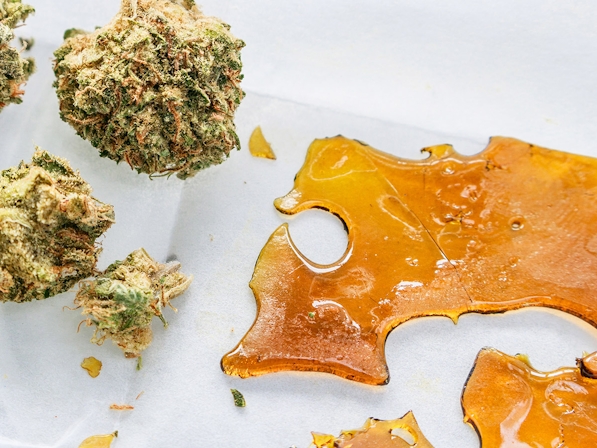
Blue River Terps’ “Strawnana Mochi Flan” live rosin has been reported at $165 per gram in California dispensaries. This solventless concentrate features:
- High THC content with exceptional terpene preservation
- Three-stage processing: fresh-frozen source material, ice water hash extraction, proprietary refinement
- Wet, custardy appearance that “melts like water”
- Enhanced terpene levels compared to standard concentrates
The Evolution of Extraction Techniques

Photo Courtesy of Leafbuyer
Premium extraction methods include:
- Live rosin — solventless mechanical separation preserving maximum terpenes
- Ice water hash — temperature-controlled extraction without chemicals
- Fresh-frozen processing — preserving volatile compounds from harvest
- Cold-cure finishing — specialized storage maintaining peak quality
Solventless concentrates often sell at a premium over flower, though the multiplier varies widely by market and product tier.
Beyond the Hype: Is the Most Expensive Gram Truly Worth It?
HERB
Critical evaluation of ultra-premium pricing requires separating genuine quality indicators from marketing narratives.
Evaluating the Return on Investment for Luxury Cannabis
Legitimate value drivers:
- Verified rare genetics with documented lineage
- Transparent lab testing showing cannabinoid and terpene profiles
- Artisanal production methods with limited output
- Consistent quality across batches
Red flags suggesting inflated pricing:
- Unverified THC percentage claims
- No genetic provenance documentation
- Mass production marketed as “craft”
- Premium pricing without corresponding quality metrics
Finding Your Personal 'Value Sweet Spot'
For most consumers, the commercial premium tier ($15-30/gram) offers the best balance of quality and accessibility. Exploring different dispensaries allows comparison shopping to identify products delivering genuine value.
Ultra-premium purchases ($50+/gram) make sense for:
- Special occasions and celebrations
- Cannabis connoisseurs seeking peak experiences
- Collectors interested in rare genetics
- Those supporting specific artisan producers
The Future of Ultra-Premium Cannabis: Trends to Watch

The luxury cannabis segment continues evolving as the industry matures and consumer sophistication increases.
Anticipating the Next Wave of High-Value Cannabis
Emerging trends shaping premium pricing:
- Genetic verification technology — DNA testing for strain authenticity
- Terroir recognition — regional appellations similar to wine
- Sustainable luxury — premium products with environmental credentials
- Personalized cannabinoid profiles — custom formulations based on individual responses
- Blockchain tracking — verified seed-to-sale provenance
Industry analysts note that cannabis connoisseurs increasingly value craftsmanship and uniqueness, signaling evolution toward a refined and sophisticated consumer base.
As federal regulations potentially shift and interstate commerce becomes possible, expect both consolidation of premium brands nationally and emergence of boutique regional producers emphasizing local terroir — paralleling the craft beer and artisan spirits evolution.
Why Herb Is Your Guide to Premium Cannabis

Nadi spasibenko
Herb provides trusted resources for exploring the premium cannabis landscape, from comprehensive strain guides to expert cannabis education. Whether you’re curious about loud weed and what makes certain cannabis stand out, or seeking to understand terpenes affect your high, Herb delivers the knowledge to make informed decisions in an increasingly sophisticated market.

Elsa Olofsson
Frequently Asked Questions
How can I verify if a premium strain is authentic?
Authentic premium strains typically come with documented lineage from reputable breeders, consistent lab testing results, and traceable cultivation history. Reputable dispensaries maintain relationships with verified suppliers and can provide batch-specific certificates of analysis. For clone-only strains, purchasing from established nurseries with documented mother plants offers the best authenticity assurance, though no standardized DNA verification system currently exists industry-wide.
What happens to cannabis prices when a state legalizes recreational use?
Legalization typically creates initial price spikes due to limited licensing and high demand, followed by gradual decreases as market competition increases. Oregon demonstrates this pattern, transitioning from prohibition premiums to current medians around $3.33/gram due to market oversupply. However, legalization simultaneously enables both budget commoditization AND luxury tier development — mature legal markets support $165/gram premium extracts alongside budget flower.
Can the average consumer access ultra-premium cannabis products?
Yes, though accessibility varies by location. Premium dispensaries in major markets stock ultra-luxury products including concentrates exceeding $100/gram. Many dispensaries offer smaller quantities (0.5g-1g) of premium products, allowing consumers to sample without full-price commitment. Some luxury brands also offer “entry-level” products at lower price points while maintaining quality standards.
How do cannabis auction prices compare to traditional luxury collectibles?
Documented high-price cannabis transactions (like the $11,000 cannagar) represent prices comparable to rare wine vintages, limited-edition spirits, and collectible art prints. However, cannabis differs fundamentally — it’s consumable with degrading potency, creating tension between preservation and intended use. This positions ultra-premium cannabis more like rare cigars or vintage wines: collectible for status and experience, but ultimately meant for consumption rather than permanent display.
Why do illegal markets sometimes have higher prices than legal markets?
Prohibition creates artificial scarcity and adds risk premiums throughout the supply chain. Older crowdsourced reports suggested Tokyo’s illegal market pricing around $32.66/gram, reflecting enforcement risk, import challenges, and limited supply — not quality. However, illegal markets rarely reach ultra-luxury pricing ($100+/gram) because they lack the quality verification, brand building, and retail experience that justify premium legal market pricing. Legalization enables both commoditization AND luxury tier development impossible under prohibition.
Herb Recommended Products:
READ MORE