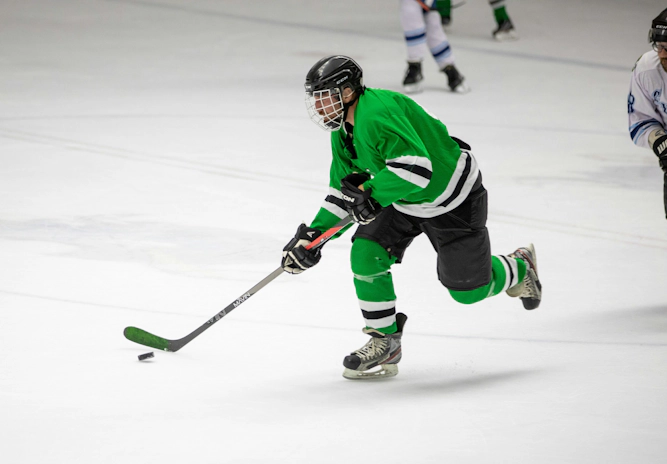
Gerhard Crous / Unsplash
List of Hockey Players Who Smoke Weed
From enforcers to elite stars: The players leading cannabis acceptance in hockey culture

Key Takeaways
- Public acknowledgment remains limited despite widespread use – While an anonymous NHL player estimates 60-70% of players use cannabis regularly, only a handful have spoken publicly due to career concerns
- Retired enforcers lead cannabis advocacy – Former fighters like Riley Cote and Darren McCarty have become vocal advocates, leveraging their post-career platforms to normalize cannabis for pain management and recovery
- Current players show cautious support – NHL superstar Connor McDavid has publicly endorsed CBD research, representing a generational shift in athlete attitudes toward cannabis wellness
- Cannabis entrepreneurship is growing – Several former players have launched cannabis businesses, from wellness brands to dispensary partnerships
- Policy evolution enables openness – The NHL’s non-punitive approach with a 150 ng/mL THC threshold creates space for players to advocate without fear of suspension
- Your recovery journey can be informed by athlete experiences – While you may not be facing 20-second shifts of physical combat, the pain management strategies of hockey players translate to everyday wellness needs
1. Riley Cote
Riley Cote, a retired Philadelphia Flyers enforcer, has become hockey’s leading advocate for cannabis since ending his career. He attributes his own transition from painkillers to cannabis as a pivotal wellness choice and now promotes the benefits for others in the sport. Cote’s efforts involve founding organizations, forming partnerships, and supporting research into cannabis as an athlete’s recovery tool.
- Estimated Usage: Cote estimates at least 50% of NHL players use cannabis regularly.
- Wellness Shift: He describes cannabis as a “gateway to wellness,” moving beyond painkillers, muscle relaxants, and sleeping pills.
- Athletes for CARE: Co-founded this group to advocate for research, education, and compassion on athlete health issues.
- Dispensary Partnership: Has worked closely with Trulieve dispensary.
- Performance Anxiety: Cote often discusses how cannabis helped him handle anxiety from his enforcer duties.
- Research Support: Actively backs NHL alumni association’s double-blind study into cannabis as a tool to help former players quit opioids.
2. Darren McCarty
Darren McCarty, legendary Detroit Red Wings player and four-time Stanley Cup winner, has publicly discussed his use of cannabis for health and recovery. He credits cannabis with helping him avoid more dangerous forms of substance abuse throughout and after his NHL career. McCarty’s openness encourages other athletes to replace risky behaviors with a normalized, health-focused routine.
- Open Use: Publicly shares that “a couple hits of weed at night is good for me. It’s legal, it’s natural.”
- Substance Abuse History: His cannabis advocacy comes from personal struggles with addiction.
- Wellness Alternative: Promotes cannabis as a safe alternative to common substance abuse in pro hockey.
- Public Statements: Helps destigmatize cannabis as part of recovery, not just as recreation.
3. Ryan VandenBussche
Ryan VandenBussche, a former NHL enforcer, has spoken bluntly about his reliance on cannabis for pain management during and after his career. He highlights the necessity for alternative therapies given the high physical toll faced by enforcers in hockey. VandenBussche’s advocacy illustrates cannabis’s vital role in his ongoing wellness after repeated sports injuries.
- Pain Management: Used cannabis to manage trauma from a physically punishing career.
- Addiction Avoidance: Reports cannabis provided relief without dangerous addiction risks tied to prescription drugs.
- Post-Career Wellness: Represents many ex-enforcers who now see cannabis as a wellness essential.
- Tailored Solution: Notes that the enforcer role brings special pain management challenges addressed by cannabis.
4. Mike Commodore
Mike Commodore, a former NHL defenseman and Stanley Cup champion, has proudly discussed his own cannabis use in multiple media settings. As a player known for his unique personality, Commodore breaks the mold, championing cannabis not just for pain but for a wide spectrum of wellness purposes. His advocacy demonstrates how cannabis is woven into the fabric of hockey culture among players of various types, not only fighters.
- Open Advocacy: Publicly shares his cannabis experiences in media appearances.
- Beyond Enforcers: Highlights acceptance among non-enforcer roles.
- Broader Narrative: Expands cannabis discussion beyond injury—into recreation and holistic wellness.
- Cultural Integration: Illustrates cannabis as part of everyday life for many hockey players.
5. Connor McDavid
Although Connor McDavid has not confirmed personal use, he has made the most consequential statements from any current NHL superstar regarding cannabis. McDavid directly supports research into CBD for pain relief, saying it’s irresponsible to ignore such options. His remarks signal a generational change in the league, as wellness and recovery tools evolve in athlete culture.
- Public Support: Advocates looking into cannabis: “You’d be stupid to at least not look into it…”
- Wellness Focus: Open to CBD as a safer alternative for pain management over routine painkillers.
- Cultural Influence: As the NHL’s most prominent player, his view impacts both teammates and fans.
- Younger Shift: Reflects the move among young players toward wellness, not just recreation.
6. Anonymous Current Players
A large portion of today’s NHL players reportedly use cannabis, particularly edibles, but choose anonymity due to lingering professional stigmas. Surveys indicate that these “silent majority” players view cannabis as an essential wellness tool rather than just a recreational option. Their behaviors show a preference for discretion, health-conscious choices, and risk avoidance.
- Survey Data: 38% of NHL players admitted to edible cannabis use during the season.
- Anonymity: Most remain silent publicly for career reasons.
- Usage Patterns: Prefer CBD-heavy edibles, delivered discreetly, and avoid traveling with cannabis across jurisdictions.
- Wellness Emphasis: Use cannabis for recovery and sleep aid, not for pre-game effects.
7. Emerging Female Voices
Within women’s hockey, public acknowledgment of cannabis use remains very limited, but cultural changes are gradually taking place. Policy differences exist between women’s leagues and the NHL; nonetheless, similar demands on recovery and wellness persist. As stigma continues to reduce and more female athletes share their stories, their advocacy is expected to become more visible.
- Underrepresentation: Few female players have spoken openly about cannabis.
- Structural Barriers: Women’s leagues have different policy frameworks and greater stigma.
- Cultural Shift: Increasing normalization of cannabis use in women’s sports is expected over time.
- Geographic Impact: Most NHL teams (90.3%) play in legal cannabis jurisdictions, setting a precedent for broader acceptance.
Cannabis Products and Consumption Patterns in Hockey
Preferred Formulations and Methods
Hockey players who use cannabis show distinct preferences in their consumption methods and product types:
- Edibles dominate: The Athletic survey shows a clear shift from smoking to edibles for lung health and discretion
- Specific ratios: Many players report using CBD-dominant edibles and other products with higher CBD and lower THC, though the player survey mainly highlights a preference for edibles over alcohol
- Timing protocols: Cannabis is used primarily for post-game recovery and sleep aid, not pre-game performance enhancement
- Delivery convenience: Players utilize delivery services that bring products directly to hotel rooms on road trips
- Travel avoidance: Players in the survey states they don’t travel with cannabis due to federal illegality
These consumption patterns reflect sophisticated understanding of cannabis as a wellness tool. Players prioritize products that provide therapeutic benefits without impairment, focusing on recovery and sleep quality rather than recreational effects. This approach aligns with Herb’s products catalog, which features categories like Edibles, Oils, and Topicals that match athlete preferences for non-smokable, precisely-dosed options.
Why Hockey Players Choose Cannabis
The reasons hockey players turn to cannabis are well-documented and scientifically supported:
- Pain management: The physical toll of hockey – with its fights, collisions, and repetitive trauma – creates chronic pain that cannabis addresses effectively
- Anti-inflammatory effects: Emerging research suggests cannabis and CBD may have beneficial effects as part of a pain management protocol, including possibly easing some concussion-related symptoms in certain patients
- Sleep quality: Late games, travel schedules, and adrenaline crashes create sleep challenges that cannabis helps address
- Anxiety management: Performance anxiety, particularly for enforcers with fight responsibilities, is mitigated by cannabis use
- Opioid alternatives: Players consistently report avoiding dangerous prescription drug dependencies through cannabis use
Policy Evolution Enabling Openness
The NHL’s cannabis policy represents the most progressive approach among major professional sports leagues. Key policy features include:
- Non-punitive approach: Positive tests only trigger referral to treatment programs, not suspensions
- High threshold: Anti-doping bodies such as WADA now use a 150 ng/mL THC metabolite threshold (raised from 15 ng/mL in 2013), which primarily targets in-competition intoxication and effectively allows some recreational use with careful timing
- Non-suspension approach: The NHL does not suspend players for marijuana positives; elevated carboxy-THC triggers referral to the SABH program rather than suspension
- Geographic reality: As of 2019, with 28 of 31 teams in legal jurisdictions, the league cannot enforce prohibition
This policy framework creates the conditions for players to eventually speak publicly about their cannabis use. The league’s Deputy Commissioner Bill Daly has confirmed they “extensively discussed” marijuana legalization and will “react as we deem necessary and appropriate given the totality of circumstances.”
The Future of Cannabis in Hockey
As cannabis normalization continues, expect to see:
- More current players speaking publicly: As stigma decreases and policies evolve, current players will feel safer discussing their cannabis use
- Increased athlete entrepreneurship: More former players will launch cannabis businesses, following Riley Cote’s lead
- Women’s hockey advocacy: Female players will begin breaking the silence around cannabis use in their leagues
- Scientific validation: Ongoing research, including the NHL alumni study with 100 former Toronto-area players, will provide more evidence for cannabis benefits
- Product innovation: Cannabis companies will develop athlete-specific formulations based on hockey players’ unique needs
For cannabis consumers interested in following athlete wellness strategies, Herb’s dispensary directory can help you find legal access points in your area, while our strain guides provide information on cultivars that match the CBD-dominant profiles preferred by hockey players. Stay informed about these evolving trends by subscribing to the Herb Insider newsletter.
Frequently Asked Questions
Which NHL players have publicly said they use cannabis?
Riley Cote, Darren McCarty, Ryan VandenBussche, and Mike Commodore are retired NHL players who have publicly acknowledged cannabis use. Current superstar Connor McDavid has endorsed CBD research without explicitly confirming personal use. While individual current players remain largely anonymous, surveys indicate that a significant percentage of active NHL players use cannabis for recovery and wellness purposes.
Is cannabis still banned in the NHL?
The NHL does not suspend players for marijuana positives; elevated carboxy-THC levels lead to referral to the SABH program rather than suspension. The 150 ng/mL THC threshold is used to determine a positive result, and the league’s approach is non-punitive, focusing on education and treatment. This progressive policy makes the NHL the most lenient major professional sports league regarding cannabis use.
Do hockey players use CBD or THC for recovery?
Players prefer products with higher CBD and lower THC ratios. The Athletic’s 2025 survey found 38% of NHL players use edible cannabis during the season, primarily choosing these CBD-dominant formulations for their anti-inflammatory and recovery benefits. This preference reflects players’ focus on therapeutic effects without impairment, allowing them to maintain performance while managing pain and promoting recovery.
What cannabis products do athletes prefer?
Hockey players favor edibles over smoking for lung health, with precise dosing and higher CBD ratios. They also use topicals for localized pain relief and oils for sleep support. Players order products through delivery services directly to hotel rooms and avoid traveling with cannabis due to federal illegality. This consumption pattern prioritizes discretion, consistency, and therapeutic benefits while minimizing risks associated with smoking or legal complications from interstate travel.
How do international hockey leagues treat cannabis differently than the NHL?
International leagues generally have stricter policies than the NHL. European leagues like the KHL, Liiga, and SHL follow IIHF anti-doping codes that may have lower THC thresholds. However, the NHL’s progressive approach is influencing global policy evolution, particularly in countries where cannabis has been legalized. As more jurisdictions adopt legal cannabis frameworks and research continues to validate therapeutic benefits, international hockey organizations may gradually move toward more lenient policies similar to the NHL’s non-punitive approach.
Herb Recommended Products:
READ MORE