
Herb
Does Weed Make You Harder or Easier to Manipulate?
The research on cannabis and manipulation is more revealing than you’d expect. Here’s what the science actually says.

Does weed affect judgment? The short answer is yes, and the longer answer gets more interesting the deeper you go.
Whether you’re here because of a late-night TikTok-induced rabbit hole or genuine curiosity about how cannabis interacts with the brain’s decision-making machinery, the research points in a pretty consistent direction.
Being high doesn’t make you sharper or harder to fool. It does the opposite, and the studies explain why in ways worth understanding.
Does Weed Affect Your Judgment and Make You Easier to Manipulate?

Herb
Before getting into the research, it’s worth being clear about what “manipulation” actually means in this context. According to the Cambridge Dictionary, manipulation involves controlling or influencing someone in a clever or unfair way, often without their awareness. The key elements are reduced critical thinking and reduced awareness of being influenced. Both of those happen to be things cannabis directly affects.
Across multiple research areas—suggestibility, executive function, memory, decision-making, and social threat detection—the evidence consistently suggests that cannabis makes you more susceptible to outside influence, not less.
Here’s how each of those pieces fits together.
Cannabis and Suggestibility: The Hypnosis Study
One of the most direct studies on this question comes from a 1989 clinical trial looking at cannabis and primary suggestibility, which is the tendency to accept things without critical analysis. Researchers tested 35 participants for suggestibility using hypnosis, once while sober and once while intoxicated with cannabis.
The result: participants were significantly more likely to be successfully hypnotized when they were high than when they weren’t.
Hypnosis is essentially a structured test of how easily someone’s critical defenses can be bypassed. Higher suggestibility under cannabis means the plant was actively reducing participants’ ability to evaluate and resist incoming influence. That’s a meaningful finding when the question is “Does weed make you more suggestible?” And the answer here is a pretty clear yes.
THC and the Brain’s Threat Detection System
One of the more counterintuitive findings in this area involves how THC affects the brain’s ability to detect social threat. A study published in Psychopharmacology found that THC significantly reduced amygdala reactivity to social signals of threat, specifically things like fearful or angry human faces.
The amygdala is the brain’s fear and threat-detection center. It’s what triggers your instinct that something feels off about a person or situation. When the amygdala is less reactive, you become less attuned to social cues that would normally signal danger or deception.
This finding is often cited as support for THC’s anti-anxiety effects, which is legitimate. Lower amygdala reactivity means reduced social anxiety. But the same mechanism that blunts anxiety also blunts your ability to detect when someone is behaving in a way that should put you on guard. Does weed affect decision-making through this pathway? It appears to be by likely reducing access to the emotional data that normally informs social judgment.

jacki drexler
Cannabis, Memory, and Executive Function
Does weed cloud your judgment in ways beyond the immediate high? A comprehensive 2019 review looked at marijuana’s impact on cognition, brain structure, and function and found strong, consistent evidence for two main effects:
Memory impairment:
- Cannabis negatively affects the ability to learn new information
- Encoding and recalling previously learned information both suffer
- Short-term memory disruption is one of the most well-documented effects of intoxication
Executive function impairment:
- Executive function covers a broad range of higher-order cognitive skills: planning, reasoning, problem-solving, self-monitoring, complex attention, and decision-making
- These are precisely the skills that help a person recognize manipulation and respond to it critically
- The review found meaningful negative impacts across these functions with cannabis use
The same review also noted that increased THC exposure is associated with a greater risk of psychosis, a mental state characterized by loss of touch with reality. Someone experiencing even mild psychotic symptoms (distorted perception, confused thinking) is significantly more vulnerable to having their beliefs and actions shaped by others.
When you combine impaired memory with reduced executive function, you get someone who is less able to track inconsistencies in what they’re being told, less able to plan a response, and less able to catch themselves being steered. Does weed impair your judgement in this way? The research says yes, particularly at higher doses and with regular use.
Chronic Use and Decision-Making: The Iowa Gambling Task
For people who use cannabis regularly, the picture gets more nuanced. A study examining chronic marijuana users used the Iowa Gambling Task, a well-validated measure of real-world decision-making where participants must learn winning strategies through wins and losses over time.
The findings:
- Chronic cannabis users showed reduced brain responsiveness to negative consequences
- The brain areas most affected were those tied to error detection and outcome evaluation
- Over time, users became less sensitive to feedback from bad decisions
So, are people high on marijuana easy to manipulate? For chronic users specifically, the reduced sensitivity to negative outcomes could mean that patterns of manipulation are less likely to register as something to avoid. Bad decisions feel less bad. Red flags feel less red.
This isn’t about intelligence. It’s about a specific feedback system in the brain becoming less responsive, which makes course-correcting harder.
So, Does Weed Make You Easier to Manipulate?
Putting it together, the research across suggestibility, social threat detection, executive function, memory, and decision-making feedback all point in the same direction. Does weed cloud your judgment? Yes. Does weed impair your judgment in ways that increase vulnerability to manipulation? The evidence suggests it very well might, through at least four distinct mechanisms:
- Higher suggestibility (reduced critical analysis of incoming information)
- Impaired executive function (reduced ability to plan, reason, and self-monitor)
- Reduced threat detection (less sensitivity to social cues that signal danger or deception)
- Diminished response to negative consequences (makes poor decisions feel less alarming)
None of this means cannabis users are inherently naive or that every high person is a manipulation target. Context matters enormously, as does dose, individual tolerance, and the setting. If you choose to use cannabis, it’s safest to do so around trusted, supportive people—the kind of environment where manipulation or pressure isn’t even plausible.

anthony tran
Frequently Asked Questions
Does weed affect decision-making?
Yes. Research consistently shows that cannabis impairs executive function, which includes decision-making as a core component. A study using the Iowa Gambling Task found that chronic cannabis users showed reduced brain responsiveness to negative consequences, making them less likely to adjust their behavior in response to bad outcomes. Acute intoxication also disrupts complex attention and reasoning in the short term.
Does weed make you more suggestible?
The evidence suggests it does. A 1989 clinical trial found that participants were significantly more likely to be successfully hypnotized while intoxicated with cannabis than when sober. Higher suggestibility means reduced ability to critically evaluate and resist incoming influence, which is the core mechanism behind manipulation.
Are people high on marijuana easy to manipulate?
Based on existing research, yes, more so than when sober. Cannabis reduces critical thinking, impairs memory, blunts social threat detection, and increases suggestibility. Each of those individually makes manipulation easier. Together, they represent a meaningful shift in vulnerability. The effect is likely strongest at higher doses and with regular, long-term use.
Key Takeaways
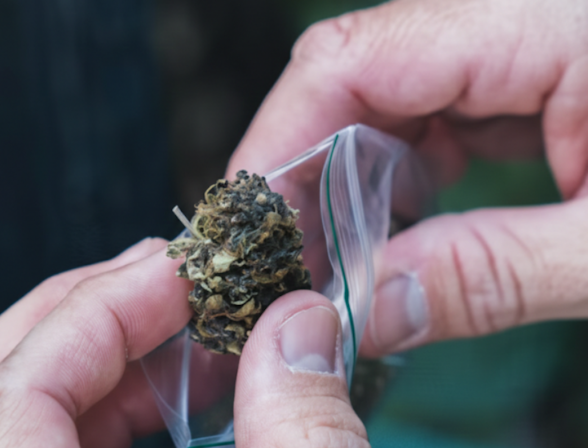
- Does weed affect your judgement? Yes, through multiple mechanisms: impaired executive function, reduced memory, higher suggestibility, and reduced social threat detection
- A 1989 hypnosis study found cannabis users were significantly more susceptible to hypnosis while high, directly demonstrating increased suggestibility
- THC reduces amygdala reactivity to social threat signals, meaning users are less likely to pick up on cues that something or someone is dangerous or deceptive
- Chronic cannabis users show reduced brain responsiveness to negative consequences, making them less likely to course-correct after poor decisions
- The combined effect of these impairments shifts the balance toward being easier to manipulate, not harder
- Dose, frequency of use, and context all play a role, but the general direction of the research is consistent: cannabis increases vulnerability to outside influence when intoxicated
The Herb Community

Herb
For more than a decade, Herb has been a gathering place for people who love, use, and are simply curious about cannabis. What started as a small corner of the internet has grown into a community where millions come to learn, share, and stay connected to the culture.
Here’s what you can tap into at Herb:
- Learning hub and guides that break things down clearly, from growing weed outdoors to understanding how terpenes impact your high
- News hub that spotlights the latest cannabis culture and policy shifts
- Dispensary directory to help you find licensed shops in your local area
- Monthly strain picks, featuring rotating Indica, Sativa, and Hybrid favorites
- Deals page, updated monthly with the best cannabis discounts available online
Stay connected with the Herb community by subscribing to our newsletter, following us on Instagram, and X for the latest in cannabis lifestyle and culture.
Herb Recommended Products:
READ MORE