
surface
CBG vs CBD: Which Cannabinoid Is Right for Focus and Productivity?
Two non-intoxicating cannabinoids, two different mechanisms, one question: which one actually helps you get things done?

CBG vs CBD is one of the more genuinely interesting comparisons in the cannabinoid space right now, especially for people who want to support focus and productivity without getting high.
Both are non-intoxicating. Both are widely available. Both have growing bodies of research behind them. But they work differently, and if you’re choosing between them for a specific use case—staying locked in, managing stress, keeping mental fog at bay—the distinction matters.
This article breaks down what the research currently suggests, with honesty about where that research is still thin.
This article is for informational purposes only and does not constitute medical advice. Consult a healthcare professional before using cannabinoids for any health-related purpose.
Key Takeaways
cosmin ursea
- CBG and CBD are both non-intoxicating cannabinoids found in hemp and cannabis plants, but they interact with the body and brain through different mechanisms
- CBG shows early direct evidence for focus-adjacent benefits, particularly in reducing anxiety, enhancing verbal memory, and demonstrating neuroprotective effects in preclinical research
- CBD’s focus benefits appear more indirect, working primarily through anxiety reduction and improvements in brain connectivity—especially in brain regions linked to executive control and emotional processing
- No peer-reviewed studies directly assess either CBG or CBD on sustained attention alone; the research available focuses on contributing factors like stress, anxiety, and working memory
- Both cannabinoids may support focus indirectly, and they may work better together than apart; the choice between them depends more on your specific challenge than a definitive winner-take-all answer
- Human research on CBG is still limited—CBD has a significantly larger evidence base, and more studies on both are needed for conclusive results
CBG vs. CBD: What’s the Main Difference?
herb
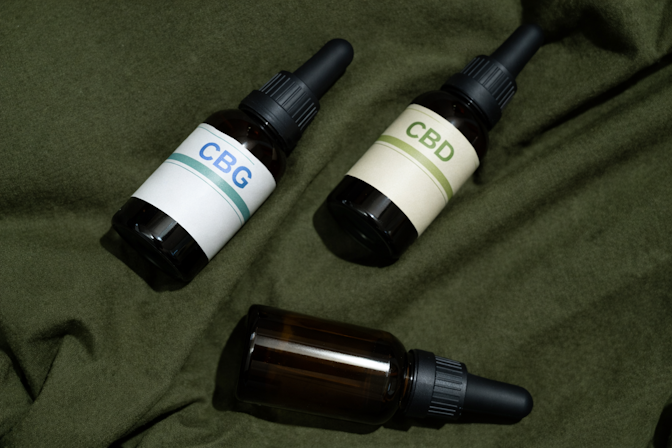
CBG (cannabigerol) and CBD (cannabidiol) are both non-intoxicating cannabinoids found in hemp and cannabis, but they differ in how they interact with the body. CBD primarily works by modulating the endocannabinoid system indirectly and is well-established for its anti-anxiety and anti-inflammatory properties. CBG interacts more directly with cannabinoid receptors and has shown early evidence of effects on mood, stress, and memory. Neither will get you high.
In terms of CBG vs CBD effects in everyday use, CBD is typically used more often for sleep, general anxiety, pain, and inflammation—the use cases with the most research behind them. CBG is newer to the mainstream, with a reputation for being more energizing and focus-oriented, though that reputation has outpaced the published science so far.
The difference between CBD and CBG isn’t just chemical—it’s also about where the research stands. CBD has decades of study behind it. CBG is in its research era. That context matters for any CBG vs CBD difference conversation, especially when the claims get specific.
CBG vs CBD for Focus and Productivity: Which One Is Better?

herb
Based on current research, CBG shows more direct early evidence for focus-related benefits, particularly in reducing anxiety and enhancing verbal memory, while CBD’s focus benefits appear more indirect, working through anxiety reduction and improved brain connectivity across regions tied to executive control. That said, CBG research in humans is still limited, and neither cannabinoid has been studied directly for sustained attention in a clinical setting. The insights below are drawn from peer-reviewed studies examining how CBG and CBD affect cognitive function, stress, anxiety, and memory—all factors that directly impact focus and productivity.
CBG vs CBD: Effects on Direct Focus and Sustaining Attention
There are no published studies that directly assess CBG or CBD’s effect on sustained attention as an isolated outcome. What exists instead is a collection of studies on the building blocks of focus: anxiety, stress, and working memory. The picture those studies paint is useful, even if incomplete.
For CBG specifically, a 2024 human clinical trial published in PLOS One is the most directly relevant piece of evidence available. 34 healthy adults completed two sessions, one week apart, receiving either 20mg of CBG tincture or a placebo. Participants reported that CBG significantly reduced anxiety and stress compared to placebo. Importantly, CBG also enhanced verbal memory (the ability to encode and recall verbal information) with no evidence of cognitive impairment or intoxication. That combination of reduced anxiety and improved memory, without any sedation or cognitive slowdown, can benefit focus.
For CBD, a 2023 study in the Journal of Psychopharmacology assessed CBD’s effect on cognitive function in patients with cannabis use disorder—a group with documented cognitive impairment from chronic cannabis use. Over 4 weeks, participants received daily oral CBD doses ranging from 200 to 800mg. At the highest dose (800mg), CBD enhanced working memory manipulation—the cognitive process of actively holding and updating short-term information. Lower doses didn’t produce that effect, and CBD did not improve delayed verbal memory overall. This suggests that CBD’s cognitive benefits may be dose-dependent and more selective than CBG’s effects appeared to be in the earlier trial.
cosmin ursea
CBG vs CBD: Effects on Stress, Anxiety, and Mental Fog
Anxiety and chronic stress are two of the most reliable focus killers. Both CBG and CBD appear to address them, though through different mechanisms and with different levels of evidence.
The CBG human trial referenced above found significant stress and anxiety reductions from a single 20mg dose. That’s a relatively low dose producing measurable effects in a controlled setting, which is encouraging. It’s worth noting this was a small study (34 participants), and the effects need replication at larger scales before drawing firm conclusions.
CBD’s anti-anxiety evidence base is a lot larger. A 2021 meta-analysis published in Frontiers in Pharmacology examined 17 neuroimaging studies on short-term CBD effects and found that CBD strengthened communication between brain regions more than a placebo, both at rest and during cognitive tasks. Specifically, it reduced activity in the amygdala (the brain’s primary fear and emotional reactivity center), which is directly linked to anxiety reduction. In people with social anxiety, CBD reduces amygdala activation and blood flow, which correlates with reduced subjective anxiety. The downstream effect on focus: clearing anxiety-driven mental fog and freeing up cognitive resources for actual work.
The CBD vs CBG differences here are meaningful. CBD has broader and more consistent evidence for anxiety reduction. CBG has fewer studies but shows a direct verbal memory enhancement that CBD hasn’t demonstrated at comparable doses.

herb
CBG vs CBD: Effects on Memory
Memory and focus are closely linked. Working memory specifically allows you to hold task-relevant information in mind while doing something, which is foundational to sustained attention.
The 2023 CBD study found working memory manipulation benefits at 800mg—a high dose that would be expensive and impractical for daily use. The CBG trial found verbal memory enhancement at just 20mg with no impairment.
A 2025 preclinical study published in Neurochemistry International found that CBG treatment reduced memory deficits, neuronal loss in the hippocampus, and neurodegeneration in mice subjected to restricted blood flow. CBG also enhanced neuronal plasticity—the brain’s ability to reorganize connections in response to learning and experience. Preclinical (animal) research doesn’t translate directly to human outcomes, but hippocampal memory protection is a meaningful signal worth tracking.
For the most relevant upcoming data on CBG and attention specifically, a registered human clinical trial (NCT06115603) is currently exploring CBG treatment in people diagnosed with ADHD. Results haven’t been published yet, but this will be the most direct human evidence on CBG and attention when it lands. A 2017 review in the European Journal of Neuroscience also noted that adults with ADHD may represent a specific group who experience symptom reduction from cannabinoids without cognitive impairment, adding context to why the ADHD trial matters.
How to Choose Between CBG and CBD for Focus

thought
The science doesn’t yet support calling either CBG or CBD definitively better for focus. What the research suggests is that both may support focus indirectly. CBD helps with anxiety and emotional regulation, and CBG delivers a combination of anxiety reduction and possible direct memory enhancement. Your choice between them should come down to what’s actually getting in the way of your focus.
Choose CBG if:
- Your main challenge is anxiety or stress that disrupts your ability to concentrate
- You want potential memory-support benefits alongside focus support
- You want a non-intoxicating option that current evidence suggests won’t cause cognitive slowdown
- You’re interested in early-stage research and willing to explore a less-studied cannabinoid
Choose CBD if:
- Your focus issues are tied primarily to anxiety, particularly social or generalized anxiety
- You want a cannabinoid with a larger, more established evidence base
- You’re dealing with tension, inflammation, or sleep problems that secondarily affect your ability to focus
- You prefer a more predictable, widely studied option with more dosing data available
Consider both if:
- Your focus challenges involve multiple factors (anxiety + poor sleep + mental fog, for example)
- You’re exploring a full-spectrum or broad-spectrum hemp product that includes both cannabinoids naturally

fernando hernandez
CBG vs CBD: Does Product Type Matter?
Yes, significantly. The same cannabinoid can produce different effects depending on how you take it.
Oils (CBG oil vs CBD oil): The most common and flexible format for both. Sublingual dosing (under the tongue) produces a faster onset than edibles, typically 15-45 minutes, and allows for more precise dose control. CBG oil vs CBD oil comparisons often come down to availability and price. CBG is generally more expensive because it’s present in lower concentrations in the hemp plant and costs more to extract.
Flower and vapes: Fastest onset, effects from inhaled CBG or CBD can be felt within minutes. Useful if you need fast-acting support before a high-focus task. Both CBG and CBD vapes are available in hemp-derived form. Inhalation generally produces shorter-duration effects than oils or edibles, so you’d need to redose more frequently for extended focus.
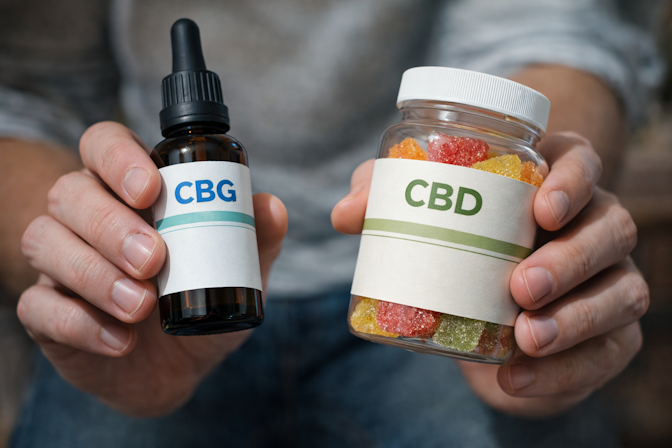
Edibles (CBG vs CBD gummies): Slowest onset, typically 45 minutes to 2 hours, but longest duration. CBG vs CBD gummies are a good option if you want a consistent background effect across a full workday rather than a sharp spike and drop. The difference between CBG and CBD gummies largely comes down to the cannabinoid itself; onset and duration are similar for both.
Topicals: Not relevant for systemic cognitive effects. Topical cannabinoids are absorbed locally and don’t reach the bloodstream in meaningful concentrations. If focus is your goal, topicals won’t move the needle.
For focus and productivity specifically, oils and flower/vapes give you the most control over timing and dosing. Edibles are the better pick if you want sustained, all-day support without thinking about redosing.
herb
Frequently Asked Questions
What is the difference between CBG and CBD?
CBG (cannabigerol) and CBD (cannabidiol) are both non-intoxicating hemp cannabinoids, but they interact with the body differently. CBD primarily modulates the endocannabinoid system indirectly and is best-known for anxiety relief, sleep support, and anti-inflammatory effects. CBG is suggested to interact more directly with cannabinoid receptors and shows early evidence of benefits for mood, stress, and memory. The CBD vs CBG differences come down to mechanism, use case, and the amount of research currently available—CBD has a significantly larger human evidence base.
Is CBG or CBD better for focus?
Based on current research, neither is definitively better. CBG shows more direct early evidence for focus-adjacent benefits, including verbal memory enhancement and anxiety reduction without cognitive impairment. CBD supports focus more indirectly, primarily through anxiety reduction and improved connectivity in brain regions tied to executive control. The right choice depends on what’s specifically interfering with your focus. More human research, including the ongoing ADHD clinical trial of CBG, is needed before drawing firm conclusions.
Can I take CBG and CBD together?
Yes, and many full-spectrum and broad-spectrum hemp products contain both. There’s no established safety concern with combining them. Some users and researchers suggest they may work synergistically, similar to the broader entourage effect observed with whole-plant cannabis products. If you’re trying to address both anxiety and memory-related focus issues, a product containing both cannabinoids may cover more ground than either alone.
Does CBG get you high?
No. CBG is non-intoxicating. The 2024 clinical trial found no evidence of subjective drug effects or motor or cognitive impairments at 20mg. CBG does not bind to cannabinoid receptors in the same way as THC and does not produce psychoactive effects.
How long does it take for CBG to work?
Onset depends on the delivery method. Sublingual CBG oil typically takes 15-45 minutes. Inhaled CBG (flower or vapes) can take effect within minutes. CBG edibles and gummies typically take 45 minutes to 2 hours. The 2024 human trial used a sublingual tincture and measured effects within a single session, suggesting onset within a similar sublingual window.
How long does it take for CBD to work?
The same general timeline applies as above with CBG. CBD oil sublingually: 15-45 minutes. Inhaled: minutes. Edibles: 45 minutes to 2 hours. The duration of effects is longer with edibles and shorter with inhaled forms.
Does CBG or CBD show up on a drug test?
CBD and CBG themselves are not what drug tests screen for. Standard drug tests screen for THC metabolites. If you’re using a full-spectrum product that contains trace THC alongside CBG or CBD, there is a risk of a positive result depending on dose and frequency. Broad-spectrum products (THC removed) and pure isolates carry a lower risk, but no hemp product can be guaranteed THC-free without recent third-party lab testing. If drug testing is a concern, check the COA (Certificate of Analysis) for any product you’re using.
The Bottom Line on Using CBG vs CBD for Focus

microsoft
The CBG vs CBD debate for focus doesn’t have a clean winner yet, and anyone telling you otherwise is ahead of the science. What the current research does support is this: CBG shows early, direct evidence for anxiety reduction and verbal memory enhancement without cognitive impairment, which is a genuinely interesting profile for focus-related use. CBD supports focus more indirectly through well-established anxiety reduction, improved brain connectivity, and possible working memory benefits at higher doses.
The CBG vs CBD difference that matters most for this use case is the mechanism. If anxiety and mental fog are your primary focus blockers, both are relevant. If you want direct memory support alongside anxiety relief, CBG has the more specific early evidence. If you want the more studied option with more predictable dosing data, CBD is the safer bet.
More human research is coming—particularly from the ongoing CBG and ADHD clinical trial, which will give the clearest picture yet of what CBG actually does for attention. Until then, both cannabinoids are worth exploring, ideally starting low, tracking your response, and using third-party tested products where the COA confirms what’s actually in what you’re taking.
The Herb Community

microsoft
For more than a decade, Herb has been a gathering place for people who love, use, and are simply curious about cannabis. What started as a small corner of the internet has grown into a community where millions come to learn, share, and stay connected to cannabis culture.
Here’s what you can tap into at Herb:
- Learning hub and guides that break things down clearly, from growing weed outdoors to understanding how terpenes impact your high
- News hub that spotlights the latest cannabis culture and policy shifts
- Dispensary directory to help you find licensed shops in your local area
- Monthly strain picks, featuring rotating Indica, Sativa, and Hybrid favorites
- Deals page, updated monthly with the best cannabis discounts available online
Stay connected with the Herb community by subscribing to our newsletter, following us on Instagram, and X for the latest in cannabis lifestyle and culture.
Herb Recommended Products:
READ MORE