This article contains sponsored content. Some of the products featured are part of paid partnerships. This page explains how our process works.
Herb
Best Ball Vapes and How to Use Them (2026 Guide)
Ball vapes have completely changed what it means to get a proper hit from dry herb. Here’s everything you need to know before you buy one.

If you’ve been hearing about ball vape dry herb setups and wondering what all the hype is about, you’re not late—you’re just in time.
Ball vapes have gone from niche enthusiast gear to one of the most talked-about categories in vaporizers, and for good reason. The vapor quality is in a different league. The efficiency is ridiculous. And once you try one, your old vape starts collecting dust.
This guide breaks down how they work, what makes a good one, and which ball vapes are actually worth your money in 2026.
Key Takeaways

Dynavap
- Ball vapes use heated ruby, quartz, or stainless steel balls to convert heat into vapor through convection—producing denser, smoother, more flavorful hits than most standard dry herb vapes
- They come in two main categories (injector and diffuser) and two power types (wired and wireless), each with different tradeoffs
- The best ball vapes for most people combine both convection and conduction heating for maximum extraction and flavor
- Budget options like the BZero Bundle start around $275; premium setups run $300+
- Ball vapes have a learning curve, but once dialed in, they’re considered endgame by most serious dry herb enthusiasts
- They’re not particularly portable, but for home use, very few setups can compete
What Is a Ball Vape for Dry Herb Vaping?
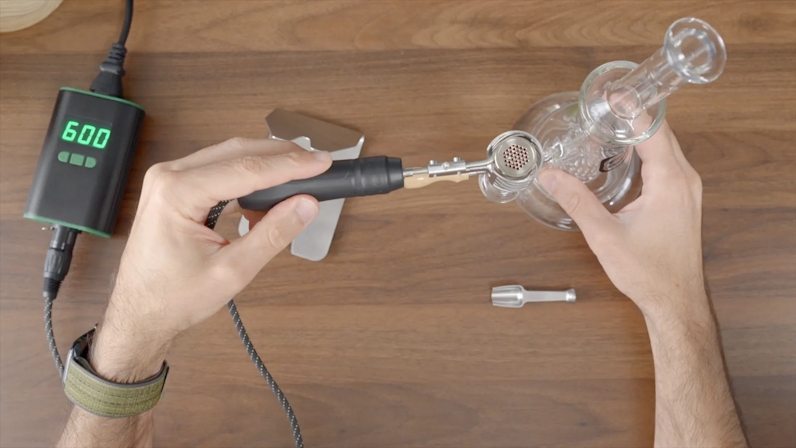
A ball vape for dry herb is a type of vaporizer that uses a chamber packed with small balls—typically made of ruby (corundum), quartz, or stainless steel—as a thermal mass. The balls absorb and store heat from a coil, then transfer that heat to the air as it passes through the chamber and into your herb. The result is dense, convection-driven vapor that’s far more consistent and flavorful than what most standard vapes produce.
To compare: a standard dry herb vape heats the herb directly, either via conduction (contact with a hot surface) or convection (hot air passing through). Ball vapes are primarily convection, but because the balls themselves hold so much heat, they also introduce a radiant/conduction element—especially when heat-soaked. This is why reviewers consistently point out that the best ball vape setups combine convection and conduction for the deepest extraction and thickest, most flavorful clouds.
The thermal media matters, too. Ruby balls are the most popular for their heat retention and purity. Quartz balls run a bit cooler and are often favored for flavor-forward sessions. Stainless steel is common in budget housings and gets the job done, but doesn’t retain heat as evenly.
How Ball Vapes Work
- The coil heats up, regulated by a PID (temperature controller) that keeps things steady
- The balls inside the housing absorb that heat and store it as thermal mass
- You load your herb into the bowl and attach it to the heater housing
- Air is drawn through the heated ball chamber when you inhale
- That superheated air passes through your herb, vaporizing it via convection
- The vapor travels through the bowl and into your water piece or whip
One nuance: wired ball vapes stay hot the whole time, so you pull whenever you’re ready. Wireless ball vapes need a brief heat soak between hits—usually 30–60 seconds on the coil—before you draw. This affects the rhythm of your session more than the quality of the hit.

Vape Guy
Types of Ball Vapes
There are two primary categories based on how the ball chamber interacts with the bowl:
- Injector ball vapes push heated air down through the balls and into the bowl from above. This is the most common design, and it’s what most budget and mid-range options use.
- Diffuser ball vapes diffuse the airflow more evenly across the ball mass, typically producing a smoother, more consistent draw. They tend to run a little pricier.
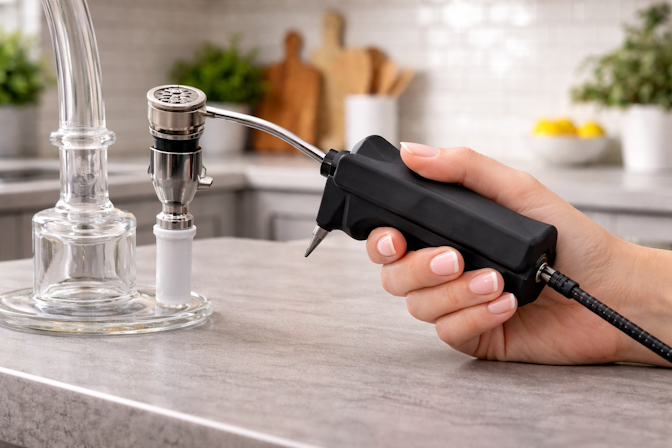
On the power side, wired ball vapes stay plugged into a PID controller and coil at all times, meaning they’re always at temp and ready to rip—great for heavy or social sessions. Wireless ball vapes heat via a coil and then detach for use, which is cleaner on your table and slightly more flexible, but requires managing heat between hits.
Style-wise, most ball vapes are stationary desktop setups used with a water piece (bong or bubbler) or a whip. Truly portable ball vapes are rare—the DynaVap UniDyn being a notable exception, using a torch instead of an electric coil.
Best Ball Vapes in 2026 (and How to Use Each One)
The best ball vapes on the market right now cover a wide range of budgets, styles, and use cases. Here’s the breakdown.
Best Ball Vape for Beginners: Cloud Connoisseur Omega

Cloud Connoisseur Omega
The Omega is one of the most approachable entry points into ball vape weed territory. It’s a modular stainless steel housing—compact, simple, and built to work with the widest range of coils and bowls on the market. At just ~$74, it’s not a full kit, but it’s the right starting housing for someone who wants to ease in without overspending.
The Omega holds around 225 3mm balls and fits 20mm barrel coils, making it compatible with most PID setups you’ll find in the space. It works wired or wireless—when going wireless, you heat it upside down in the coil, then flip it and use it.
- Housing material: 316L stainless steel
- Ball capacity: ~225 3mm balls
- Bowl compatibility: 22mm diffuser, 18mm or 14mm injector
- Coil compatibility: 20mm barrel coil
- Power: wired or wireless
- Style: desktop/stationary
- Price: ~$73.68 (housing only—PID and coil sold separately)
How to Use the Cloud Connoisseur Omega
Fill the housing with your 3mm balls. Attach it to your 20mm coil and PID controller, set your temp (start around 440–480°F), and let it heat soak for a few minutes. Load your bowl with finely ground herb, attach it to the housing, place it over your water piece, and draw slowly. Start with long, gentle pulls to get a feel for the airflow before cranking the temp.
Best Ball Vape for Portability: DynaVap UniDyn
Dynavap
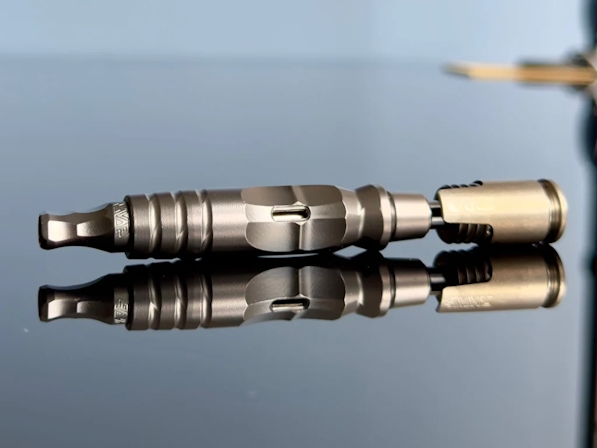
The DynaVap UniDyn is the outlier on this list. It’s the only truly portable ball vape here, running on a torch lighter or induction heater instead of an electric coil. No outlet. No cord. No PID. Just medical-grade titanium, DynaVap’s signature click-to-vape cap system, and a compact bowl designed for efficient, on-the-go sessions.
The UniDyn is DynaVap’s portable high-performance model, built for users who want strong vapor production in a battery-free format. When the cap clicks, you’re at vaporization temp. Adjustable airflow lets you dial in the draw to your preference. It fits a 10mm or 14mm water piece, and it’s modular with existing DynaVap midsections and mouthpieces.
This isn’t the best ball vape if you want giant desktop clouds—it won’t compete with a wired PID setup on vapor density. But if you want to take your session outside, travel with something that actually performs, or just hate dealing with cords, the UniDyn is the move.
- Material: hardened medical-grade titanium
- Bowl capacity: compact/efficient load size
- Heat source: torch lighter or induction heater (battery-free)
- Water piece compatibility: 10mm and 14mm tapers
- Airflow: adjustable
- Style: portable
- Price: $199
How to Use the DynaVap UniDyn
Pack the bowl lightly for your first few sessions to get a feel for the heat-up time. Heat the cap with a torch, rotating slowly from the bottom up. When it clicks, you’re ready. Take a slow, steady draw. When you hear the second click as it cools, reheat if needed. For water piece use, drop the tapered end into your bong and draw through that.
For more information on using the UniDyn, check out our guide on the DynaVap Ball Vape Explained.

Best Ball Vape for Heavy Use: Vapvana Screwball

troyandjerry
The Screwball isn’t technically a ball vape in the traditional sense—it uses 750 gem-cut ruby balls (corundum) instead of spheres, which gives it an unusually even heat distribution and eye-catching look when you open the housing. It’s built around an all-titanium housing and bowl, a six-wrap coil for serious heat output, and a PID controller for precision.
This is a ball vape for dry herb that’s built to go hard. Heavy sessions, back-to-back rips, shared use—the Screwball handles it. The big titanium bowl holds up to 0.4g, extraction is fast even at lower temps, and the ABV comes out evenly cooked from edge to center. Reviewers in the vape community consistently rate it at or above other corded ball vapes in its price range for vapor thickness and flavor.
It’s a wired, desktop-only setup, meant to be run through a water piece. The airflow is slightly tighter than some competitors, which is a design choice—not a flaw.
- Housing material: all-titanium
- Thermal media: 750 gem-cut ruby balls (2.5mm)
- Bowl capacity: up to 0.4g
- Coil: 25mm, six-wrap (PID-controlled)
- Power: wired desktop
- Style: desktop/stationary, used with water piece
- Price: ~$299–$300 (full kit)
How to Use the Vapvana Screwball
Set your PID to your target temp (most users start around 430°F for flavor, 460°F for bigger hits). Let the housing heat soak for 3–5 minutes. Load your bowl, seat it firmly into the housing, drop it onto your bong, and pull. The Screwball’s bigger bowl means you can take multiple full hits before reloading. ABV should come out light to medium brown—adjust your temperature accordingly.
Best Ball Vape for Flavor: Ruby Twist Pro

Vape Guy
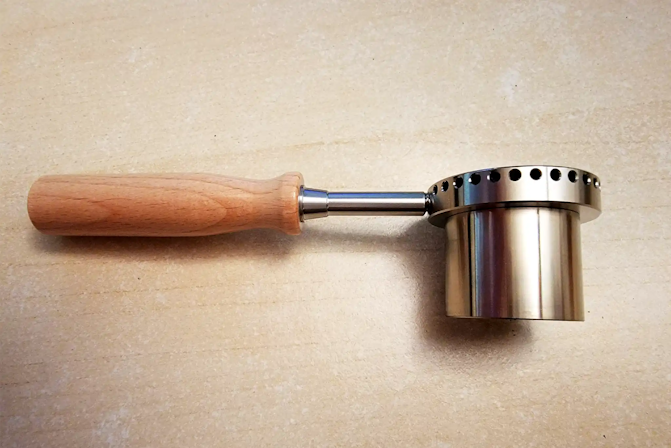
If flavor is your priority, the Ruby Twist Pro is hard to beat. It’s a convection-dominant injector ball vape built around an upgraded ruby ball thermal mass, improved airflow control, and a premium wooden handle—all the things that matter for clean, terpene-forward vapor.
The original Ruby Twist already had a reputation as a flavor-first setup. Redditor No_Anybody_3024 called it “super inexpensive” and said it “puts my Volcano to shame in flavor and size of hit.” The Pro version improves on the original with better heat distribution, a more refined bowl system, and the wooden handle that makes a real difference during extended sessions.
The twisting airflow system is what sets it apart mechanically—as air moves through the chamber, it circulates the flower for more even extraction without you having to stir. At lower temps, the flavor profile is exceptional. You can push it harder for bigger extractions when you want, via a heat soak.
- Heating method: convection / hybrid
- Core material: ruby ball thermal mass
- Handle: premium wooden grip
- Coil size: 20mm (compatible with most PID controllers)
- Bowl compatibility: 14.4mm / 18.8mm
- Includes: PID controller, 20mm coil, matrix bowl, coil stand, tools, spare balls/screens
- Temperature range: ~260–330°C / 500–626°F via PID
- Power: wired desktop
- Price: $319.99 (full kit)
How to Use the Ruby Twist Pro
Set your PID somewhere between 430–470°F to start. Give it 3–5 minutes to heat soak. The twist mechanism in the Ruby Twist Pro means the airflow naturally moves through the herb in a spiraling pattern—take your draws slowly to let that do its thing. You don’t need to stir mid-bowl. If you want a heavier hit, let it soak longer before pulling.
Best Ball Vape for Budget: Cannabis Hardware BZero Bundle
herb
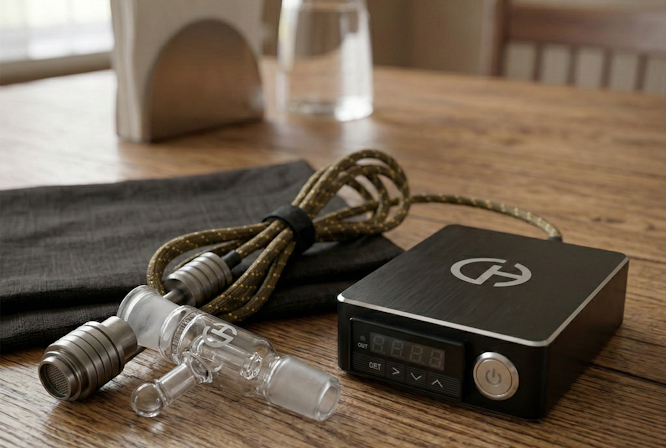
The BZero Bundle from Cannabis Hardware is the “buy once, cry once” answer for people who want a full ball vape setup without spending $300+ on a premium option. For $275, you get everything: the BZero injector head, 4mm ruby balls, insulated heat post, pass-through injector bowl (14mm or 18.8mm), CH PID controller, and a 20mm XLR coil.
The BZero is compact but packed with performance, and the CH controller’s 1/4-20 threaded mod mount means you can customize your setup as you grow. Plus, the 4mm rubies punch above their weight.
Cannabis Hardware’s recommended temps are 580°F for long, flavorful pulls and 600°F for shorter, harder hits. A ball vape temperature sweet spot that low tells you this thing extracts efficiently.
- Injector head: BZero with 4mm rubies
- Bowl compatibility: 14mm or 18mm (your choice)
- PID controller: CH Controller with mod mount
- Coil: 20mm XLR (US 110v or International 220v)
- Power: wired desktop
- Style: desktop/stationary
- Price: $275 (add $78 for optional heat shield)
How to Use the Cannabis Hardware BZero Bundle
Start at 580°F for your first sessions—this is the sweet spot for flavor-heavy, efficient extraction. Let it heat soak 3–4 minutes after reaching temp. Pack your bowl medium-fine and load it into the pass-through bowl. Drop onto your water piece and pull slowly. When the hit starts thinning out, you’re done. ABV should come out light golden to medium brown.
Pros and Cons of Ball Vapes for Dry Herb

TV APE
Ball vape dry herb setups are legitimately impressive, but they’re not for everyone. Here’s the full picture.
Pros of using ball vapes include:
- Increased flavor: The combination of convection heating and thermal mass produces vapor that’s cleaner and more terpene-rich than most other methods. Users coming from bongs or standard vapes consistently say the flavor difference is immediate and obvious.
- Increased efficiency: You get more out of your herb. The even heat distribution means less waste per session, and because extraction is so thorough, you typically use less material to achieve the same effect.
- Increased potency and cloud size: These things produce massive hits. Not “bigger than a pen” big—actually massive. If you want thick, full-extraction vapor that genuinely hits as hard as it looks, a ball vape delivers.
- Better consistency: Because most ball vapes use a PID to maintain precise temperatures, every hit in a session is as good as the first. No guesswork, no temperature drift.
Cons of using ball vapes include:
- Price: Even budget options like the BZero start at $275 for a complete setup, and that’s before you add a water piece. Premium options run $300–400+. Compared to a $60 portable vape, that’s a real upfront investment.
- Heat-up and cool-down time: Wired setups take 3–5 minutes to fully heat soak before your first hit. They also stay hot for a while after—you can’t just stuff this in a bag and leave.
- Lack of portability: With the exception of the UniDyn, ball vapes are desktop-only gear. They need an outlet, a water piece, and a flat surface.
- Learning curve: Ball vape temperature settings, heat soak times, draw speed, and bowl loading all affect the result. It takes a few sessions to dial in your setup.
- Complex cleaning: The balls need occasional cleaning, and if you heat-soak heavily, residue can build up in the housing. It’s not hard, but it’s more involved than wiping down a portable vape.
- Increased tolerance: These things hit hard. Ball vapes are efficient enough that regular users often notice their tolerance climbing faster than it did with less powerful methods.
- Ball spill hazards: If you’re using a wireless or removable setup, dropping or tipping the housing while hot is a real risk. Hundreds of tiny hot ruby balls on your carpet is not a good time.
- Electricity required for use: Wired setups need a constant power source. They’re not camping gear.
vape guy
Frequently Asked Questions
What is a ball vape?
A ball vape is a dry herb vaporizer that uses a chamber filled with small balls—typically ruby, quartz, or stainless steel—as a heat exchanger. The balls absorb heat from a coil and transfer it to air passing through the chamber, vaporizing your herb via convection for dense, flavorful hits.
Do ball vapes help you save money on dry herb?
Yes, over time. The extraction efficiency means you get more out of each gram of herb compared to combustion or less efficient vapes. You’ll use less material per session to achieve the same effect. The upfront cost is higher, but it pays off if you’re a regular user.
Are ball vapes good for beginners?
With some patience, yes. The Cloud Connoisseur Omega and BZero Bundle are both accessible entry points. The UniDyn by DynaVap is a portable-friendly version, also suitable for beginners. The learning curve is real—understanding heat soak times, ball vape temperature settings, and draw speed takes a few sessions—but most new users figure it out quickly with a little reading.
How long do the balls in a ball vape last?
A long time. Ruby and quartz balls are extremely durable. Most users report using the same set for years with normal use. They may discolor slightly over time (a sign of use, not failure), and occasional cleaning keeps them performing well. Stainless steel balls are similarly long-lasting. You’ll likely replace screens and O-rings before you ever need new balls.
Can I use concentrates in a ball vape?
Some setups can handle concentrates with the right bowl or insert, but ball vapes are primarily designed for dry herb. Check your specific device’s compatibility before trying.
What materials are the balls made of in a ball vape?
The most common materials are ruby (synthetic corundum), quartz, and stainless steel. Ruby is the most popular for its heat retention and inert surface. Quartz tends to run slightly cooler and is favored for flavor-forward sessions. Stainless steel is common in budget options.
Do I need any extra materials to use a ball vape?
Most wired ball vapes require a PID controller, coil, and a water piece to use properly. Bundles like the BZero include everything except the water piece. The DynaVap UniDyn just needs a torch lighter.
Why are ball vapes more expensive than regular dry herb vapes?
The materials are higher quality (titanium housings, ruby or quartz thermal media), the engineering is more complex, and the thermal management hardware (PID controllers, precision coils) adds cost. You’re also paying for performance that most vapes can’t match.
Are ball vapes safe?
Yes, when used properly. The main hazards are heat-related: hot surfaces, the potential for balls to spill if the housing tips over, and the fire risk if anything flammable gets near the coil. Use a stable setup, keep it on a solid surface, and don’t leave it unattended while hot.
The Herb Community
herb
For more than a decade, Herb has been a gathering place for people who love, use, and are simply curious about cannabis. What started as a small corner of the internet has grown into a community where millions come to learn, share, and stay connected to the culture.
Here’s what you can tap into at Herb:
- Learning hub and guides that break things down clearly, from growing weed outdoors to understanding how terpenes impact your high
- News hub that spotlights the latest cannabis culture and policy shifts
- Dispensary directory to help you find licensed shops in your local area
- Monthly strain picks, featuring rotating Indica, Sativa, and Hybrid favorites
- Deals page, updated monthly with the best cannabis discounts available online
Stay connected with the Herb community by subscribing to our newsletter, following us on Instagram, and X for the latest in cannabis lifestyle and culture.
Herb Recommended Products:
READ MORE