
karl callwood
US Virgin Islands Cannabis Laws: Possession Rules, Visitor Restrictions & the Status of Legal Retail Sales |
07.17.2026US Virgin Islands Cannabis Laws: Possession Rules, Visitor Restrictions & the Status of Legal Retail Sales
What's actually legal in the US Virgin Islands right now, from possession limits to the current status of licensed dispensaries on St. Thomas, St. Croix, and St. John.

The US Virgin Islands became a legal cannabis territory on January 18, 2023, when Governor Albert Bryan Jr. signed the Virgin Islands Cannabis Use Act into law. That made adult possession legal within territorial limits, but it did not, by itself, create a retail market. As of this writing, licensed retail dispensaries have not yet opened for business, and legal possession does not make an unlicensed purchase legal. This guide separates what territorial law currently allows from what isn’t yet a lawful way to obtain cannabis, and what to expect once licensed retail sales begin.
Key Takeaways

vernon raineil cenzon
- Adults 21 and older may legally possess up to 2 ounces of flower, 14 grams of concentrate, and 1 ounce of cannabis products in the USVI.
- Legal possession does not create a lawful purchasing option; licensed retail dispensaries have not yet opened, and no official OCR launch date has been confirmed.
- Qualified medical patients may possess up to 4 ounces of flower, 1 ounce of concentrate, and 2 ounces of cannabis products, subject to territorial residency and OCR registration requirements.
- Cannabis cannot legally travel between St. Thomas, St. Croix, and St. John; each island is treated as a separate market under territorial law.
- Nonresidents are subject to an 18% cannabis sales tax and a $20 Cannabis Fee once retail sales begin; the tax exemption applies only to resident qualified patients with an OCR medical card.
- Public consumption is prohibited territory-wide, and cannabis remains prohibited on federal land, including Virgin Islands National Park.
- Do not purchase cannabis from any delivery service or seller that hasn’t been verified as OCR-authorized; unlicensed cannabis commerce is illegal regardless of how established the seller appears.
Is Weed Legal in the US Virgin Islands?

Herb
Yes, for adult possession. Adults 21 and older may legally possess up to 2 ounces of cannabis, 14 grams of concentrate, and 1 ounce of cannabis products under the Virgin Islands Cannabis Use Act. Qualified medical patients registered with the territory’s Office of Cannabis Regulation (OCR) have higher limits.
However, legal retail sales have not commenced. The OCR’s official rules limit dispensary delivery to qualified patients and other specifically authorized medical recipients, and cannabis commerce outside the Act and its regulations remains unlawful. There is currently no verified, OCR-authorized general adult-use or tourist delivery service, and readers should not purchase from any seller that hasn’t been confirmed through OCR’s official channels.
Understanding the US Virgin Islands' Cannabis Laws

chris khani
The USVI’s cannabis framework separates what’s legal to possess from what’s legal to buy, and the two aren’t the same thing yet.
Historical Context
The territory legalized medical cannabis in 2019 through the Virgin Islands Medicinal Cannabis Patient Care Act. Act 8680, signed in January 2023, replaced and expanded that earlier framework to include adult-use and sacramental cannabis alongside the existing medical program, rather than creating both programs from scratch at once.
Key Provisions of the Law
Adult-use (21+) possession limits:
- 2 ounces of flower (dried cannabis)
- 14 grams of concentrate
- 1 ounce of cannabis products, such as edibles and topicals
Qualified-patient possession limits:
- 4 ounces of flower
- 1 ounce of concentrate
- 2 ounces of cannabis products
- Home cultivation, subject to separate authorization (see below)
The Office of Cannabis Regulation (OCR) oversees all licensing, patient registration, and compliance for the territory. It’s located at the Property & Procurement Building, 8201 Subbase, Suite 1, St. Thomas, and can be reached at (340) 714-9755 or info.ocr@ocr.vi.gov during business hours, Monday through Friday, 8:00 a.m. to 4:00 p.m. Check OCR’s official website directly for the current status of licensing and retail sales before making any plans around cannabis access.
Medical Cultivation Requires Separate Authorization
Qualified patients don’t receive automatic home-cultivation rights just by registering. A patient must obtain a separate OCR cultivation authorization, pay the applicable fee, meet territorial residency requirements, provide property-owner consent where relevant, permit inspection, and the cultivation area cannot be visible to the public. An authorized patient may generally cultivate up to six flowering and six immature plants, with an address-level cap of 12 flowering and 12 immature plants, regardless of how many authorized patients live there.
The Current Status of Licensed Dispensaries

Herb
OCR has issued conditional awards to some applicants across the territory’s three main islands. It’s important to understand what that does and doesn’t mean: under OCR’s own rules, a conditional license is a contingent award that doesn’t entitle its recipient to begin buying or selling cannabis. A business must still receive all required final approvals, including authorization to operate, before it can legally serve customers.
No official OCR announcement confirming a specific retail launch date could be confirmed at the time of writing, and OCR has previously cautioned that dates circulated by outside sources may not be accurate. Check the OCR website directly for current licensing announcements and Certificate to Operate notices before attempting to purchase cannabis anywhere in the territory.
Regulated dispensary hours, once operating dispensaries exist, are limited to 8:00 a.m. to 7:00 p.m., seven days a week. That’s the permitted operating window under the rules, not confirmation that any specific dispensary is currently open.
Do Not Rely on Unverified Delivery Services

Herb
You may encounter informal delivery services, social media accounts, or word-of-mouth referrals claiming to offer cannabis delivery to hotels, resorts, or vacation rentals in the USVI. Treat these with real caution.
Under OCR’s current rules, dispensary delivery is limited to qualified patients, designated caregivers, and other specifically authorized medical recipients, subject to OCR transportation authorization and identity verification, and only after a business has all required operating approvals. General adult-use or tourist delivery is not an established, lawful category under the current rules. Purchasing cannabis outside the Act and its regulations is unlawful, regardless of how professional or established an unverified seller may seem.
The safest approach: don’t purchase cannabis from a service you can’t verify as OCR-authorized. Check OCR’s official website or contact OCR directly to confirm a business’s licensing status before relying on it.
Visitor Information: Cannabis for Tourists in the USVI

andy feliciotti
The USVI’s cannabis law applies to residents and visitors, but the practical reality is shaped by where retail sales currently stand.
What’s true right now:
- Adult possession within territorial limits is legal for anyone 21 or older, resident or visitor.
- No licensed retail dispensaries have opened as of this writing.
- There is no confirmed general adult-use delivery option; don’t rely on an unverified seller.
Nonresident fees and limits, once retail sales begin: Nonresidents will be subject to a $20 Cannabis Fee and an 18% cannabis sales tax on purchases, with daily nonresident purchase limits set at 14 grams of flower, 3 grams of concentrate, and 500 milligrams of cannabis products. The 18% sales-tax exemption applies only to resident qualified patients holding an OCR medical card; it does not extend to visitors, and there is no confirmed short-term visitor medical-card or out-of-state reciprocity program under the current published rules. Visitors shouldn’t assume an out-of-state medical card will be recognized, and shouldn’t treat obtaining a Virgin Islands medical card as a cost-saving strategy for a short trip, since the published rules require territorial residency for patient registration.
The Three-Island Rule
St. Thomas, St. Croix, and St. John each operate as separate markets under territorial law, and personal transportation of cannabis between islands is prohibited. Federal law may create additional exposure in federally controlled transportation settings, such as ferries and seaplanes, but the core prohibition on inter-island transport comes from territorial cannabis rules themselves, not solely from crossing federal waters or airspace.
What this means practically:
- Taking a ferry between islands, such as Red Hook to Cruz Bay? Don’t carry cannabis with you.
- Flying a seaplane between islands? Leave cannabis behind.
- Planning a multi-island trip? Once retail sales exist, plan to purchase separately on each island rather than carrying products between them.
Where You Can and Cannot Consume Cannabis

Herb
Public cannabis consumption is prohibited throughout the territory, including beaches, parks, sidewalks, restaurants, and bars.
On private property, permission from a host, hotel, or property owner is a starting point, not a guarantee that every form of consumption is lawful. Territorial law, the property’s own rules, and any applicable lease or rental terms can all still apply, so confirm your specific accommodation’s policy rather than assuming permission covers everything. Rental car and taxi restrictions typically come from the rental agreement itself, and impaired driving is a separate offense regardless of where you obtained the cannabis. Never consume in a vehicle or drive while impaired.
Other good practices: store cannabis securely and away from minors, and be considerate of non-smokers and neighboring properties.
What Products Will Be Available
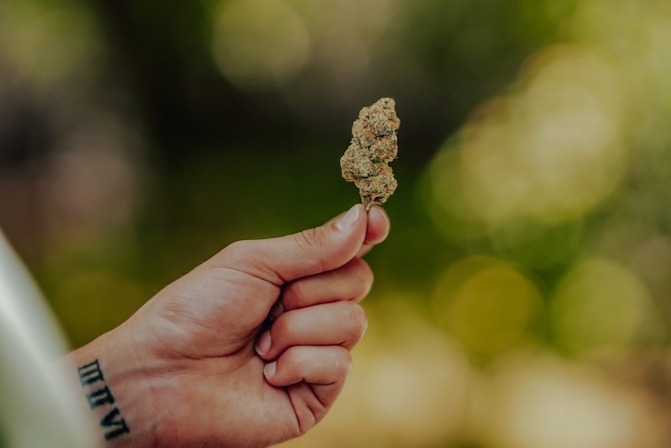
Because retail sales haven’t launched, there’s no current legal adult-use product inventory to describe. Once licensed dispensaries open, expect categories similar to other regulated markets, including flower, pre-rolls, concentrates, topicals, and vape products, with edibles becoming available once certified testing infrastructure is operating. All licensed products will be required to pass laboratory testing for potency, microbial contamination, pesticides, and heavy metals before sale, and licensees will be required to use the electronic inventory-tracking system designated by OCR.
The Territory's Approach to Building a Local Industry

karl callwood
The USVI’s regulatory framework includes several provisions intended to support local entrepreneurs and cultivators, based on the currently approved rules:
- Third-party sourcing requirement. A vertically integrated dispensary must source at least 70% of its inventory from third-party licensees rather than growing everything itself.
- Micro-cultivation permits. The rules provide for micro-cultivation permits for small farmers, generally capped at a smaller plant count than standard cultivation licenses.
- Cultivation residency requirements. Cultivation permits generally require an extended period of territorial residency.
Exact license counts, specific business names, and island-by-island allocations change as OCR processes applications, so check OCR’s official announcements directly for current, verified figures rather than relying on a fixed number.
Why Herb Helps You Stay Informed
While the USVI’s retail market develops, Herb offers an educational context to help you understand the space, separate from any purchasing recommendation for this specific territory.
Herb’s strain guides let you research effects and genetics ahead of time, and the platform’s educational resources and how-to guides cover consumption, storage, and responsible use more generally. Herb’s industry news coverage is also a good place to track USVI regulatory developments, including when OCR confirms a retail launch date or authorizes specific dispensaries to operate.
For travelers preparing for a future USVI cannabis market, understanding the legal framework now means you’ll be ready to shop confidently and legally once licensed dispensaries actually open.
Final Verdict

The US Virgin Islands has a real, legal cannabis framework, but it’s important not to confuse legal possession with a legal purchasing option that doesn’t exist yet.
- Visiting soon and hoping to buy cannabis? There’s currently no confirmed, licensed retail option. Check OCR’s website directly before your trip for the latest status.
- Tempted by an informal delivery service? Don’t rely on any seller you can’t verify as OCR-authorized. Unlicensed cannabis commerce remains illegal even if the service seems established.
- A registered medical patient? Your possession limits are higher, but home cultivation and tax benefits require separate OCR authorization and territorial residency, not just patient registration.
- Planning a multi-island trip? Treat St. Thomas, St. Croix, and St. John as entirely separate markets, and never carry cannabis between them.
- Want to be ready for when the market opens? Follow OCR’s official announcements and use the time now to learn about products, testing standards, and responsible use.
Frequently Asked Questions
Is cannabis legal in the US Virgin Islands for recreational use?
Adult possession is legal. The Virgin Islands Cannabis Use Act, signed January 18, 2023, allows adults 21 and older to legally possess up to 2 ounces of flower, 14 grams of concentrate, and 1 ounce of cannabis products. However, licensed retail dispensaries have not yet opened, and no official launch date has been confirmed by OCR. Legal possession doesn’t create a lawful way to purchase cannabis before licensed retail sales begin.
Do I need a medical card to buy weed in the US Virgin Islands?
Once dispensaries open, adults 21 and older won’t need a medical card to purchase. Medical patients registered with OCR have higher possession limits and, if they’re territorial residents with an OCR medical card, an exemption from the 18% cannabis sales tax. There is no confirmed short-term visitor medical card or out-of-state reciprocity program under the current published rules, so visitors shouldn’t assume an out-of-state card will be recognized or plan around getting a temporary card to save money.
Can tourists purchase and consume cannabis in the USVI right now?
Tourists can legally possess cannabis within the adult-use limits, but there is no confirmed, OCR-authorized retail or tourist delivery option available at this time. Don’t rely on an unverified delivery service; unlicensed cannabis commerce remains illegal regardless of how it’s presented. Consumption is restricted to private property with the owner’s permission, and public places, most hotels, rental vehicles, and federal land all prohibit cannabis use.
What cannabis products will be available in the US Virgin Islands once dispensaries open?
Expect flower, pre-rolls, concentrates, topicals, and vape products initially, with edibles becoming available once certified testing infrastructure is operating, since all licensed products must pass laboratory testing for potency and contaminants before sale. There’s currently no legal adult-use retail inventory to describe, since licensed sales haven’t started.
Can I take cannabis between St. Thomas, St. Croix, and St. John?
No. Each island functions as a separate cannabis market under territorial law, and personal transportation of cannabis between islands is prohibited, whether by ferry or seaplane. Federal law adds further exposure in those federally regulated transportation settings. Plan to treat each island as its own market rather than carrying cannabis between them, even for a short ferry ride.
This guide is for informational and educational purposes only and does not constitute legal advice. The USVI’s cannabis licensing and retail landscape is actively developing; confirm current details directly with the Office of Cannabis Regulation before making any
Herb Recommended Products:
READ MORE