VERNON RAINEIL CENZON
How to Buy Weed in Taiwan: Taipei, Asia’s Strict Laws & What Visitors Must Know |
04.30.2026How to Buy Weed in Taiwan: Taipei, Asia’s Strict Laws & What Visitors Must Know
Taiwan enforces some of the strictest cannabis laws in East Asia, with serious criminal penalties for possession, use, or trafficking. This guide covers everything visitors need to know before arriving in Taipei: the legal framework, customs enforcement, CBD restrictions, the regional landscape, and what to do if something goes wrong.

You cannot buy weed in Taiwan, legally or as a short-term visitor. Cannabis is a Category 2 narcotic under the Narcotics Hazard Prevention Act, a category that carries severe penalties for possession, use, manufacturing, transport, and sale. There are no dispensaries, no licensed retailers, no gray-market cafés, and no tourist exceptions. Possession carries up to 2 years for simple possession, or up to 5 years for possession of more than 20 grams of pure Category 2 narcotics; manufacturing, transporting, or selling cannabis can result in life imprisonment or a minimum 10-year sentence, plus a fine of up to NT$15 million.
Taiwan is one of East Asia’s most visited destinations, and for cannabis enthusiasts building multi-country itineraries with Thailand, Japan, or South Korea, it is a predictable question. This guide covers what Taiwan’s laws actually say, how enforcement works in practice, the complicated CBD situation, which neighboring countries have different policies, and what is happening inside Taiwan’s growing reform movement. If you are building a broader Asia itinerary or visiting Taipei specifically, the complete picture is below.
Key Takeaways

YK
- Cannabis is a Category 2 narcotic in Taiwan under the Narcotics Hazard Prevention Act, illegal for both recreational and medical use.
- Possession penalties are serious: up to 2 years for simple possession, or up to 5 years for possession of more than 20 grams of pure Category 2 narcotics; manufacturing or trafficking can result in life imprisonment.
- CBD products are heavily restricted: technically legal only as a pharmaceutical with less than 0.001% THC (equivalent to 10 ppm), and routinely seized at customs even when legally purchased abroad.
- No major legalization reform appears likely in the near term: 93.5% of Taiwanese residents surveyed did not support marijuana legalization, and the government has repeatedly rejected reform proposals.
- Thailand remains the most accessible cannabis market in the region, though rules tightened in 2025 and purchases now require a prescription or medical documentation.
- Travelers from legal markets regularly face customs issues by carrying products that are legal at home but prohibited in Taiwan, including CBD products that exceed Taiwan’s strict 10 ppm threshold.
How to Buy Weed in Taiwan: Why Travelers Ask

DAVE WEATHERALL
Taiwan is increasingly popular with international travelers, and for cannabis enthusiasts building multi-country Asia itineraries, the legal landscape question is predictable. Three things make it worth understanding before you arrive.
The contrast with nearby Thailand is jarring. Thailand decriminalized cannabis in 2022 and built a large retail dispensary market in the years that followed. Travelers arriving in Taipei after a Bangkok itinerary, or planning to visit both countries in sequence, are often surprised by how completely different the legal environments are. The two countries are geographically close, but their drug policies are at opposite ends of the spectrum.
Legal products from home can create problems at customs. Travelers from California, Canada, Germany, or the Netherlands regularly carry CBD oils, vape cartridges, or edibles that are completely legal where purchased. At Taipei Customs, those same products can be seized and trigger criminal proceedings. Taiwan’s 10 ppm THC threshold is orders of magnitude stricter than US or European legal hemp standards, and “legal where I bought it” carries no weight at Taoyuan International Airport.
The “private use” assumption does not apply. Travelers from decriminalized environments, where small personal amounts are effectively tolerated, sometimes assume private consumption is a gray area. Taiwan’s enforcement posture is different: the prohibition applies in hotel rooms and private residences, not just public spaces.
Understanding these gaps before you land is the difference between a smooth trip and a serious legal problem.
Is Cannabis Legal in Taiwan?

CRYSTALWEED
Cannabis is completely illegal in Taiwan for both recreational and medical use. Under the Narcotics Hazard Prevention Act, cannabis is classified as a Category 2 controlled narcotic. This classification applies to the plant, seeds, resin, concentrates, edibles, vape cartridges, and any derivative product containing THC.
There is no recreational cannabis market in Taiwan: no dispensaries, no cannabis cafés, no social consumption spaces. The country has not passed any legislation to create a licensed retail framework, and government officials have consistently rejected calls to move in that direction.
Taiwan also has no functional domestic medical cannabis program. Patients with specific medical needs can theoretically apply to the Ministry of Health and Welfare for special import approval for pharmaceutical cannabinoid medications, but this pathway is narrow, bureaucratic, and entirely unavailable to tourists. International visitors cannot access it.
The prohibition is uniform across the island. Laws are identical whether you are in Taipei’s Da’an District, the night markets of Tainan, the beach towns of Kenting, or the mountainside valleys of Hualien. Taiwan sets narcotics policy at the national level, so there are no local jurisdictions with softer enforcement.
Taiwan’s approach is notably at odds with global trend lines. Germany, Canada, Thailand, and a growing number of American states have moved toward legal or regulated markets in recent years. Taiwan has maintained the legal framework it has carried for decades, with the government repeatedly reaffirming that cannabis prohibition will not change in the near term.
For travelers who have visited Thailand’s retail dispensary scene or bought cannabis legally in Amsterdam or Denver, Taiwan represents an entirely different operating environment. That gap needs to be clearly understood before arriving at Taoyuan International Airport.
Taiwan's Cannabis Penalties Explained

TAIWAN POLICE
Taiwan’s cannabis penalties are severe by international standards and can include imprisonment even for possession. The Narcotics Hazard Prevention Act distinguishes between personal use, possession, and trafficking, with consequences that escalate sharply based on quantity and intent.
Penalties by Offense Type
| Offense | Penalty |
|---|---|
| Personal use/consumption | Up to 3 years imprisonment; mandatory rehabilitation for first-time offenders |
| Possession (any amount) | Maximum 2 years imprisonment or NT$200,000 fine (~$6,500 USD) |
| Possession (more than 20g of pure Category 2 narcotics) | Mandatory minimum 6 months to 5 years + fine up to NT$700,000 (~$22,700 USD) |
| Cannabis seeds | Up to 1 year imprisonment or fine of NT$10,000 (~$325 USD) |
| Manufacturing/trafficking/selling | Life imprisonment or minimum 10 years + fine up to NT$15 million (~$488,000 USD) |
These are not theoretical maximums; they reflect the actual sentencing range Taiwanese courts apply. First-time personal users are frequently directed toward mandatory rehabilitation programs rather than immediate imprisonment, but repeat offenders and anyone caught with larger quantities face full prosecution without that option.
What "Possession" Means in Practice
Taiwan’s courts interpret possession broadly:
- A single joint, a small bag of cannabis, or a vape cartridge with THC oil all qualify.
- Edibles and concentrates are covered.
- If a product contains THC above 10 parts per million, it is classified as a Category 2 narcotic at Taiwan’s border and subject to confiscation and prosecution.
- That 10 ppm threshold is far stricter than the legal hemp standard (0.3% THC) in the United States or the 0.2% standard in much of Europe.
Foreign Nationals Face the Same Laws
Taiwan’s narcotics laws apply equally to everyone within Taiwanese jurisdiction, regardless of nationality. Foreign tourists who are caught with cannabis face the same legal process as Taiwanese citizens. Foreign nationals may also face immigration consequences, including possible expulsion or future entry problems. The U.S. State Department has specifically warned that American citizens have been arrested and imprisoned in Taiwan for drug offenses, including cases involving products mailed to Taiwan addresses.
2022: A Narrow Reform
One incremental change passed Taiwan’s legislature in April 2022: reduced sentences for growing cannabis specifically for personal use. Taiwan’s lawmakers recognized that small-scale personal cultivation should not carry the same sentencing weight as commercial drug production. This was a limited change. It did not decriminalize possession, use, or any other aspect of cannabis law. Cannabis remains a Category 2 narcotic, and the fundamental prohibition is unchanged.
How Taipei Customs Enforces Drug Laws

TAIPEI POLICE
Taipei Customs operates under an explicitly stated zero-tolerance narcotics policy, a posture the agency communicates publicly and actively enforces.
Taipei Customs has recorded cannabis seizures involving flower, wax concentrates, gummies, vape oil cartridges, and other products, intercepted from both passengers at Taiwan Taoyuan International Airport and packages entering through international mail and courier services.
What Customs Screens For
Customs officers at Taoyuan International Airport use drug-detection dogs, X-ray scanning, and targeted searches to identify prohibited substances. Cannabis and its derivatives are among the primary detection targets. Taipei Customs has issued public advisories warning travelers specifically not to import:
- Cannabis flower and plant material
- Cannabis seeds
- Cannabis resin and concentrates
- Any derivative product containing more than 10 ppm of THC, including products that are completely legal in the traveler’s home country
That 10 ppm threshold matters enormously in practice. Products classified as legal hemp in the United States (up to 0.3% THC by dry weight, or 3,000 ppm) exceed Taiwan’s limit by orders of magnitude. “Legal where I bought it” is not a defense that applies at the Taiwan customs.
International Mail Is Also Screened
Taiwan’s customs authorities screen international mail and packages for narcotics. Sending cannabis products to a Taiwan address, or receiving them, carries the same legal exposure as transporting them in person. The Taipei Customs agency has specifically publicized its interception of cannabis products arriving through postal services, making clear that the mail system is not a workaround.
Multiple travelers have reported having CBD products confiscated at the border, even when the products were purchased legally in their home countries and labeled as compliant or zero-THC. The enforcement posture on imported CBD has been trending stricter over time.
The Practical Takeaway
Do not carry any cannabis product into Taiwan, in carry-on luggage, checked baggage, or international shipments. Enforcement is active, the penalties are real, and even a minor seizure incident can derail a trip significantly before any criminal proceedings begin.
Cannabis in Taipei: The Street Reality

DANIEL HONIES
The law is one thing. The actual street reality in Taipei is another, and travelers asking how to buy weed in Taiwan often want to know what actually exists on the ground, not just what the statute says.
There are no visible cannabis retail options in Taipei: no dispensaries, no cannabis cafés, no social consumption spaces, and no gray market that operates with tacit official tolerance. Unlike Amsterdam or some decriminalized European environments, Taipei has no designated spaces where enforcement is effectively suspended.
An underground market exists, as it does in virtually every major city in the world. Because cannabis remains illegal and enforcement is active, visitors should not attempt to source cannabis through informal networks. The risk at every step of that process is real and is not offset by the legal environment being inconsistent.
Quality in the underground market varies considerably, and prices reflect the risk premium embedded in Taiwan’s supply chain. Travelers who have navigated this route report significantly higher per-gram prices than legal markets charge, with no recourse if a product is misrepresented.
Public consumption in parks, night market areas, outdoor spaces, and alleys near entertainment districts carries particular risk. Taiwan does not have a “use privately, and you are fine” enforcement posture. The law applies in private spaces as well as public ones.
For most cannabis enthusiasts who visit Taipei, the honest calculation comes down to this: the risk-to-reward ratio is unfavorable compared to neighboring destinations where legal or decriminalized access exists. Taiwan, as a destination, is very much worth visiting; it simply is not the right leg of an Asia trip for cannabis tourism.
Is CBD Legal for Visitors in Taiwan?

CLEMENT SOUCHET
CBD is technically legal in Taiwan under one narrow condition: it must contain less than 0.001% THC (equivalent to 10 ppm) and be accessed as a pharmaceutical product. That threshold is three hundred times stricter than the 0.3% US hemp standard, and many internationally sold CBD products, including some labeled THC-free, may not meet Taiwan’s 10 ppm threshold or may lack the required import approval.
In June 2020, Taiwan’s Ministry of Health and Welfare clarified this position, confirming that cannabidiol is only permissible when it contains less than 0.001% THC. Under Taiwan’s classification framework, CBD is regulated as a pharmaceutical drug, not a dietary supplement or wellness product. This means it can only be legally obtained with a doctor’s prescription from a licensed pharmaceutical source.
CBD is not available through a normal retail supplement market in Taiwan; legal access is limited to prescription or permit pathways. Patients who need cannabinoid-based medications must apply to import them from overseas, a formal government approval process entirely inaccessible to short-term visitors.
Traveling to Taiwan with CBD Products

H CO
Travelers who bring CBD products from home face a genuine risk at customs:
- Products labeled as zero-THC in the United States or Europe may still contain trace amounts of THC above Taiwan’s 0.001% threshold.
- According to Taipei Customs advisories, importers of CBD and its extracts must apply for an import permit in advance. Without that permit, products are subject to confiscation.
- The USDA Foreign Agricultural Service has confirmed that hemp cultivation is prohibited in Taiwan under the Narcotics Hazard Prevention Act.
The practical guidance is simple: leave all CBD products at home before traveling to Taiwan. The legal complexity, enforcement unpredictability, and potential for confiscation do not add up to a worthwhile risk, particularly when replacement options are readily available upon return to a legal market.
Taiwan vs. Other Asian Countries: Cannabis Laws Compared

JIACHEN LIN
For cannabis enthusiasts building an Asia itinerary, understanding the regional legal landscape puts Taiwan in its proper context. Asia remains overwhelmingly prohibitionist, but the picture is uneven, with Thailand standing out as the most accessible market.
| Country | Legal Status | Reality for Tourists |
|---|---|---|
| Thailand | Decriminalized; dispensaries open with prescription/medical documentation | Most accessible option in Southeast Asia; large retail market in Bangkok, Phuket, Chiang Mai; rules tightened in 2025 |
| Taiwan | Illegal; Category 2 narcotic | Active enforcement; serious criminal penalties; no retail access |
| South Korea | Medical-only (since 2018) | No tourist access; strict enforcement; Korean nationals face prosecution even for overseas use |
| Japan | Illegal | Strict enforcement; no tolerance; foreigners have been arrested |
| Singapore | Illegal; severe trafficking penalties | Among the harshest drug regimes in the world |
| Malaysia | Illegal; severe trafficking penalties | Mandatory penalties for amounts over threshold; serious risk |
| Vietnam | Illegal | Active enforcement; imprisonment penalties |
| Indonesia | Illegal; Category 1 narcotic | Severe penalties; foreigners have received long prison sentences |
Thailand remains the most accessible cannabis market in the region, though the regulatory framework tightened in 2025: cannabis sales now require a prescription or medical documentation, and the open recreational access of 2022 to 2024 is no longer in place. The market remains large, and the contrast with Taiwan’s environment is still significant.
Taiwan and Thailand are often paired on Asia itineraries given their geographic proximity. For cannabis enthusiasts, the common pattern is treating Taiwan as a cannabis-free leg of the trip and planning Thailand as the destination where cannabis culture is part of the experience, within the current prescription-based framework.
Taiwan's Cannabis Reform Movement: Is Change Coming?

MIHALY KOLES
Taiwan is not static on cannabis policy. An active, vocal reform movement has sustained pressure on the government for years, but the political and cultural barriers to change remain formidable.
The Reform Advocates
The Taiwan Weed Safety Education Association (TWSEA) is the most prominent organization pushing for cannabis reform. The TWSEA has repeatedly called on the Ministry of Justice to decriminalize cannabis, allow medical use, and move toward eventual regulated legalization, framing their arguments around harm reduction, international alignment, and the evidence that prohibition does not prevent use.
Each April, activists organize the Green Sensation festival and street march near Taiwan’s Legislative Yuan in Taipei. In April 2025, hundreds of marchers gathered outside the legislature demanding the government end its approach to cannabis users. In April 2026, advocacy groups again rallied outside the Legislative Yuan, calling on authorities to stop treating cannabis users as criminals. The TWSEA used the occasion to press for decriminalization and the beginning of a regulated framework.
The Government's Position
Taiwan’s government has been consistent and explicit in its opposition to reform. Following major advocacy events, the Ministry of Justice has reiterated that cannabis will remain a Category 2 narcotic and that possession and use will remain criminal offenses. Officials have framed cannabis prohibition as a public health and social stability matter, and no senior government figure has publicly broken with that position.
The Taiwan government’s official communications to foreign audiences have been unambiguous: cannabis and its derivative products remain Category 2 narcotics, visitors are not allowed to possess marijuana when entering Taiwan, and this will not change based on what is legal in the visitor’s home country.
Public Opinion
The most significant barrier to cannabis reform in Taiwan is public opinion. A peer-reviewed study published in BMC Public Health, drawing on survey responses from over 38,000 Taiwanese residents, found that 93.5% of respondents did not support marijuana legalization. Taiwan’s reform movement is operating against a roughly 20-to-1 majority in the general population, a starting position that makes rapid legislative change essentially impossible regardless of how coherent the policy arguments are.
Is Change Coming?
No major legalization reform appears likely in the near term based on current public opinion and government posture. As of 2026, no major political party is actively championing cannabis legalization, no draft legislation is advancing through the Legislative Yuan, and no government commitment to a reform timeline exists. The 2022 reduction in sentences for personal cultivation represents the extent of formal change so far.
The TWSEA and allied advocates are building long-term public education campaigns, and Taiwan’s annual protest marches keep the issue in civic conversation. But the gap between current public opposition and the threshold needed for legislative action is measured in years of sustained cultural shift, not months. Cannabis travelers who follow global policy developments should keep an eye on Taiwan over the long term, but should not visit expecting a different legal environment than what currently exists.
Planning Your Taiwan Trip as a Cannabis Enthusiast

k-x-i-t-h-v-i-s-u-a-l-s
Taiwan is a genuinely extraordinary destination, one of Asia’s most rewarding for food, culture, hiking, and genuine hospitality. For cannabis enthusiasts visiting, navigating the situation honestly requires realistic expectations and a few practical considerations.
Be Honest About Your Risk Tolerance
Taiwan’s legal penalties are not performative warnings. People, including foreign nationals, have been arrested, prosecuted, and imprisoned for cannabis offenses here. If being without cannabis for the duration of a trip creates significant stress, or if carrying it feels like a necessity, Taiwan may not be the right destination for that particular trip. That is a legitimate factor to weigh before booking.
If You're Coming from a Legal Market
Cannabis purchased legally at home is illegal to bring to Taiwan:
- Edibles, vape cartridges, tinctures, and topicals containing THC should be left behind before departure.
- The “I have a valid dispensary receipt” argument carries no weight at Taoyuan Airport.
- Double-check all bags before flying.
Understanding the Expat Community
Taipei has a sizable expatriate community, including English teachers, tech workers, and long-term residents from the US, Canada, Australia, and Europe. Short-term tourists generally do not have access to the social networks that long-term residents may navigate over years. Trying to source cannabis as a first-time visitor with a week in Taipei is a fundamentally different risk profile than being a long-term resident with established local ties.
Taiwan Is Worth the Trip on Its Own Terms
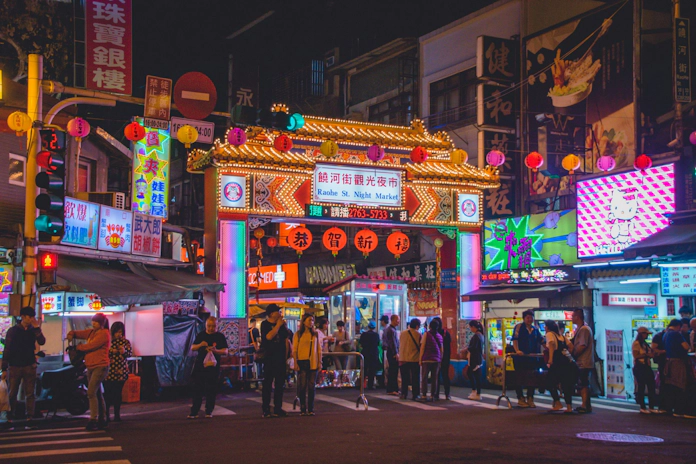
Jiufen’s lantern-lit alleyways perched above misty hillsides. The chaotic, delicious energy of Shilin and Raohe night markets. The hot springs of Beitou. The dramatic river gorges of Taroko National Park. Tainan’s layered centuries of temple culture. The pineapple cake shops, beef noodle bowls, and bubble tea set the benchmark for everything else.
Taiwan is a country where food and cultural experiences are genuinely exceptional enough to make almost any visit worthwhile, independent of cannabis access. Many cannabis enthusiasts report Taiwan as one of their favorite destinations in Asia, precisely because the richness of the experience does not depend on it. They simply save the cannabis-inclusive leg of the trip for Thailand or another destination with legal access.
What to Do If You're Caught
ROMEO A
If you are detained or arrested in Taiwan in connection with cannabis, the following guidance applies.
- Contact your embassy or consulate immediately. For American citizens, the American Institute in Taiwan (AIT) serves as the de facto US consular presence. AIT can provide a list of local attorneys and notify your family, but it cannot extract you from Taiwan’s legal process or shield you from local law. Citizens of other countries should contact their respective de facto diplomatic representatives in Taipei.
- Retain a Taiwanese criminal defense attorney. Legal proceedings in Taiwan are conducted in Mandarin. A local criminal defense attorney who handles narcotics cases can navigate the process, potentially advocate for treatment-focused outcomes in first-time personal use cases, and ensure that procedural rights are respected. This is not optional; it is essential.
- First-time users may qualify for rehabilitation. Taiwan’s narcotics framework distinguishes between users and traffickers. First-time offenders caught with small amounts for personal use are sometimes sentenced to mandatory rehabilitation programs rather than immediate imprisonment. This outcome is not guaranteed, and rehabilitation is still a serious legal consequence, but it reflects the tiered approach built into the law.
- Never admit to trafficking. The legal distinction between personal possession and supply is enormous. The sentencing gap between possession and trafficking is measured in decades of potential imprisonment. Do not characterize your situation in ways that suggest commercial activity or intent to supply, even informally, before legal representation is present.
- A drug conviction has long-term consequences beyond Taiwan. A narcotics conviction in Taiwan can affect visa applications, employment background checks, professional licensing, and immigration status in multiple countries. The long-term consequences of an arrest here extend well beyond the island and the immediate legal process.
Final Verdict

ROVIN FERRER
Taiwan is a destination cannabis enthusiasts can and should visit, with clear expectations about what the trip will and will not include.
- For travelers comfortable abstaining, Taiwan delivers one of Asia’s most rewarding experiences, with extraordinary food, night markets, mountain landscapes, and a genuinely welcoming culture. The trip stands on its own without cannabis access.
- For multi-country Asia itineraries: Pair Taiwan with Thailand. Thailand is the cannabis-accessible leg of that trip within its current prescription-based framework; Taiwan is the cultural and culinary counterpart. The two destinations complement each other naturally, and many cannabis enthusiasts structure their Asia trips exactly this way.
- For travelers who need cannabis access to enjoy a trip: Taiwan is not the right fit for that particular trip. The penalties are real, the underground market is inaccessible to short-term visitors, and the risk-reward calculation does not work in your favor.
- For CBD users traveling from legal markets: Leave all CBD products at home. Taiwan’s 0.001% THC threshold means many internationally sold CBD products may not meet customs requirements, regardless of what the label says.
If you are planning the cannabis-accessible parts of your Asia itinerary, find dispensaries nearby across every legal destination worldwide.
Frequently Asked Questions
Is weed legal in Taiwan?
No. Cannabis is classified as a Category 2 narcotic in Taiwan under the Narcotics Hazard Prevention Act, making it illegal for both recreational and medical use. There is no licensed retail market, no dispensaries, and no tourist exemptions. This applies equally to foreign visitors and Taiwanese citizens, regardless of what laws apply in their home countries.
What are the penalties for cannabis possession in Taiwan?
Possession of any amount of cannabis can result in up to 2 years in prison. For quantities exceeding 20 grams of pure Category 2 narcotics, mandatory minimums of six months to five years apply, plus a fine of up to NT$700,000. Manufacturing, selling, or trafficking cannabis can result in life imprisonment or a minimum 10-year sentence, plus a fine of up to NT$15 million.
Can tourists bring CBD products into Taiwan?
No. Tourists cannot safely bring CBD products into Taiwan. CBD is technically legal only as a pharmaceutical drug containing less than 0.001% THC (10 ppm), an extremely strict threshold that many internationally sold CBD products, including those labeled zero-THC, may not meet. Taipei Customs routinely seizes CBD products brought in from abroad. The practical guidance is straightforward: leave all CBD products at home before traveling to Taiwan.
Are there any cannabis dispensaries in Taiwan?
No. There are no cannabis dispensaries, cannabis cafés, or any licensed retail outlets for cannabis in Taiwan. The legal and regulatory framework for such businesses does not exist, and the government has explicitly rejected proposals to create one.
Has Taiwan ever considered legalizing cannabis?
Yes, but without success. Taiwan has an active reform movement: the Taiwan Weed Safety Education Association holds an annual march each April near the Legislative Yuan, and advocacy groups continue to push for decriminalization. However, a peer-reviewed BMC Public Health survey of over 38,000 Taiwanese residents found 93.5% did not support marijuana legalization. The government has consistently rejected reform proposals. The most recent formal change, a 2022 reduction in sentences for personal cultivation, was a narrow amendment that did not decriminalize possession or use.
Disclaimer: This article is for informational purposes only and does not constitute legal advice. Cannabis laws change frequently. Always verify current local laws before traveling. Herb does not encourage or condone the purchase, possession, or use of cannabis in jurisdictions where it is illegal or against local regulations.
Herb Recommended Products:
READ MORE