
ramon kagie
How to Buy Weed in St. Maarten: The Dutch–French Island’s Cannabis Reality |
08.13.2026How to Buy Weed in St. Maarten: The Dutch–French Island’s Cannabis Reality
Recreational cannabis is prohibited on both sides of St. Maarten. Here is what travelers should know about Dutch and French law, medical access, and reform.

A common misconception is that Dutch cannabis tolerance rules automatically apply in Sint Maarten. They do not. Despite the island’s constitutional link to the Kingdom of the Netherlands, Sint Maarten legislates its own drug policy, and recreational cannabis remains prohibited on both the Dutch and French sides of the island.
The 37-square-mile island is split between Dutch Sint Maarten in the south and French Saint-Martin in the north. Two governments, two legal systems, and two sets of penalties share one landmass with an open border. Cannabis travel rules from home do not follow you to either side.
Below you will find a complete breakdown of the law on both sides, what the 2019 medicinal-cannabis policy actually authorizes, how the 2024 reform process is structured, the risks at airports and ports, and what to do if you encounter law enforcement.
Key Takeaways
- Recreational cannabis is prohibited on both Dutch Sint Maarten and French Saint-Martin, and the open border between them transfers no legal protection.
- The Netherlands’ coffeeshop tolerance policy has no legal effect in Sint Maarten. The island’s Opiumlandsverordening prohibits cultivation, import, export, possession, transportation, and sale outside specified controlled purposes.
- Sint Maarten has had an official medicinal-cannabis policy since 2019 that contemplates prescription-based access through authorized pharmacies. Current product availability should be confirmed with an authorized prescriber.
- Under French law, illicit use of a narcotic can carry up to one year of imprisonment and a €3,750 fine, with a €200 fixed-fine procedure available in qualifying cases. Trafficking-related offenses carry substantially higher maximums.
- In February 2024, Sint Maarten established the National Cannabis Legalization Committee, an inter-ministerial workgroup. That regulation did not legalize recreational cannabis.
- Emergency numbers differ by side: 911 for police on the Dutch side, 17 for police and gendarmerie on the French side.
- The Caribbean guilder became legal tender in Sint Maarten on March 31, 2025, replacing the Netherlands Antillean guilder.
Is Weed Legal in St. Maarten?

Herb
No. Recreational cannabis is illegal across the entire island. There are no coffeeshops, no recreational dispensaries, and no legal retail pathway for a visitor who wants to buy cannabis. For anyone asking how to buy weed in St. Maarten, there is no lawful recreational option on either side of the border.
The two jurisdictions arrive at that result through separate legal systems:
- Dutch Sint Maarten. The Opium National Ordinance governs controlled substances. Government policy documents confirm that the ordinance prohibits marijuana cultivation, import, export, possession, transportation, and sale, subject to controlled exceptions established by law.
- French Saint-Martin. French narcotics law applies in full. Illicit personal use is prohibited under the Code de la santé publique, while illicit production, import, export, possession, acquisition, supply, and sale are addressed separately under the Penal Code.
- The open border. No checkpoints exist for most travelers, but each territory maintains its own jurisdiction. Standing on one side does not exempt you from that side’s law.
Travel forums sometimes describe the Dutch side as informally tolerant of small personal amounts. No current Sint Maarten government source establishes a possession threshold, a prosecutorial tolerance rule, or a Dutch-style gedoogbeleid for recreational cannabis. The 2024 reform regulation itself identifies decriminalization, depenalization, and tolerance policy as future policy work, which is a strong indication that no such regime exists today.
Sint Maarten vs. the Netherlands: The Dutch Connection Explained
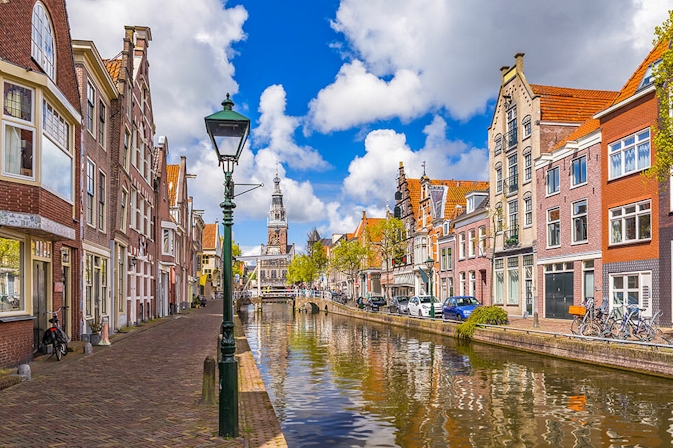
Alkmaar
The single most common misconception among cannabis-curious tourists is that Sint Maarten’s Dutch status makes it Amsterdam-adjacent. It does not.
Sint Maarten is an autonomous constituent country within the Kingdom of the Netherlands. It has its own parliament, its own legislation, and its own justice system, operating independently of Dutch domestic policy. The coffeeshop licensing system and the tolerance framework that make Amsterdam cannabis tourism possible carry no legal weight in the Caribbean.
The Kingdom of the Netherlands includes four countries: the Netherlands, Aruba, Curaçao, and Sint Maarten. Each governs itself. The same holds for the Caribbean Netherlands, meaning Bonaire, Sint Eustatius, and Saba, none of which has decriminalized cannabis despite being part of the Netherlands proper.
If the Netherlands’ cannabis culture is part of the draw, Herb’s Amsterdam cannabis guide covers what is actually available there.
Sint Maarten Cannabis Laws: The Dutch Side

Herb
Cannabis is a controlled substance under the Opiumlandsverordening. A few points that most travel guides gloss over:
- Possession is an offense. There is no published quantity below which possession stops being unlawful.
- Sales and cultivation are prohibited. No licensed recreational retail framework exists.
- Tolerance is not decriminalization. Occasional enforcement discretion, where it occurs, is not a legal protection and cannot be relied on by a visitor.
- Tourist status carries no weight. A medical card from home, residence in a legal state, or unfamiliarity with local law does not change how the ordinance applies.
Saint-Martin Cannabis Laws: The French Side

thomas kelley
French law applies fully on the northern portion of the island. The two sides operate under entirely separate legal systems, and French law provides specific criminal penalties for illicit cannabis conduct:
- Illicit use. Prohibited under Article L3421-1 of the Code de la santé publique, punishable by up to one year of imprisonment and a €3,750 fine. A €200 fixed-fine procedure can apply in qualifying cases.
- Trafficking-related conduct. Illicit production, import and export, possession, acquisition, transport, supply, and sale are addressed under the Penal Code and carry substantially higher maximum penalties.
- Sales and cultivation. Prohibited, with no recreational retail exception.
Comparative claims about which side enforces more aggressively are not supported by published arrest, charging, or sentencing data from either jurisdiction. The practical takeaway is simpler: both sides prohibit recreational cannabis, and travelers should plan accordingly.
The Market Reality: No Recreational Retail System

Herb
Sint Maarten does not have a verified legal recreational cannabis retail system or a Dutch-style coffeeshop system, and neither does Saint-Martin. Medicinal cannabis is governed separately through the 2019 pharmacy-based policy described below.
Any cannabis obtained outside a regulated legal supply chain carries a different risk profile than an authorized product:
- Legal exposure. The transaction itself violates local law on both sides of the island.
- No regulatory assurance. Products sourced outside an authorized channel do not carry the testing, labeling, or potency verification that regulated markets require.
- No consumer recourse. There is no refund process, no complaint mechanism, and no way to seek assistance from authorities after an illegal transaction.
For readers interested in what verified product information looks like in jurisdictions where cannabis is lawful, Herb’s strain guides and cannabis education cover the full picture.
Medical Cannabis in Sint Maarten
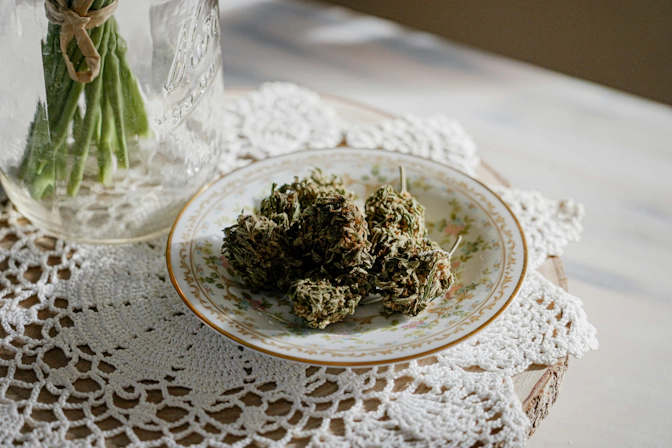
Elsa Olofsson
Sint Maarten has an official medicinal-cannabis policy, and it is more established than most travel coverage suggests.
- The 2019 policy. The Government of Sint Maarten published an Inspectorate VSA policy on medicinal cannabis and CBD products in the National Gazette on August 2, 2019. It established procedures covering import, storage, distribution, and prescription, and stated that medicinal cannabis would be available through authorized pharmacies upon prescription.
- Statutory recognition. Sint Maarten’s later agriculture policy expressly recognizes a legal basis for controlled medicinal marijuana alongside the general prohibition on recreational use.
- What remains variable. What is difficult to verify publicly is which pharmacies are dispensing which specific medicinal-cannabis products in 2026. Patients should confirm current availability directly with an authorized prescriber or pharmacy rather than assuming a particular product is stocked.
- Foreign authorization. A medical cannabis card or prescription issued elsewhere should not be treated as permission to carry cannabis into either side of the island.
Airports, Ports, and Border Crossings
Herb
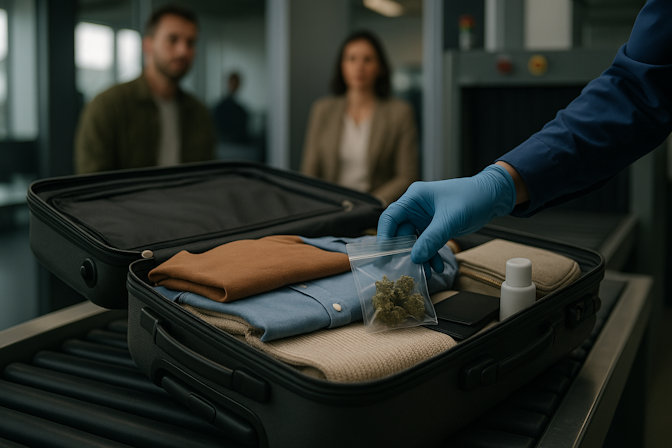
Airports, seaports, and border crossings involve additional security and customs procedures, and travelers should not carry cannabis through any of them.
- Princess Juliana International Airport (SXM) on the Dutch side and Grand Case-Espérance Airport (SFG) on the French side both prohibit cannabis entirely.
- Cruise terminals in Philipsburg apply the same prohibition, and cruise lines maintain their own policies independent of local law.
- Both directions matter. Bringing cannabis onto the island is an importation offense, and departing with a product obtained locally carries its own exposure. Airport security screening applies on the way out as well as the way in.
- Legal-state paperwork is irrelevant. A dispensary receipt or medical card from a US state or Canadian province has no standing with customs on either side.
What Happens If You Encounter Law Enforcement
Procedural rights and the mechanics of access to counsel differ between the Dutch and French systems, so blanket advice can be misleading. A neutral approach works on both sides:
- Stay calm and cooperative. Arguing legal technicalities at the roadside rarely improves an outcome.
- Ask to speak with a lawyer. The Constitution of Sint Maarten provides that a person deprived of liberty must be informed of the reason for detention, the right to refrain from answering, and the ability to be assisted by a lawyer. French procedure has its own rules, and local counsel should advise on them.
- Ask what rights apply before answering substantive questions. This is more useful than assuming a specific procedural framework carries over from home.
- Do not sign documents you do not fully understand, particularly documents in a language you do not read.
- Request consular assistance if eligible. Consular officers can visit, provide attorney referrals, and notify family. They cannot secure release, pay fines, or intervene in the legal process.
Emergency Contacts and Consular Assistance
Emergency short codes differ by side of the island. Direct-dial numbers for hospitals, police stations, and consulates change periodically, so confirm them through official government pages before travel.
Dutch side (Sint Maarten):
- Police: 911
- Ambulance: 912
- Coast Guard: 913
- Fire and Disaster: 919
- Hospital: St. Maarten General Hospital, formerly St. Maarten Medical Center
French side (Saint-Martin):
- Police and Gendarmerie: 17
- Medical (SAMU): 15
- Fire Department: 18
- European emergency number: 112
Consular assistance: US citizens are served by the US Consulate General in Curaçao, which covers Sint Maarten. Canadian and UK citizens should use their respective government consular services. Current contact numbers are published on the US State Department country information page and equivalent official pages, which should be checked shortly before departure.
The 2024 National Cannabis Legalization Committee

Herb
Policy development is underway, though it has not changed what is legal today.
In February 2024, the Sint Maarten government established the National Cannabis Legalization Committee, an inter-ministerial workgroup, through Government Regulation AB 2024, no. 11. The committee’s mandate covers:
- Medicinal use policy development
- Scientific use policy development
- Religious use policy development
- Recreational use policy development
- Depenalization and decriminalization options
- Legalization or tolerance policy frameworks
- Inter-ministerial coordination and law enforcement impact assessment
What this means for visitors:
- The 2024 regulation established a policy-development body. It did not legalize recreational cannabis.
- No timeline for legislation has been announced.
- Current law remains in full effect throughout the development process.
- Visitors should not plan a trip on the assumption that legal access is imminent.
Practical Island Details for Travelers

scott s bateman
The island’s split governance affects more than cannabis law.
- Geography. Roughly 87 square kilometers total, with Dutch Sint Maarten covering about 34 square kilometers in the south, capital Philipsburg, and French Saint-Martin covering about 53 square kilometers in the north, capital Marigot.
- Currency. The Caribbean guilder, currency code XCG, became legal tender in Sint Maarten on March 31, 2025, and the Netherlands Antillean guilder was withdrawn after June 30, 2025. The Caribbean guilder is pegged to the US dollar. Saint-Martin uses the euro. Payment acceptance varies by merchant, so confirm before relying on any single currency.
- Languages. Dutch and English are the official languages of Sint Maarten. French is official on Saint-Martin, with English widely spoken.
- Jurisdiction. Two separate legal systems, one open border. The distinction matters most when law enforcement is involved.
St. Maarten vs. Other Caribbean Destinations
Caribbean cannabis law varies sharply between neighboring islands, and proximity is a poor guide to legality.
Legal or regulated access:
| Destination | Legal Status | Tourist Access |
|---|---|---|
Jamaica | Decriminalized + licensed medical | Possession of up to 2oz is decriminalized; purchases generally go through licensed herb house channels; Rastafarian sacramental use is legally protected |
US Virgin Islands | Adult-use framework being implemented | An adult-use framework has been enacted; retail availability has been rolling out and should be verified before travel |
Personal-possession decriminalization:
| Destination | Legal Status | Tourist Access |
|---|---|---|
Antigua and Barbuda | Decriminalized up to 15g | Possession of up to 15g decriminalized; a medical framework exists; visitor access should be verified before travel |
Dominica | Decriminalized up to 28g | Personal possession of up to 28g is not an offense; up to 3 home plants permitted for adults |
Puerto Rico | Medical cannabis legal | 30-day temporary medical card available for visiting patients |
Cannabis-restricted destinations:
| Destination | Legal Status | Notes |
|---|---|---|
Sint Maarten (Dutch) | Prohibited, medicinal policy in place | No recreational access; prescription-based medicinal pathway through authorized pharmacies |
Saint-Martin (French) | Saint-Martin (French) | No legal access; French narcotics law applies in full |
Aruba | Fully illegal | No legal access; CBD with no more than 0.2% THC only |
Curaçao | Illegal | No legal access |
If cannabis access is a meaningful part of how you travel, Jamaica remains the region’s most developed destination. Herb’s Jamaica weed guide is a useful starting point.
Final Verdict

ramon kagie
St. Maarten delivers on beaches, food, and two distinct cultures in a single day trip. Cannabis access is not part of what it offers in 2026. Here is how the decision breaks down:
- Planning a trip centered on cannabis? Jamaica has the region’s most developed framework, with decriminalized personal possession, licensed retail channels, and deep cultural context.
- Want something closer to a US dispensary experience? The US Virgin Islands has enacted an adult-use framework that has been rolling out, so confirm retail availability before booking.
- Assuming the Dutch side works like Amsterdam? It does not. Sint Maarten legislates independently, and the coffeeshop system has no legal effect there.
- Managing a medical condition with cannabis at home? Sint Maarten’s 2019 policy provides a prescription-based pathway through authorized pharmacies. Arrange care locally rather than traveling with a supply, and confirm product availability in advance.
- Going for the island, not the cannabis? You can have an outstanding trip. Skip the illegal market entirely and enjoy St. Maarten for what it actually is.
The honest answer to “how to buy weed in St. Maarten” is that you cannot, legally, on either side. For destinations where cannabis is lawful, Herb’s cannabis guides and legalization news track developments as they happen.
Frequently Asked Questions
Is weed legal in St. Maarten?
No. Recreational cannabis is prohibited on both the Dutch and French sides of the island. Sint Maarten’s Opium National Ordinance prohibits cultivation, import, export, possession, transportation, and sale outside specified controlled purposes, and French narcotics law applies in full on Saint-Martin. The Netherlands’ coffeeshop tolerance policy has no legal effect in Sint Maarten, and no published possession threshold or tolerance rule exists there.
Can I bring cannabis into or out of St. Maarten?
No. Cannabis is prohibited at Princess Juliana International Airport on the Dutch side and Grand Case-Espérance Airport on the French side, as well as at seaports and cruise terminals. Transporting cannabis across an international border is a serious offense regardless of whether you departed from a jurisdiction where cannabis is legal, and a dispensary receipt or medical card from home carries no weight with customs.
What are the penalties for cannabis on the French side?
Under French law, illicit use of a narcotic can be punished by up to one year of imprisonment and a €3,750 fine, and a €200 fixed-fine procedure can apply in qualifying cases. Illicit production, import and export, possession, acquisition, transport, supply, and sale are addressed separately under the Penal Code and carry substantially higher maximum penalties. Actual outcomes depend on the conduct, quantity, and circumstances of the case.
Is medical cannabis available in Sint Maarten?
Sint Maarten published an official medicinal-cannabis policy in 2019 that established procedures for import, storage, distribution, and prescription, and contemplated access through authorized pharmacies upon prescription. Its later agriculture policy also recognizes a legal basis for controlled medicinal marijuana. What varies is which products are currently stocked, so patients should confirm availability directly with an authorized prescriber or pharmacy rather than assuming a specific formulation is on hand.
Did the 2024 cannabis regulation legalize weed in Sint Maarten?
No. Government Regulation AB 2024, no. 11 established the National Cannabis Legalization Committee, an inter-ministerial workgroup tasked with developing policy for medicinal, scientific, religious, and recreational cannabis and with reviewing depenalization and decriminalization options. The regulation itself did not legalize recreational cannabis, no timeline for legislation has been announced, and current law remains in full effect.
Disclaimer: This article is for informational and educational purposes only and does not constitute legal or medical advice. Cannabis laws change frequently and vary by jurisdiction. Verify current Sint Maarten and French law with official government sources before traveling.
Herb Recommended Products:
READ MORE