
herb
How to Buy Weed in Nicaragua 2026: Laws, Penalties & Risks
Cannabis is illegal in Nicaragua with no recreational, medical, or decriminalized framework. Here is exactly what travelers need to know before arriving.

Buying weed in Nicaragua is illegal. Cannabis is prohibited for recreational use under the 2008 Nicaraguan Penal Code, and Nicaragua has no legal medical cannabis access program for consumers or tourists. Possession under 5 grams carries fines and community service; above 20 grams risks 3 to 8 years in prison. Nicaragua is among the strictest cannabis destinations in Central America, with no legal dispensaries or consumer medical cannabis access.
If you are planning a Central American trip and wondering whether cannabis is realistic in Nicaragua, you are asking the right question. Nicaragua draws backpackers, surfers, and adventure travelers from across the world. The cannabis question follows almost every itinerary that passes through Managua, Ometepe, or San Juan del Sur.
The honest answer is more complicated than a quick search suggests. Cannabis is illegal in Nicaragua, but enforcement does not match the written law. That gap is real, and it is not protection. This guide covers exactly what that means: the specific penalties, where enforcement is strictest, and what the realistic options are for cannabis travelers in Central America.
Herb does not encourage cannabis purchase in jurisdictions where it is illegal.
Key Takeaways
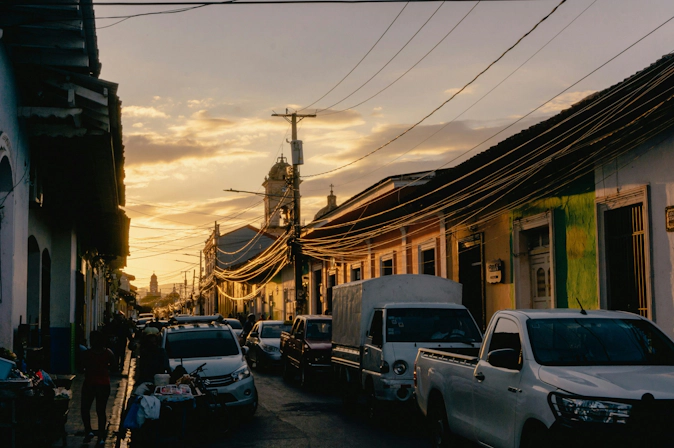
tobias tullius
- Cannabis is fully illegal in Nicaragua. There is no recreational, medical, or decriminalized framework for consumers or tourists.
- Possession of less than 5 grams carries fines and mandatory community service. Possession above 20 grams can result in 3 to 8 years in prison.
- Judicial inefficiency creates reported informal tolerance for very small personal amounts in some situations, but this does not constitute legal protection.
- Foreign tourists have been arrested for cannabis in San Juan del Sur, where enforcement is more active than elsewhere in the country.
- Belize offers the clearest formal decriminalization threshold in Central America: possession of up to 10 grams and smoking on private premises were decriminalized in 2017. Buying, selling, cultivation, and public use remain legally risky.
- Costa Rica has a regulated medical and therapeutic cannabis framework under Law 10113 (2022), but recreational cannabis remains illegal and it should not be treated as a recreational cannabis destination.
- As of publication, Herb could not identify an active cannabis reform bill in the Nicaraguan National Assembly’s public legislative tracking system.
Nicaragua Cannabis Laws at a Glance
| Category | Status |
|---|---|
Recreational cannabis | Fully illegal |
Medical cannabis | No consumer access program |
CBD products | No clear legal pathway; treat as prohibited |
Dispensaries | None |
Personal-use threshold | No fixed gram threshold; penalty tiers set by quantity |
Reform outlook | No confirmed active legislation as of 2026 |
Why Cannabis Travelers Research Nicaragua

Photo by Davide Angelini / Adobe Stock Photo
Nicaragua turns up on cannabis traveler radars for three consistent reasons.
First, the country sits on the Central American backpacker circuit between Costa Rica and the rest of the region. Travelers who have just come from Costa Rica, where a regulated medical cannabis framework exists and private use may be more tolerated, cross into Nicaragua and do not expect the legal environment to shift dramatically. It does.
Second, cannabis is visibly present in Nicaragua despite being fully illegal. San Juan del Sur, the Corn Islands, and parts of Managua all have informal markets. Visible access can feel like safe access. It is not.
Third, travelers hear about reported informal tolerance in Nicaragua and interpret it as legal protection. That is incorrect. Informal tolerance means the court system cannot always process every case. It does not mean you will not be arrested, detained, or charged.
Understanding why the confusion exists is the first step to navigating Nicaragua’s cannabis situation accurately.
Nicaragua Cannabis Laws: The Legal Framework

austin curtis
Nicaragua cannabis laws prohibit possession, sale, cultivation, processing, and transport of cannabis in all forms under two primary statutes: Penal Code Law No. 641 and Law 285 (the Law on the Control of Narcotics, Psychotropic Substances, and Other Controlled Substances). The 2008 Penal Code update treats cannabis as a controlled substance.
Cannabis is prohibited for recreational use, and Nicaragua has no legal medical cannabis access program for consumers or tourists. Limited official authorization may exist for controlled governmental or health-authorized purposes, but not for personal medical use. Nicaragua does not appear to provide a clear legal pathway for consumer CBD products, and reputable legal summaries treat CBD as illegal or legally risky. Cannabis seeds capable of germination are also explicitly banned without Ministry of Health authorization.
The law does not provide for decriminalization thresholds the way some Latin American countries do. There is no quantity below which possession becomes automatically exempt from criminal liability. Instead, the penalty structure scales with the amount found in your possession, and discretion rests with the arresting officer and the prosecutor who handles your case.
Nicaragua is bound by the 1988 United Nations Convention Against Illicit Traffic in Narcotic Drugs and Psychotropic Substances, which reinforces its prohibition posture. The ruling Sandinista government has shown no appetite for liberalization. Notably, Juan Carlos Ortega Murillo (son of President Daniel Ortega) has publicly suggested cannabis legalization, but no policy changes have materialized. As of publication, Herb could not identify an active cannabis reform bill in the Nicaraguan National Assembly’s public legislative tracking system. This contrasts with regional neighbors who have moved, at varying speeds, toward legal access, a gap that Herb maps in its strictest cannabis laws guide.
What makes Nicaragua’s situation unusual is not the law itself, which is strict, but the gap between what the law says and how it is enforced at street level. The gap is real. But it is not protection.
Possession Penalties: Exactly What You Risk

nicaragua police
Nicaragua’s Penal Code sets out specific penalty tiers based on the quantity of cannabis involved.
- Under 5 grams: 70 to 100-day fines plus 30 to 60 days community service
- 5 to 20 grams: 6 months to 3 years in prison plus 50-day fines
- Above 20 grams: 3 to 8 years in prison plus 100 to 300-day fines
Beyond possession, the code also addresses other cannabis activities:
- Selling or distribution: 5 to 15 years prison plus 300 to 800-day fines
- Processing: 5 to 20 years prison plus 100 to 1,000-day fines
- Home cultivation: 5 to 10 years prison
Two things stand out in this structure. First, the jump between under-5-grams penalties (fines and community service) and 5-to-20-grams penalties (potential prison time) is significant. A tourist carrying a few pre-rolls for a week’s trip could easily be holding 5 to 10 grams, which puts them squarely in the 6 months to 3 years tier. Second, cultivation carries the same prison range as holding 20-plus grams. There is no “just growing for personal use” defense in Nicaraguan law.
The “day fines” system used in Nicaragua is based on daily income. Nicaragua’s GDP per capita is approximately $2,100 per year, meaning the baseline daily income figure used in fine calculations is very low. For a foreign tourist assumed to earn higher wages, a 100-day fine can translate to thousands of dollars at the court’s discretion. Travelers should not assume fines will be nominal; there is uncertainty over how a court calculates amounts for foreign nationals.
These are the penalties as written. How they apply in practice is a different matter entirely.
De Facto Tolerance: The Enforcement Reality

jeff w
Legal observers who study Nicaragua’s cannabis policy have described a pattern of reported informal tolerance for small personal amounts, without any formal legal protection. This pattern emerges from three overlapping factors: judicial inefficiency, prosecutorial discretion, and the sheer volume of cases that would overwhelm the court system if fully prosecuted.
According to analysis of Nicaragua’s cannabis policy, when a person is processed for possession of a small quantity, it creates administrative and judicial burden that prosecutors frequently choose to avoid. Cases may be dropped if charges are not pressed within a three-month window. If witnesses fail to appear at trial, acquittal can follow. The result is that many low-level cannabis possession cases in Nicaragua never result in formal conviction.
This does not mean you will walk away if caught. The process of being detained, questioned, potentially held, and formally charged is itself a significant experience that can disrupt travel plans, cost money in legal fees, and create serious stress even if no conviction follows.
Nicaragua appears to have some reported informal tolerance for small personal amounts in certain contexts, but unlike Belize’s formal decriminalization or Costa Rica’s medical framework, this does not create legal protection. The informal tolerance varies considerably by location. Sources from travelers and long-term expats suggest that Managua, particularly in areas popular with tourists and expats, sees a level of informal street tolerance that does not reflect the written law. Other areas, notably San Juan del Sur on the Pacific coast, have seen higher rates of actual arrests of foreign nationals.
Being a tourist does not reduce your legal exposure. In some situations, it increases it, as foreign nationals may be seen as higher-value targets for fines or as lacking the local connections that sometimes allow situations to be resolved informally.
The bottom line: reported informal tolerance is real. But it is not protection. It is the absence of prosecution, not immunity from it.
How to Buy Weed in Nicaragua's Capital: The Managua Reality

azzedine rouichi
Managua is a sprawling, non-traditional capital city without a defined historic center (the 1972 earthquake destroyed much of the old city and it was never rebuilt in a traditional urban form). This makes the cannabis scene in Managua harder to characterize than in cities built around a visible tourist strip.
What travelers report from Managua is consistent with the broader Nicaraguan picture: cannabis exists, it circulates in informal networks, and the quality is generally described as variable, leaning toward what is sometimes called “commercial” grade cannabis rather than the curated, tested products cannabis enthusiasts expect.
The social context in Managua is also important. Cannabis culture in Nicaragua is not publicly visible in the way it is in cities where cannabis is decriminalized or legal. Smoking in public spaces is not a normal part of Managua’s street life. The informal tolerance that exists tends to apply to private spaces, not public ones. Foreign tourists who smoke visibly in public in Managua are taking a different level of risk than locals who use discreetly in private settings.
For cannabis travelers, Managua is a transit city more than a destination. Most travelers pass through on their way to Granada, León, Ometepe, or the Pacific coast. If you are in Managua and looking to connect with cannabis culture in the region, Herb’s cannabis news covers the evolving Central American landscape and can provide context on where reform discussions are happening across the region.
Beyond Managua: Key Locations Compared

mario von rotz
Different parts of Nicaragua carry meaningfully different risk profiles for cannabis travelers. The same law applies everywhere, but enforcement intensity varies significantly by location.
Ometepe Island
Ometepe has lower enforcement intensity than most of Nicaragua, but cannabis remains fully illegal there, and possession still carries the same criminal penalties. Private use in accommodation settings carries the lowest practical risk on the island, though no consumption is legally safe. The island’s small size and limited police presence relative to its tourist population have made it one of the places where travelers report a degree of informal cannabis access. The general assessment from travelers is that private consumption in accommodation settings carries lower practical risk than public consumption.
San Juan del Sur: Highest Risk for Foreign Tourists
San Juan del Sur is Nicaragua’s most internationally recognized surf and party destination. Traveler and expat reports suggest it may carry heightened enforcement risk for foreign tourists, but reliable public arrest-rate data by location is limited. Multiple accounts from travelers and expat sources confirm that gringos have been arrested in San Juan del Sur for cannabis, with outcomes including formal charges, fines, and periods of detention.
The combination of a highly visible tourist nightlife scene, a local police presence accustomed to international travelers, and a town where cannabis circulates relatively openly creates a higher-risk environment than other parts of Nicaragua. Avoid it if you are risk-averse.
The Corn Islands: Caribbean Norms, Same Legal Risk

frames for your hearth
Nicaragua’s Caribbean coast has a different cultural character from the Pacific side. The Corn Islands are home to communities with Afro-Caribbean heritage and a distinct relationship to Nicaraguan mainland culture and law. Travelers report that cannabis is more culturally integrated into the social fabric of the Corn Islands, reflecting Caribbean regional norms. Enforcement on the Corn Islands has historically been less intensive than in San Juan del Sur, though this does not mean it is absent. Cultural integration does not equal legal protection.
The Central American Gap: How Nicaragua Compares
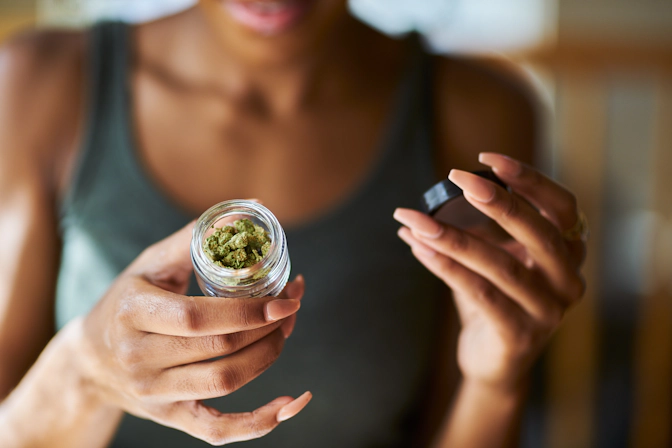
Photo by Joshua Resnick / Adobe Stock Photo
Nicaragua represents what cannabis policy observers have called the “Central American Gap”: the lag between changing public attitudes toward cannabis across the region and the near-total absence of formal policy reform in most Central American countries.
Here is where each Central American country stands as of 2026:
| Country | Recreational Status | Medical Status | Key Notes |
|---|---|---|---|
Belize | Decriminalized up to 10g on private premises | No formal framework | Only country with formal decriminalization in region; sales/cultivation remain illegal |
Costa Rica | Illegal; private use may be more tolerated | Legal (Law 10113, 2022) | Medical/therapeutic framework exists; recreational use remains illegal |
Guatemala | Illegal | Illegal | Strict enforcement; limited reform discussion |
Honduras | Illegal | Illegal | Among the strictest in the region |
El Salvador | Illegal | Illegal | Strong government prohibition stance |
Nicaragua | Illegal | No consumer access | Reported informal tolerance in some contexts; no legal protection |
Panama | Recreational illegal; no fixed decriminalization threshold | Medical cannabis regulated under Law 242 | Ongoing reform discussion |
Within this landscape, Nicaragua sits in the bottom tier of reform alongside Guatemala, Honduras, and El Salvador. Costa Rica and Belize have moved meaningfully, while Panama has a developing medical framework. Nicaragua, despite a pattern of reported informal tolerance, has made no legislative movement toward any form of legalization or decriminalization.
The “Central American Gap” matters for cannabis travelers because the region is often treated as a single travel zone, when in reality it is a patchwork of meaningfully different legal environments. A traveler who crosses from Costa Rica into Nicaragua faces a dramatically different legal situation despite covering a relatively short distance.
Herb’s guides section covers cannabis travel laws across multiple regions for enthusiasts planning international trips.
Cannabis Culture and History in Nicaragua

roberto zuñiga
Nicaragua’s relationship with cannabis has been shaped by its political history in ways that are distinct from other Latin American countries. The Sandinista revolution of 1979 brought a government ideologically oriented toward anti-imperialism and social discipline that included strong positions against drug use. Cannabis was framed within this context as both a foreign cultural influence and a social problem, a framing that has shaped Nicaraguan policy attitudes in ways that persist today.
The Sandinista National Liberation Front (FSLN) has governed Nicaragua continuously since 2007 and has shown no appetite for cannabis reform. President Daniel Ortega’s government has grown increasingly authoritarian since the 2018 political crisis, which saw Nicaragua’s tourism sector decline sharply. That political environment makes meaningful cannabis reform unlikely in the near term.
The Caribbean coast of Nicaragua, however, has long maintained a different cultural relationship with cannabis. Afro-Caribbean communities in the Bluefields region and the Corn Islands have cultural ties to broader Caribbean cannabis traditions, creating regional variation within Nicaragua that mirrors the broader Caribbean-Pacific cultural split that runs through the country’s history.
For travelers interested in cannabis culture specifically, Nicaragua is not a destination in the way that Amsterdam, Barcelona, or even some US states have become. Nicaragua is a country where cannabis exists in the social fabric in some communities and regions but has not developed the public-facing cannabis culture that draws that kind of tourism.
Smart Alternatives for Cannabis Travelers

Herb
If you are planning a Central American trip with cannabis in mind, there are regional options worth understanding.
Costa Rica: A Developed Medical Cannabis Framework
Costa Rica has one of the region’s most developed legal frameworks because Law 10113 regulates cannabis and derivatives for medicinal and therapeutic use. Recreational cannabis remains illegal, though private-use enforcement may be more tolerant than in Nicaragua. The program primarily serves licensed businesses rather than tourists, and it should not be treated as a recreational cannabis destination. Herb’s Costa Rica guide covers how the legal framework works for visitors.
Belize: Formal Decriminalization for Travelers
Belize offers the clearest formal decriminalization threshold in Central America: possession of up to 10 grams and smoking on private premises were decriminalized in 2017. Buying, selling, cultivation, and public use remain legally risky, but for personal possession it provides a defined threshold below which adults are not criminally liable.
Panama: An Evolving Framework
Panama has a regulated medical cannabis framework under Law 242 for controlled medical and therapeutic access, and ongoing reform discussion. Recreational cannabis remains illegal, and there is no fixed decriminalized personal-use threshold. Herb’s guides section covers the distinct scenes in Panama City and Bocas del Toro.
Planning Your Central American Cannabis Route
A cannabis-conscious traveler routing through Central America would do well to anchor experiences in Costa Rica and Belize, where the legal frameworks offer at least some protection, and treat Nicaragua (along with Guatemala, Honduras, and El Salvador) as countries where cannabis-related activities carry genuine legal risk regardless of informal tolerance patterns.
Practical Safety: What to Know Before You Go

Photo by Joshua Resnick / Adobe Stock Photo
For anyone researching how to buy weed in Nicaragua, the honest answer is that there is no legal way to do so, and the informal methods carry real legal risk. Herb’s cannabis travel guide provides a framework for thinking through legal risk in any complex destination. Here is what every traveler needs to know.
- Police encounters and your rights. Nicaraguan police have broad stop-and-search authority, and reports from travelers and human rights organizations document instances where constitutional protections around privacy and search have not been fully respected in practice.
- Foreign national status. As a tourist, you do not have the local connections, language fluency, or informal networks that sometimes allow Nicaraguan residents to navigate low-level cannabis encounters with less consequence.
- Documented consequence. A traveler reported being arrested in Granada with approximately 2 grams of cannabis after a street informant reported the transaction to police. The experience included detention in poor conditions and release pending trial, after which a police inspector advised leaving Nicaragua before the court date. This outcome was not guaranteed and reflects what informal tolerance sometimes looks like in practice, not a reliable escape route.
- San Juan del Sur specific risk. This deserves repeating: traveler and expat reports suggest San Juan del Sur may carry heightened enforcement risk for foreign tourists, and multiple accounts confirm actual arrests with formal charges.
- Quality and contamination. Cannabis available through informal Nicaraguan networks is unregulated and untested. There is no way to know pesticide content, potency, or what the product actually contains.
- Accommodation and discretion. Even in locations where informal tolerance exists, consuming cannabis in shared spaces, public areas, or places where other guests or staff might observe you creates exposure.
If You Are Detained for Cannabis in Nicaragua
- Do not resist, argue, or attempt to bribe. Bribery attempts can escalate a minor detention into a serious charge. Remain calm and do not escalate the situation.
- Invoke your right to consular assistance. You are entitled to contact your home country’s embassy or consulate. State this clearly and calmly.
- Do not make any statements without a lawyer present. The U.S. Embassy in Managua can provide a list of local attorneys; most other embassies provide similar referral services.
- Do not sign documents you do not fully understand. Signing documents in Spanish without full comprehension can create additional legal exposure.
Final Verdict

The Points Guy
There is no version of cannabis travel in Nicaragua that carries reliable legal protection. Here is how to make the decision.
- For Central American cannabis travel with a developed legal framework: Costa Rica has regulated medical and therapeutic cannabis under Law 10113 and may have more tolerant private-use enforcement, but recreational cannabis remains illegal. It is the most developed framework in the region but should not be treated as a recreational market.
- For formal decriminalization: Belize is the only Central American country where possession up to 10 grams on private premises does not trigger criminal liability. Buying, selling, and public use remain illegal.
- For Nicaragua specifically: Reported informal tolerance is real and documented, but it is not consistent, it is not available to foreign nationals the way it sometimes is to residents, and it is most unreliable in the places (San Juan del Sur) where tourists are most concentrated.
If cannabis access during travel is a meaningful priority, Costa Rica and Belize are substantially better Central American options. Nicaragua is worth visiting for everything else it offers. The cannabis math just does not work in travelers’ favor.
Explore Strains at Herb to find out what documented varieties from legal markets look like before or after your trip. Keep up with how cannabis laws evolve across Latin America and beyond through Herb’s travel guides.
Find dispensaries nearby to locate licensed cannabis options in legal markets when you are back home.
Frequently Asked Questions
Is weed legal in Nicaragua?
No. Cannabis is prohibited for recreational use in Nicaragua, and Nicaragua has no legal medical cannabis access program for consumers or tourists. Possession, sale, cultivation, and processing are all criminal offenses under the Nicaraguan Penal Code, with penalties ranging from fines and community service for small amounts to years in prison for larger quantities or commercial activity.
What are Nicaragua's cannabis possession penalties?
Possession below 5 grams carries 70 to 100-day fines and 30 to 60 days of community service. Possession of 5 to 20 grams can result in 6 months to 3 years in prison plus 50-day fines. Possession above 20 grams can result in 3 to 8 years in prison plus 100 to 300-day fines. As of publication, these penalty tiers are consistent with published legal analysis of Nicaragua’s Penal Code.
Does informal tolerance offer legal protection in Nicaragua?
No. Reported informal tolerance does not legally protect you in Nicaragua. It refers to a pattern where enforcement gaps and judicial inefficiency mean that small personal amounts sometimes avoid prosecution, even though possession remains a criminal offense. You can still be detained, charged, and potentially convicted. The informal tolerance is not consistent, varies by location, and is less likely to apply to foreign nationals.
How does Nicaragua compare to Belize and Costa Rica for cannabis travelers?
Belize offers the clearest formal decriminalization threshold: possession of up to 10 grams and smoking on private premises were decriminalized in 2017, though buying, selling, and public use remain illegal. Costa Rica has a regulated medical and therapeutic cannabis framework under Law 10113 (2022), but recreational cannabis remains illegal. Nicaragua has no equivalent framework of any kind. For cannabis travelers, both Belize and Costa Rica offer substantially lower legal risk than Nicaragua.
Is CBD legal in Nicaragua?
Nicaragua does not appear to provide a clear legal pathway for consumer CBD products, and reputable legal summaries treat CBD as illegal or legally risky. Traveling to Nicaragua with CBD products carries legal risk and should be avoided.
This article is for informational purposes only and does not constitute legal advice. Cannabis laws vary by jurisdiction and are subject to change. Always verify current regulations with official sources before traveling. Herb does not encourage the purchase or use of cannabis in jurisdictions where it is illegal.
Herb Recommended Products:
READ MORE