Tolerance Breaks May Backfire, Study Finds
A 2023 study found short tolerance breaks linked to worse outcomes six months later. Here's what it actually says, plus a full t-break timeline chart.
Rachel Abela
September 10, 2026
This article contains sponsored content. Some of the products featured are part of paid partnerships. This page explains how our process works.

herb
A 2023 study found short tolerance breaks linked to worse outcomes six months later. Here's what it actually says, plus a full t-break timeline chart.
September 10, 2026
Figuring out the right cannabis tolerance break time usually means picking a number off a forum and hoping. But a 2023 study makes that strategy a bit more complicated.
Researchers followed 170 recreational cannabis users for six months. People who took a deliberate tolerance break ended up with worse risk indicators than when they started. People who took a break for entirely different reasons ended up better.
Below: what the study found, whether break length should change based on the cannabinoid you’re using, and a timeline for what to expect.
Important: This article is for informational purposes only; not legal or medical advice. For adults 21+. Cannabinoid legality varies by state, and the federal hemp definition narrows in late 2026—verify your state’s laws and that the retailer ships to you before buying any cannabinoid products. Featured products are not FDA-evaluated and are not intended to diagnose, treat, cure, or prevent any disease.

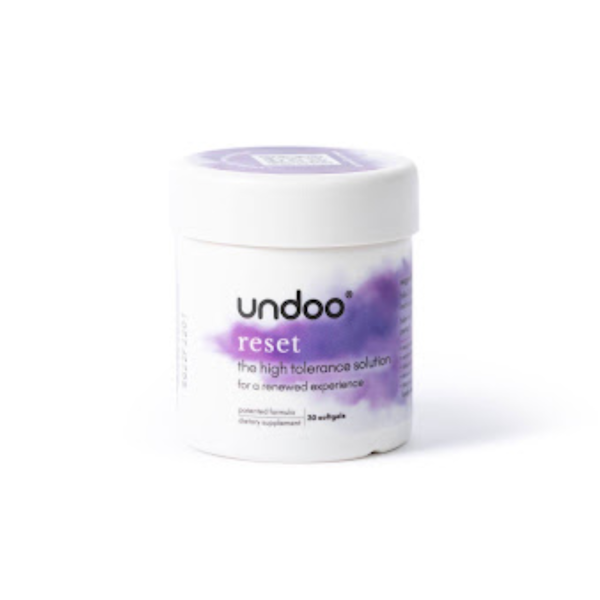
If you’re rethinking the two-week break, undoo® reset is one option some people use.
It’s a five-night protocol built around olivetol, taken as two softgels with 12 to 16oz of water before bed. It’s framed as a tolerance reset that doesn’t require stopping cannabis at all.
Here’s what the patent US-10265277-B2 behind olivetol documents. Volunteers took a 30mg softgel at the peak of their high and reported noticing a reduction within 4 to 10 minutes, while mental clarity and motor function improved, and non-psychoactive effects like pain relief and mood stayed intact.
The patent describes an effective range of 8 to 100 mg, with 30 to 60mg preferred, though that’s for acute use at peak high rather than the nightly protocol the reset calls for.
Each softgel carries 75 mg, with 15 to a container, and some customers run the cycle alongside a short tolerance break for added effect.
Important: The effects described come from self-reported volunteer trials in a US patent and undoo®‘s preliminary studies—not peer-reviewed or controlled research.

herb

herb
A 2023 longitudinal study set out to test a cannabis culture assumption nobody had really checked: that a temporary abstinence improves your outcomes later by lowering tolerance.
The researchers split breaks into two categories:
The methods:
The findings:
So a 2-month tolerance break looks good, and a two-and-a-half-week one looks bad. Except that’s not quite the comparison the study made.
The two groups differ on two variables at once. Length and motivation. The t-break group was both shorter and specifically aimed at tolerance. The other group was both longer and aimed at something else entirely. You can’t separate those effects from this data, so the study doesn’t establish that a longer t-break produces better outcomes.
There’s also a reasonable reverse explanation. People with heavier or more concerning use patterns may be the ones most likely to attempt a tolerance break in the first place. If so, the t-break isn’t causing the worse scores. It’s a signal that something was already harder to manage.
What the study does suggest is that motivation may be doing real work. A break aimed at getting your tolerance down has a built-in endpoint and a built-in reward: resuming at full strength. A break aimed at saving money or doing better at school has no such finish line, and the behavior change tends to outlast it.
Consider the limits too. This is 170 young adults in one region, average age 21, self-reporting their own break lengths months after the fact.
No. No peer-reviewed research prescribes different t-break lengths for different cannabinoids. The pharmacology does offer some useful context.
The belief makes intuitive sense. It’s well-documented that delta-8 THC produces weaker psychoactive effects than delta-9, so people reasonably assume a weaker cannabinoid needs a shorter reset. Here’s why that doesn’t follow.
Tolerance is a receptor story, not a cannabinoid story. Cannabis tolerance is driven by CB1 receptor downregulation, where the brain reduces both the number and the sensitivity of receptors in response to repeated activation. Research on chronic users has found that the process reverses over roughly four weeks of abstinence. What drives it is how often and how intensely those receptors get activated, not which molecule is doing the activating.
Intensity is the variable that actually matters. A daily concentrate user is hitting CB1 receptors far harder than someone taking a low-dose gummy twice a week. The first person needs a longer break than the second. So tolerance break length should scale with your consumption intensity, not with the cannabinoid label.
THCA shows why intensity matters more than the label. Raw THCA isn’t intoxicating. Heat changes that. When you vape or smoke it, THCA converts into delta-9 THC, so it activates CB1 receptors the same way delta-9 does. Concentrates also pack a lot of THC into each puff.
Take the Fade Co. THCA Disposable, a rechargeable vape filled with 3 grams of hemp-derived THCA concentrate from California. That’s more than most disposables hold, and the USB-C port keeps it running until the concentrate is gone. It’s convenient. It also means one device can carry you through many sessions before you notice how much you’ve used. If you’re planning a t-break and a device like this is in your rotation, keep an eye on how often you reach for it. Strain options include Northern Lights, Super Boof, Zkittlez, RS-11, Sour Diesel, and Runtz.
And there’s a research gap here. Nobody has run the clinical work comparing break lengths across cannabinoid types. Until someone does, assessing your own consumption intensity is the more defensible guide. Treat that as an informed read of the available pharmacology rather than a research finding.
Here’s what the stages of cannabis tolerance break time often look like. Withdrawal symptoms are drawn from clinical descriptions of cannabis withdrawal. They generally begin within the first few days, peak in the first week, and mostly resolve within two weeks.
| Timeline | Withdrawal symptoms | Tips | Reintroduction effects |
|---|---|---|---|
Days 1-3 | Irritability, trouble falling asleep, reduced appetite, restlessness. | Front-load a sleep routine before you start. Keep meals regular even without hunger. Light movement helps. | Essentially unchanged. Tolerance is still intact. |
Days 4-7 | Peak discomfort. Vivid dreams, night sweats, mood swings, headaches, anxiety. | Cut late caffeine. Keep a consistent bedtime. Replace the evening ritual with something else rather than leaving it empty. | Marginally stronger at most. Still close to baseline. |
Weeks 2-4 | Symptoms taper. Sleep begins normalizing; mood evens out. | Exercise and social plans do the most work here. Tracking your days helps when motivation dips. | Noticeably stronger. Receptor recovery is underway. |
Over 4 weeks | Acute symptoms largely resolved. Sleep and appetite normalized. | Shift focus to maintaining the habits you built instead of counting down. | Substantially stronger. Most people need much less. |
Over 8 weeks | No acute withdrawal. Baseline mood and sleep restored. | Decide in advance what returning looks like, including dose, or you'll default to your old one. | Closest to a full reset. This is where a 3-month tolerance break lands too. |
If you want the day-to-day tactics rather than the timeline, our tips for getting through a tolerance break and our tolerance reset guide both go deeper.
elsa olofsson
For plenty of people, a break is exactly what it sounds like. A reset, a bit of discomfort, then a better relationship with the plant. For others, the difficulty of starting or finishing one is itself the useful information.
A few things worth paying attention to:
The study above is relevant here. If shorter breaks tracked with worse outcomes six months on, one likely reading is that people with more difficult use patterns are the ones attempting breaks and struggling to sustain them. In that case, a t-break isn’t the wrong idea; it’s just not addressing what’s underneath it.
Support that goes further:
Our guide to whether weed is addictive covers what cannabis use disorder involves if you’d rather read before reaching out.

Eli Defaria
The honest verdict on cannabis tolerance break time is that duration matters, but it isn’t the only thing that matters.
The 2023 study found self-identified t-breaks averaging 2.5 weeks associated with worse risk indicators six months later, and non-tolerance-motivated breaks averaging 8 weeks associated with better ones. It did not isolate length from motivation, so nobody should read it as proof that a longer t-break works better. What it does suggest is that a break with a reason attached beyond resetting tolerance may stick more effectively.
So, how long should a tolerance break be?
And if getting through one keeps proving harder than expected, that’s worth taking seriously rather than trying the same way again.
Physiologically, yes. Removing THC allows CB1 receptors to recover in number and sensitivity, which is why doses land harder afterward. Behaviorally, it’s less clear-cut, since one study associated short self-identified t-breaks with worse use outcomes six months later.
The clearest signals are physical rather than mental. Acute withdrawal symptoms fading by the second week, sleep and appetite returning to normal, and the urge becoming occasional rather than constant. Receptor recovery isn’t something you can feel directly, so how much less you need when you return is the real measure.
Two weeks is a reasonable floor, and four is better for heavy daily users. Anything under a week does very little for tolerance, and the evidence suggests short breaks may not be neutral. Match the length to your consumption intensity rather than picking a number that sounds manageable.