Every State Moving Toward Cannabis Legalization in 2026
Half the year is gone, and the map already looks different than it did in January. Here's where every state stands right now.
Rachel Abela
September 28, 2026
This article contains sponsored content. Some of the products featured are part of paid partnerships. This page explains how our process works.
nico smit
Half the year is gone, and the map already looks different than it did in January. Here's where every state stands right now.
September 28, 2026
Cannabis legalization in 2026 has moved on more fronts simultaneously than any year in recent memory. And not always in the direction people expected.
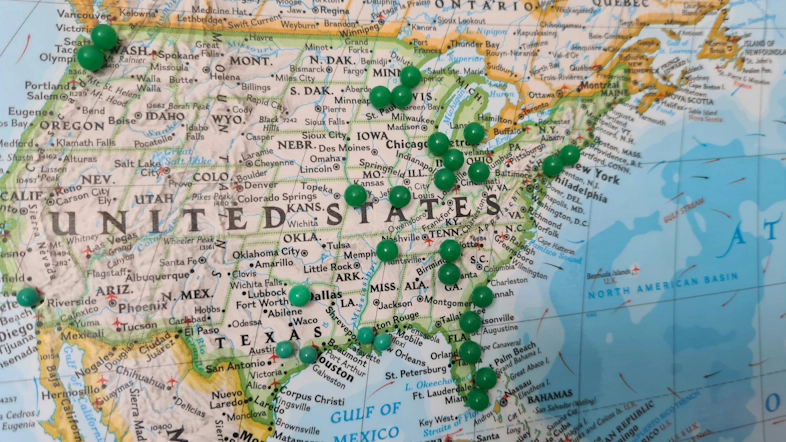
A total of 24 states plus D.C. have legalized adult use. Another 40-plus have medical programs of some kind. So we’re asking: who’s next?
The honest answer is that 2026 isn’t going to flip the entire remaining map. What it is doing is advancing the front lines in specific ways while making clear that the number of states where cannabis legalization is a serious conversation continues to grow.
Here’s the definitive breakdown of every state worth watching in 2026 for potential cannabis legalization.
Important: This article is for informational purposes only; not legal or medical advice. For adults 21+. Cannabinoid legality varies by state, and the federal hemp definition narrows in November 2026—verify your state’s laws before buying any cannabinoid products. Featured products are not FDA-evaluated and are not intended to diagnose, treat, cure, or prevent any disease.
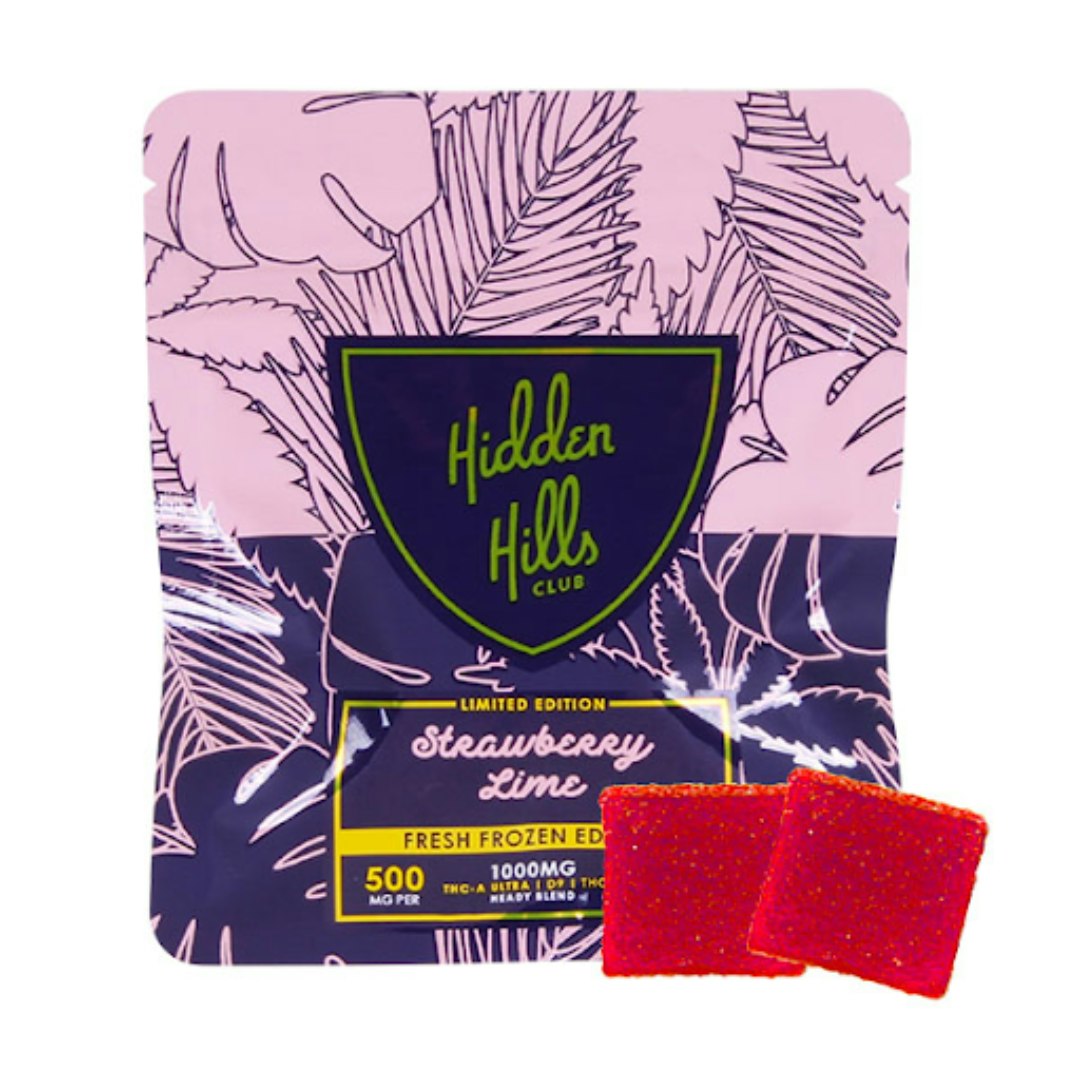
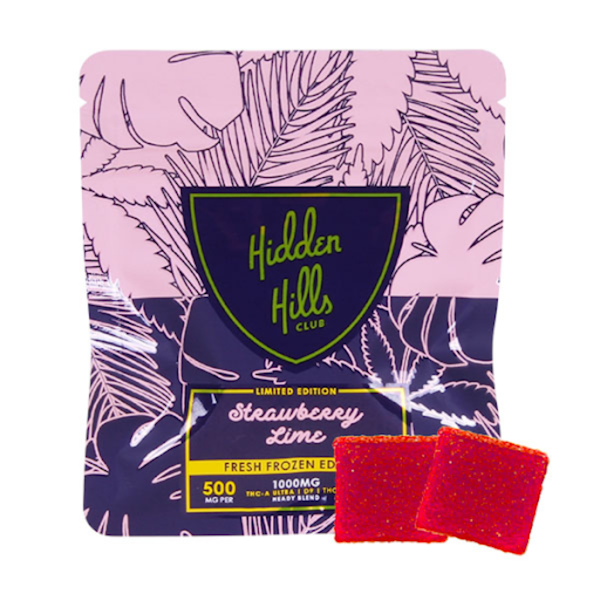
In states still waiting on legalization, hemp-derived edibles have filled a lot of the gap, though federal hemp rules are narrowing in late 2026. The Hidden Hills Heady Blend Gummies are one of the stronger options out there, blending THCA Ultra, delta-9, and THC-B at 500mg per gummy.
Each sachet holds two gummies for 1,000mg total, which makes them easy to carry and easy to portion. Flavors include Sour Apple, Sour Blue Razz, Strawberry Lime, and Sour Mango. At this potency, they’re best for experienced users, so start with a small piece.

herb
24 states plus the District of Columbia have legalized adult-use cannabis:
Worth noting that legal possession and a functioning retail market aren’t the same thing. Virginia sits on this list because possession and home cultivation have been legal since 2021. But retail sales don’t begin until July 2027.

Herb
Alabama is not a cannabis legalization story in the traditional sense. But it is a medical cannabis story. And in June 2026, it finally reached the finish line after a slow five-year journey through legislative delays, legal fights, and licensing setbacks.
Callie’s Apothecary in Montgomery became Alabama’s first operating medical dispensary, opening June 4, 2026.
That rollout of other dispensaries has been slow. Additional shops were expected to open in summer 2026. But as of mid-August, only the Montgomery location is confirmed to be open, per Cannabis Business Advisors. Planned locations in Attalla and Oxford still don’t have announced opening dates.
Alabama remains one of the most conservative cannabis legal states on the issue, which makes even a functional medical market a big milestone. For patients who’ve been waiting since the program was signed into law, one open dispensary is a start.
Virginia is the biggest cannabis legalization story in 2026, though it didn’t turn out the way anyone predicted. Adult-use possession and home cultivation have been legal since 2021. But the state never established a regulated retail market to go with them. That made Virginia one of the more legally strange cannabis legal states in the country. You could legally have it, legally grow it at home, and legally not buy it anywhere.
That’s changing, just later than the original bills proposed.
Gov. Abigail Spanberger vetoed the standalone retail bills, HB 642 and SB 542, on May 19, 2026. The adult-use retail framework was instead enacted through the 2026–2028 state budget, which she signed on June 29, 2026.
The confirmed timeline:
Possession limits also increase under the new framework, rising from one ounce to two ounces for adults 21 and over.
So Virginia’s retail gap is closing. It just isn’t closing this year.
South Carolina is one of the last states without a medical cannabis program, and it’s also the state closest to fixing that.
Sen. Tom Davis, a Republican from Beaufort, has spent more than a decade refining the Compassionate Care Act. The current version, S.0053, is conservative:
That design is the whole strategy, built to answer the objections that killed earlier versions. It worked in the Senate.
But it still didn’t pass. The session adjourned May 7, 2026 without a House floor vote, and Davis is expected to reintroduce in 2027.
That’s frustrating, but it’s not the same as being nowhere. South Carolina has a bill that clears one chamber, a governor who’s signalled openness, and a sponsor who keeps narrowing the objections. It’s one House vote away, which is more than most states on this list can say.
Worth noting South Carolina remains one of only 19 states that still jails people for possessing small amounts of cannabis.

HERB
These are the states where the fight isn’t in the legislature. It’s in petition drives, courts, and voter campaigns.
Recreational marijuana is not legal in Florida, and the 2026 effort is finished.
Here’s how it ended. The Smart & Safe Florida campaign spent 2025 collecting signatures for a 2026 ballot initiative. In early February 2026, state officials declared the campaign had landed short of the 880,062 verified signatures required, at 783,592 in the state’s count. The campaign disputed that total, arguing county-level tallies didn’t match the state count and calling the declaration premature.
The courts settled it. A 1st District Court of Appeal panel sided with the state, and on March 9, 2026, the Florida Supreme Court declined to rehear the case. That ended the 2026 push. The adult-use amendment will not appear on the 2026 ballot.
Advocates have signaled 2028 as the next target, though formal status for a 2028 initiative remains unconfirmed. The unfortunate case? A state election law resets initiative signatures each cycle, so nothing already collected carries over.
Nebraska is fighting on two fronts at once, which makes it one of the more interesting states on this list.
The ballot fight first. In August 2025, Bill Hawkins of the Nebraska Hemp Company filed a constitutional amendment initiative with one sentence in it: all persons 21 and older have the right to use all plants in the genus Cannabis. If approved, it would make Nebraska the first state to write adult cannabis use into its constitution as a right.
Getting there is the hard part. Nebraska requires signatures from 10% of registered voters, roughly 123,000 based on recent cycles, plus 5% of registered voters in at least 38 of the state’s 93 counties. That distribution requirement is what has repeatedly sunk cannabis petitions in Nebraska. This is the fifth attempt since 2018, and none of the previous four submitted enough valid signatures. The deadline for the November 2026 ballot was July 3, 2026.
The second front is arguably more urgent. Nebraska voters approved two medical cannabis initiatives in November 2024, both with more than two-thirds support. Implementation has been a fight ever since. The Nebraska Medical Cannabis Commission issued emergency rules that ban raw and inhaled cannabis along with palatable edibles, which advocates argue directly contradicts what voters approved. And in 2026, the Commission backed LB 1235, a bill critics say would strip patients of protections they currently have.
So Nebraska is simultaneously trying to expand cannabis rights at the ballot box and defend the ones voters already granted. It’s a preview of where a lot of states are heading.
North Carolina belongs in this conversation for a reason that surprises people. The state has no citizen ballot initiative process.
That matters more than it sounds. In 13 states plus D.C., voters legalized cannabis directly through initiatives, bypassing legislatures entirely. North Carolinians can’t do that. There’s no petition drive to sign, no signature threshold to hit, no route to put the question to voters unless the legislature chooses to refer one, which it hasn’t.
Everything therefore runs through Raleigh. A state commission is actively studying cannabis policy, and multiple bills aim to expand the state’s currently limited medical framework. The Eastern Band of Cherokee Indians already operates a legal cannabis dispensary on tribal land, creating a functioning market inside a state that otherwise prohibits it.
North Carolina is a good reminder that the ballot-initiative map and the legalization map aren’t the same thing. Several remaining prohibition states simply don’t have the tool that got cannabis legalized elsewhere, which is why their timelines look so different.

These states established legislative groundwork and political pressure that could produce real wins in the next cycle or two.
New Hampshire is the only New England state without some form of legal cannabis. In 2026, the state was more active on drug policy reform than it has been in years. Though the session ended without legalization.
The New Hampshire House passed a legalization bill on the first day of the 2026 session, an increasingly familiar pattern for a chamber that has advanced similar legislation only to see it stall in the Senate. Senate prospects stayed poor, and the current governor is opposed.
New Hampshire is also one of the most interesting policy states to watch beyond cannabis. The House approved HB 1809, creating a state-regulated medical psilocybin program, and a separate psilocybin decriminalization bill advanced in the Senate. That level of drug policy activity signals a shifting appetite for broader reform.
Pennsylvania has been on the “about to legalize” list for years. In 2026 the path looked clearer than in previous cycles, but as of mid-2026 no major bill had advanced to enactment.
The House passed a legalization bill in May 2025; the Senate killed it within a week. New bipartisan bills—SB 120 from Sens. Laughlin and Street, plus HB 20—use a private-store model and represent a more viable path than the state-run approach that failed. Neither has received a committee hearing.
Gov. Josh Shapiro has called for cannabis legalization in his annual budget address four years running and has emphasized that any bill needs equity provisions to earn his signature. A senior GOP senator on the appropriations committee had expressed skepticism about moving before federal rescheduling advanced further. That argument got more complicated in April 2026, when a partial move to Schedule III took effect for medical-state-licensed and FDA-approved products. Though adult-use cannabis remains Schedule I.
Hawaii stands out as the only state in the Pacific region and the only West Coast-adjacent state without legal adult-use cannabis.
The 2026 session followed the familiar pattern. Comprehensive legalization again died in the House after clearing the Senate, and narrower measures also fell short. House Speaker Nadine Nakamura has acknowledged that conservative areas on Oahu don’t have the votes to move forward. Gov. Josh Green supports legalization. A ballot measure putting the question to voters was in play but collapsed due to insufficient support in the House.
This one state won’t see full legalization soon, but notable movement is worth knowing about.
West Virginia: A proposed constitutional amendment would put cannabis legalization directly to voters, covering possession and home cultivation. Separate bills would allow counties to opt into adult-use sales. That’s a new angle for the state, though passage remains a long shot.
Indiana and Kansas were never likely to legalize in 2026, but the fact that serious bills exist at all marks a real shift.
Indiana has adult-use and medical bills in play. Kansas has both an adult-use bill (HB 2405) and a constitutional amendment resolution that would put legalization rights directly into the state’s Bill of Rights (HCR 5028, updated in the 2026 session). These are conservative-leaning states where passage faces major obstacles—but a few years ago, these bills wouldn’t have existed. The Overton window continues to move.

herb
Here’s the shift almost nobody predicted five years ago. In 2026, some states aren’t fighting to legalize cannabis. They’re fighting to keep it.
Well-funded repeal campaigns targeted three legal states this cycle. And they were backed largely by Smart Approaches to Marijuana, the anti-legalization organization led by former Obama drug policy advisor Kevin Sabet. Two of those campaigns collapsed. One is going to voters in November.
Massachusetts voters legalized adult-use cannabis by referendum in 2016. This November, they’ll be asked whether to undo it.
The repeal measure, titled An Act to Restore a Sensible Marijuana Policy, would repeal the state laws legalizing, regulating, and taxing recreational cannabis sales. Personal possession of an ounce or less for adults 21 and over would remain legal, so this isn’t full recriminalization. It’s the destruction of the regulated market that sits underneath it, including the dispensaries generating hundreds of millions in annual tax revenue.
If it passes, it would be the first time any state has reversed cannabis legalization after implementing it.
The industry took a while to take it seriously. That changed in June, when operators launched Stop the Repeal on the State House steps.
Arizona faced a nearly identical threat and beat it without a vote.
Political operative Sean Noble filed a repeal initiative in December 2025 targeting Proposition 207. The proposal would have eliminated commercial sales while leaving possession legal, effectively shutting down a market that recorded roughly $1.2 billion in sales last year.
It needed close to 256,000 signatures by July 2026. In May, Noble abandoned the effort.
His stated reasons are worth noting. Signature gathering alone would have cost an estimated $5 million, which he called simply too expensive. He also cited the Trump administration’s order reclassifying medical cannabis under federal law, which made the prohibitionist argument harder to run. And he said he’d been misled by legalization opponents.
Two of three campaigns collapsed on cost and logistics rather than on the merits. That’s worth sitting with. The organized money to challenge legalization exists now, and Massachusetts is the test case for whether it works.

ian hutchinson
The federal picture changed a lot in 2026.
Following President Trump’s December 2025 executive order directing the DEA and HHS to pursue reclassification, Acting Attorney General Todd Blanche issued a final order in late April 2026. Effective April 28, 2026, two narrow categories moved from Schedule I to Schedule III:
That’s a big change for the operators it covers. Schedule III status relieves them of IRC 280E, the tax provision that has long prevented cannabis businesses from deducting expenses.
What it doesn’t do is legalize anything. Adult-use and recreational cannabis remain Schedule I under federal law.
A separate, expedited DEA administrative hearing evaluated broader rescheduling, including adult-use. That hearing concluded July 15, 2026, and post-hearing briefs were due August 17, 2026. The administrative law judge’s recommendation and the DEA’s final decision are both still pending.
2026 didn’t flip the entire remaining map, and it’s worth being clear about that.
Virginia enacted adult-use retail legalization, but sales don’t start until July 1, 2027. Alabama finally delivered on a five-year-old medical promise with one dispensary open. Florida’s 2026 ballot effort died in court in March. South Carolina got closer than ever to a medical program and still adjourned without a House vote. And federal rescheduling moved partway, covering medical-licensed and FDA-approved products while leaving adult-use on Schedule I.
The bigger story might be the direction of travel. For the first time, legalization is playing defense. Repeal campaigns targeted Massachusetts, Arizona, and Maine this cycle. Two collapsed, but Massachusetts goes to voters in November, and a yes vote would be the first reversal of cannabis legalization in American history.
Meanwhile, the list of states where legalization is a serious conversation keeps expanding. Nebraska is pursuing a constitutional right at the ballot box while defending the medical program voters already approved. Indiana and Kansas have active bills. West Virginia is pursuing a constitutional amendment path.
The front lines are advancing, and now they’re also being defended. Stay with Herb as these situations develop.

HERB
No state completed adult-use legalization in 2026. Virginia enacted a retail framework through its 2026–2028 budget on June 29, 2026, but sales don’t begin until July 1, 2027, with license applications opening February 1, 2027. Alabama’s first medical dispensary opened June 4, 2026, with additional locations expected during summer 2026. Pennsylvania, Hawaii, and New Hampshire all faced political obstacles that prevented completion this session.
No. The 2026 ballot initiative fell short on verified signatures, and the effort ended in court when the Florida Supreme Court declined to rehear the case on March 9, 2026. The amendment will not appear on the 2026 ballot. Advocates have signaled 2028, though formal status is unconfirmed.
24 states plus Washington, D.C. have legalized adult-use cannabis, and around 40 states have some form of medical cannabis program. That count has held steady through mid-2026. Virginia is already included, since possession has been legal there since 2021, though its retail market doesn’t open until July 2027.
A partial move to Schedule III took effect April 28, 2026, covering FDA-approved marijuana drug products and marijuana under qualifying state medical licenses. That relieves those operators of IRC 280E but doesn’t legalize anything, and adult-use cannabis remains Schedule I. A broader DEA rescheduling hearing concluded July 15, 2026, with post-hearing briefs due August 17, 2026. The ALJ recommendation and DEA’s final decision are still pending.
It looks unlikely. The House has passed legalization bills, and the Senate has blocked them. Bipartisan legislation with a private-store model is in play, and the governor supports legalization with equity provisions. But as of mid-2026, neither major bill had received a committee hearing, and Republican opposition in the Senate remains the key obstacle.
ELSA OLOFSSON
For more than a decade, Herb has been a gathering place for people who love, use, and are simply curious about cannabis. What started as a small corner of the internet has grown into a community where millions come to learn, share, and stay connected to the culture.
Here’s what you can tap into at Herb:
Stay connected with the Herb community by subscribing to our newsletter, following us on Instagram, and X for the latest in cannabis lifestyle and culture.