Olivetol 101: What It Is, How It’s Used & Where to Buy
Olivetol is a lichen compound. Here's what the research shows, what it doesn't, and where to buy it.
Rachel Abela
September 25, 2026
This article contains sponsored content. Some of the products featured are part of paid partnerships. This page explains how our process works.

herb
Olivetol is a lichen compound. Here's what the research shows, what it doesn't, and where to buy it.
September 25, 2026
Olivetol has been part of cannabis chemistry for decades, just not in the way it’s suddenly getting attention for.
In a lab, it’s a workhorse, used across research and as a starting material chemists have relied on to synthesize cannabinoids like THC.
Outside the lab, most people have never heard of it, and the one place it’s now showing up— cannabis-adjacent wellness supplements—has almost nothing to do with why chemists valued it in the first place.
One company, undoo®, is behind most of what’s driving that shift—a US patent claiming olivetol can ease an intense THC high.
Below: what olivetol actually is, where it shows up, what the research does and doesn’t support, and what to look for if you’re buying an olivetol supplement.
Important: This article is for informational purposes only; not legal, medical, or professional advice. For adults 21+. Featured products are not FDA-evaluated and are not intended to diagnose, treat, cure, or prevent any disease.

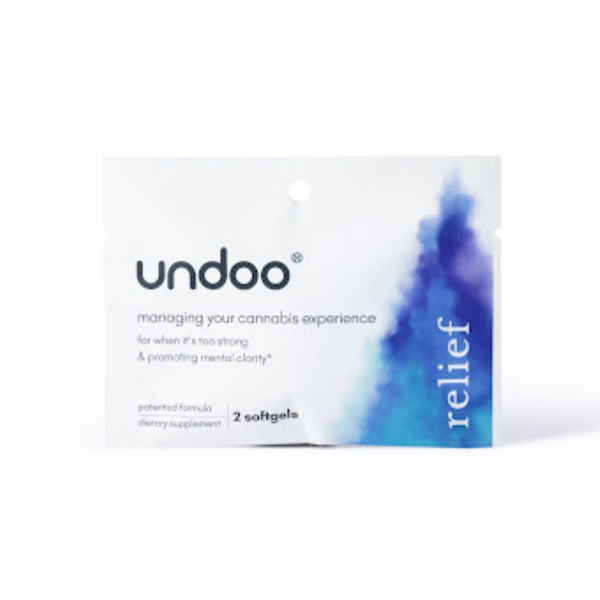
undoo®relief contains 60mg per softgel, sold in 2-count packets. The brand suggests taking 2 softgels with 12 to 16oz of water, with an additional 1 to 2 possible after 30 minutes if needed, and no more than 8 in 24 hours. It’s best for situations where cannabis is stronger than intended, or the timing is inconvenient.

herb
Olivetol is a naturally occurring phenolic lipid compound, known chemically as 5-pentylresorcinol.
Despite the name, olivetol does not come from olives. Instead, it occurs in certain lichen species (a symbiotic partnership of fungus and algae) as a metabolite, including oakmoss and related Parmeliaceae varieties. Some insects also produce it as a pheromone or repellent.
Lichens themselves have a long relationship with people, well beyond olivetol. They’ve been used as natural dyes for centuries—orchil and litmus, the classic pH-indicator dye, both come from lichen extracts. Some species have served as food, including Iceland moss, cooked into bread, porridge, and soups. Lichens have also appeared on restaurant menus as a gourmet, exotic-leaning ingredient.
Appearance-wise, olivetol looks like off-white crystals or an olive-to light-purple waxy solid.

photo courtesy of undoo
Documented olivetol uses span several areas. Let’s get into it.
Olivetol has been proposed as an anti-obesity agent in animal models using zebrafish and mice.
In the zebrafish study, obese fish given a high dose of olivetol showed significantly reduced fat accumulation. No human participants were involved, but the researchers pointed to it as a promising direction for obesity-related treatment, with the usual caveat that further studies are needed.
The mouse study went further, testing olivetol across multiple metabolic conditions. Mice on a high-fat diet lost body weight and showed improved fat metabolism after olivetol supplementation, and the same effect held up in separate models of type 1 and type 2 diabetes. Here too, the researchers described olivetol as a promising therapeutic candidate for these conditions.
Of everything olivetol is used for, this is the one generating the most buzz—and the one with the least published science behind it.
There’s no peer-reviewed research showing olivetol shortens a tolerance break or blunts a THC high.
What exists instead is a single patent and an in-progress company study, and that patent is the main driver of olivetol’s buzz: US Patent 10,265,277 B2, titled “Composition of Olivetol and method of use to reduce or inhibit the effects of tetrahydrocannabinol in the human body,” with James J. Carberry listed as inventor. You can read it yourself through the USPTO patent search by entering the patent number.
Patents document a claimed invention and its basis, and they typically aren’t peer-reviewed. This one relies on informal, non-controlled trials with volunteer consumers who self-reported their experiences after taking softgels.
How the informal trials worked
Volunteers consumed cannabis by their preferred method. They reported baseline mood, pain levels, and prior cannabis experience. After consuming, a timer started and participants self-reported when their high peaked. At peak, they took one or two 30mg olivetol softgels dissolved in an edible oil such as olive oil, then tracked the time until they noticed any reduction.
What participants reported
The patent claims subjects typically noticed a reduction in THC effects within 4 to 10 minutes, most commonly around 6 to 7 minutes.
The individual accounts in the patent’s Description of Embodiments section are more impressive than the averages:
That pattern is the core of the claim. The undoo® patent asserts that olivetol can reduce the psychoactive intensity while leaving non-psychoactive benefits like pain relief largely intact.
Dosing in the patent
The patent describes an effective range of 8 to 100mg, with 30 to 60mg preferred. For extreme THC intoxication, higher doses of 10 to 15mg per kilogram are suggested.
The proposed mechanism
The hypothesis is that olivetol binds to CB1 and CB2 receptors and acts as a competitive inhibitor. In practice, that would mean olivetol occupies the same receptor site THC needs to bind to produce a high, without activating the receptor itself—potentially blunting THC’s psychoactive effects by crowding it out, rather than by altering how the body processes THC. That’s the theory the patent rests on; independent, published research hasn’t confirmed it.

Photo by Yaroslav Shuraev
The patent isn’t undoo®’s only research effort. The company is also conducting an ongoing undoo® Veterans Study in tandem with the Cannabis Center of Excellence’s Veterans Cannabis Access Program.
Preliminary findings from McNabb et al. were reported in May 2023 and are published on undoo®’s science page:
That pattern tracks with what the patent’s individual trial subjects described: intensity fading while clarity and other benefits hold steady. It’s a second data point pointing the same direction—though, like the patent trials, it’s still self-reported feedback from participants who knew exactly what they were taking, not independent clinical evidence.
This is the least glamorous and best-established use of olivetol.
Olivetol is used as a starting material in the lab-made synthesis of THC, the primary psychoactive cannabinoid in the cannabis plant.
Published work on synthetic strategies for rare cannabinoids documents its role in producing compounds including CBG, CBD, and delta-9 THC. Olivetol is chosen because it’s stable, straightforward to manufacture, and structurally positioned to build cannabinoids.
If you’ve ever wondered where lab-made cannabinoids in hemp disposables or high-dose gummies start, this compound is frequently part of the answer.

photo courtesy of undoo
Finding a consumer olivetol supplement is harder than you’d expect. Most suppliers of olivetol are chemical companies that supply research and manufacturing customers with raw material, not products formulated for people to take.
undoo® is the leading brand in the consumer space, and it’s the company behind both the patent and the Veterans Study covered above.
If you’re looking to buy olivetol as a supplement, here’s what’s worth checking.
undoo® currently offers three formulations, each with different dosing:
undoo®relief contains 60mg per softgel, sold in 2-count packets. The brand suggests taking 2 softgels with 12 to 16oz of water, with an additional 1 to 2 possible after 30 minutes if needed, and no more than 8 in 24 hours. It’s best for situations where cannabis is stronger than intended, or the timing is inconvenient.
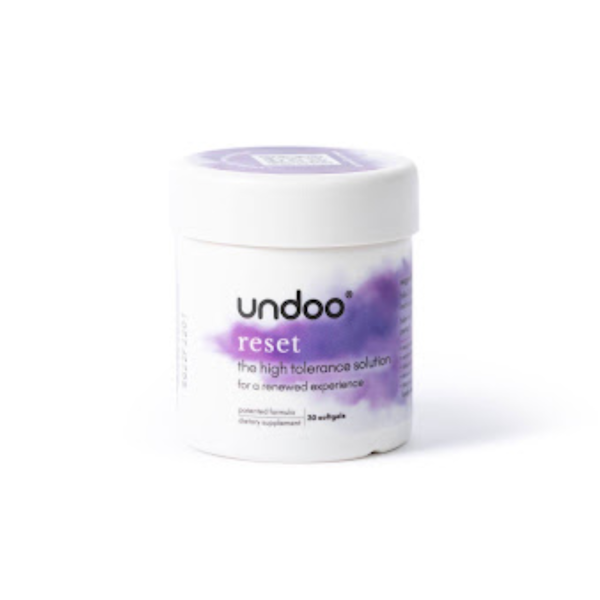
undoo® reset contains 75mg per softgel with 15 per container. The suggested protocol is 2 softgels with water before bed for 5 consecutive nights, with no more than 6 in 24 hours. Undoo states it doesn’t require stopping cannabis use, though some may pair it with a short break.
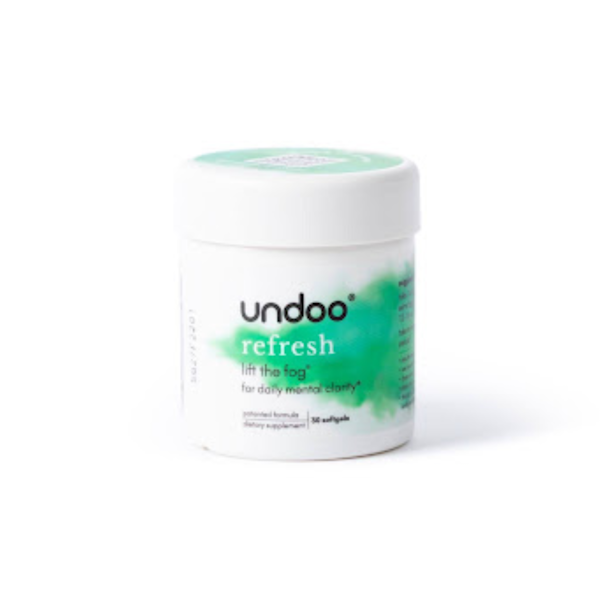
undoo® refresh contains 60mg per softgel in a 30-count jar made from ocean reclaimed plastic. The suggestion is 1 softgel daily with water, repeated if needed, and no more than 8 in 24 hours. It’s the daily option for lingering fogginess.
All three list olivetol content clearly and use the oil-softgel format described in the patent, which is the main thing to look for.
If you’re a heavy edible or concentrate consumer, that’s the demographic undoo® targets most directly. Our comparison of concentrate and dry herb vaporizers covers why those formats hit differently in the first place.
Important: Featured products are not FDA-evaluated and are not intended to diagnose, treat, cure, or prevent any disease.

photo courtesy of undoo
Olivetol is a real compound with a genuinely interesting structural relationship to THC. It has a solid track record as a synthesis material, and a research file that is thinner than the marketing around it suggests.
What’s well established:
What’s preliminary:
What’s claimed rather than demonstrated: the ability to reduce THC effects.
That comes from a patent built on informal volunteer feedback and a preliminary study still in progress. The proposed receptor mechanism hasn’t been confirmed by published studies.
undoo® is the main commercial source of consumer olivetol. It discloses dosing clearly, and it’s been more transparent than most supplement brands about what its evidence actually is. Just make sure you understand what a patent is and isn’t. If you’re considering it alongside any medication or health condition, talk to a doctor first.
Olivetol is a naturally occurring phenolic compound, chemically 5-pentylresorcinol, found in certain lichen species. Despite the name, it doesn’t primarily come from olives. Its structure resembles part of a THC molecule, and the related compound olivetolic acid is a precursor in the cannabis plant’s own cannabinoid biosynthesis.
Limited human safety data is available on olivetol. Olivetol is sold as a dietary supplement, and the FDA hasn’t evaluated it for safety or effectiveness. Brands that sell it publish suggested maximum daily amounts, and anyone with a health condition or taking medication should speak to a doctor before taking olivetol supplements.
Olivetol’s main established use is as a starting material for synthesizing cannabinoids in laboratories. It’s also been studied for antioxidant, anti-inflammatory, and anti-obesity properties in preclinical settings. In the consumer market, it’s sold in supplements marketed around managing cannabis experiences.
A US patent claims it can, based on informal volunteer trials rather than controlled clinical research. Participants self-reported noticing reduced THC effects within roughly 4 to 10 minutes of a 30mg dose. No peer-reviewed study has confirmed this, and the proposed receptor mechanism remains a hypothesis.
Pricing varies by brand, formulation, and count, and consumer olivetol supplements are niche enough that there’s no established market rate. Products differ in dosage per softgel and units per container, so compare on cost per milligram rather than sticker price. Check current pricing directly with the retailer.
Patent volunteers reported noticing effects within 4 to 10 minutes, most commonly around 6 to 7. Other sources suggest allowing roughly 30 minutes, since an oral softgel has to pass through digestion before entering the bloodstream. Individual results vary, and none of this comes from controlled research.
Consumer options are limited, with undoo® being the primary brand selling olivetol formulated for people rather than laboratories. Most other olivetol for sale online is raw research-grade material from chemical suppliers, which is not intended for consumption. Look for clearly disclosed milligram content and third-party testing.